Philippines ‘Very Happy’ With Made-in-India BrahMos Missiles; Envoy Calls Technology ‘Unmatched’
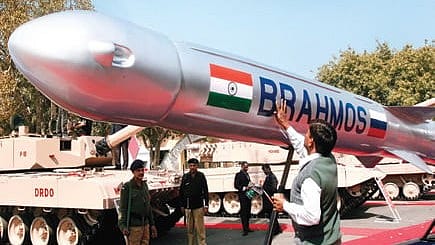
The Philippines is “very, very happy” to have become the first export customer for India's BrahMos supersonic cruise missile system, with its ambassador to India, Josel F. Ignacio, describing the technology as “unmatched” and signalling the possibility of deeper defence procurement ties between the two countries.
In an exclusive interview with ANI, Ignacio said the acquisition was a significant step in the Philippines' defence partnership with India and had strengthened Manila's deterrence capabilities.
“The Philippines is very, very happy and delighted and proud to have been the first country of export for India for the BrahMos technology,” he said.
The ambassador described BrahMos as one of the Philippines' major defence purchases, emphasising that the system was intended to strengthen deterrence rather than be used in combat.

The Era of Forever Wars
30 Oct 2026 - Vol 05 | Issue 44
Coping with an explosive Middle East
“Of course, no one wants to see it put to use. We are a peace-loving country, after all. All of this is about deterrence, but credible deterrence,” Ignacio said.
INDIA EMERGES AS A DEFENCE PROCUREMENT PARTNER
Ignacio said the acquisition had helped establish India as a credible source of defence technology for the Philippines, opening the way for potential purchases beyond the BrahMos system.
“For the Philippines, India has risen to join the ranks of countries that are credible sources of defence technology for us,” he said, adding that the country's defence ministry and military could increasingly look to India for future procurement.
Asked whether Manila was considering additional BrahMos purchases, Ignacio said the decision would rest with the Philippines' defence establishment and military. However, he reiterated his confidence in the missile system's capabilities.
“I feel that the kind of technology and defence deterrence that BrahMos accords us right now is unmatched. The technology as a supersonic cruise missile has yet to be matched. And so there remains an opportunity,” he said.
‘BRAHMOS OPENS THE DOORS’ FOR HIGH-TECH PURCHASES
The ambassador also pointed to existing defence procurement ties between the two countries. The Philippines has been purchasing smaller military equipment from India, including helmets, protective vests and military trucks, under an agreement on defence equipment cooperation.
“What BrahMos does is that it opens the doors to purchases of more high-technology items,” Ignacio said.
He indicated that India could become an increasingly important source for the Philippines' future defence requirements, particularly in advanced military technology.
“Now India is on the horizon, on our eyesight when it comes to these kinds of procurement. So BrahMos will not be the end of it,” he said.
INDO-PACIFIC DIALOGUE IN NEW DELHI
Ignacio's remarks come as New Delhi hosts the 2026 edition of the Indo-Pacific Regional Dialogue, being held under the theme ‘Science, Technology and Academic Cooperation in the Indo-Pacific’.
The three-day dialogue brings together participants to discuss ways to strengthen cooperation and the foundations of maritime security across the Indo-Pacific region.
With inputs from ANI