Nepal's flood tragedy is now India's concern too: What New Delhi is doing as the crisis deepens
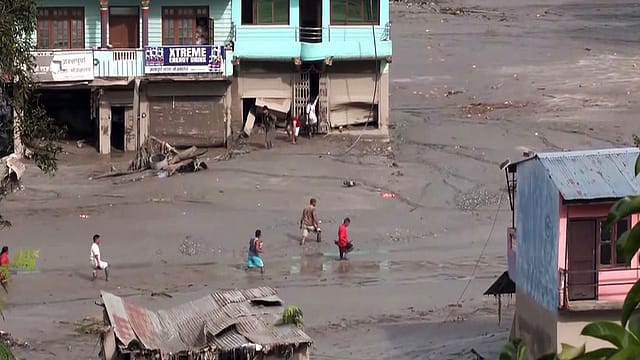
The floodwaters that tore through Nepal this week did not stop at the border.
Neither, it appears, has the response.
Days after a catastrophic flash flood triggered by a massive ice-rock avalanche devastated parts of Nepal's Bhote Koshi region, India says it is closely monitoring the situation, dispatching aid, coordinating rescues and preparing for possible downstream impacts in its own border states. The latest update came from Minister of State for External Affairs Kirti Vardhan Singh, who said India was extending "all possible assistance" to Nepal as the Himalayan nation grapples with one of the worst natural disasters in its recent history.
But this story is no longer just about aid.
It is about geography, shared rivers, missing Indians, climate-linked disasters and a crisis that is testing one of South Asia's closest bilateral relationships.
What exactly happened in Nepal, and why is the disaster so significant?
The disaster began on August 26, when a massive collapse of ice, rock and debris high in the Himalayas triggered a catastrophic flood in the Bhote Koshi river system near the Nepal-China border. Entire settlements were swept away, roads vanished, bridges collapsed and critical infrastructure suffered extensive damage. Reuters described it as one of the most destructive flood disasters the region has witnessed in years.

Zeroing In on ECI
09 Oct 2026 - Vol 05 | Issue 41
Constitutional legitimacy versus political opportunism
The scale of the tragedy has continued to grow as rescue teams reach isolated areas.
According to figures cited by Nepal's authorities and multiple media reports, hundreds have died and thousands remain missing. Nepal President Ramchandra Paudel said the disaster had claimed 626 lives, while thousands of families have been affected across the country.
The International Federation of Red Cross and Red Crescent Societies estimates that more than 90,000 people have been directly affected.
Why is India so deeply involved in Nepal's flood response?
Because this is not a distant foreign disaster.
India and Nepal share an open border, interconnected river systems, deep economic ties and millions of people who move between the two countries every year.
The flood zone is also linked to important pilgrimage and tourism routes used by Indian travellers heading towards Kailash Mansarovar and other Himalayan destinations. Reuters reported that hundreds of foreign nationals were caught in the disaster zone, including Indians.
Prime Minister Narendra Modi spoke to Nepal Prime Minister Balendra Shah shortly after the disaster and assured Nepal of "all possible humanitarian assistance", according to the Indian government and multiple media reports.
That commitment has since evolved into a broader rescue and relief effort.
What is India doing on the ground right now?
According to MoS Kirti Vardhan Singh, India's first response was to activate emergency communication channels.
The Indian Embassy in Kathmandu set up round-the-clock helplines for affected Indians and their families, while the Ministry of External Affairs established a 24x7 control room in New Delhi to coordinate rescue and relief efforts.
India has also sent multiple consignments of humanitarian aid, medicines and emergency supplies to Nepal. Reports from Kathmandu indicate that at least three relief flights carrying assistance have already reached the country.
Kirti Vardhan Singh said India continues to provide assistance in accordance with the requirements identified by Nepalese authorities.
How many Indians have been affected by the Nepal floods?
That number has been changing as rescue operations continue.
Early reports suggested that more than 100 Indians were among those missing in the immediate aftermath of the floods.
Nepal's Ministry of Foreign Affairs later released data indicating that Indian nationals were among the foreign citizens affected in the disaster zone. Rescue efforts involving Indian workers, tourists and pilgrims have continued over the past several days.
Indian authorities have also been coordinating the safe return of stranded citizens from Nepal.
Why has India deployed disaster-response teams near its own border?
This is where the story becomes larger than Nepal.
Kirti Vardhan Singh said National Disaster Response Force (NDRF) teams have been positioned in sensitive areas along the India-Nepal border, including parts of Uttar Pradesh and Bihar.
The reason is simple.
Many Himalayan rivers do not recognise international boundaries.
Floodwaters, debris and sudden surges can travel downstream and affect communities hundreds of kilometres away. Authorities are therefore monitoring river levels and preparing evacuation plans if conditions worsen.
Officials have also warned about secondary risks, including the possibility of further flooding linked to a newly formed lake created by the disaster. AP reported that experts remain concerned about additional flood events if the lake breaches or destabilises.
Why are experts calling this more than just a flood?
Because many scientists believe this was not a typical monsoon flood.
According to Reuters, the disaster appears to have been triggered by a massive ice-rock collapse in the Himalayas, which unleashed an enormous debris flow downstream.
The event has reignited concerns about climate-related risks in the Himalayan region.
Glacial retreat, unstable mountain slopes and increasingly unpredictable weather patterns are making such disasters more frequent and harder to predict, experts have warned.
In other words, Nepal's tragedy may also be a warning about the future of the Himalayas.
Why Nepal's thank-you message to India matters
On Saturday, Nepal President Ramchandra Paudel publicly thanked India for what he described as its "generous support and solidarity" during the crisis. He also expressed condolences for Indian lives lost in the disaster.
Diplomatic statements often pass quietly.
This one did not.
It reflected how closely the two countries remain linked during moments of crisis.
For many in Nepal, India's aid arrived when roads were destroyed, communication networks were disrupted and thousands were waiting for help.
What happens next?
The immediate focus remains rescue and relief.
Thousands are still unaccounted for, survivors require food, shelter and medical care, and authorities continue to monitor the risk of further flooding. UNICEF and international relief agencies have warned that tens of thousands of people, including children, urgently need assistance.
For India, the challenge is twofold.
Helping a neighbour recover from catastrophe.
And ensuring that the same rivers carrying destruction through Nepal do not create a second crisis downstream.
That is why this story is no longer just about Nepal's flood.
It is about how a disaster in the Himalayas can quickly become a regional emergency—and how countries on both sides of the border are racing to stay ahead of it.
(With inputs from ANI)