Manipur Schools Shut Over ‘No NRC, No Census’ Protests: Inside the Delimitation, Citizenship and Census 2027 Showdown
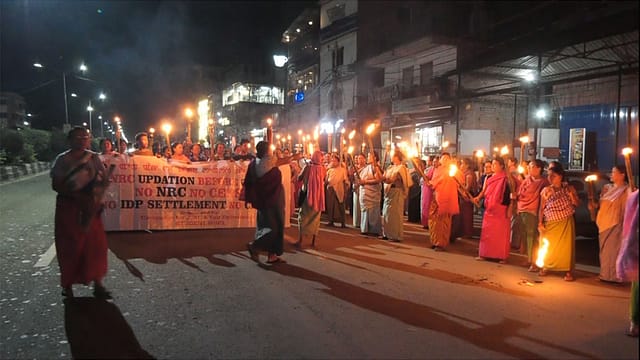
Schools and colleges across Manipur have been ordered shut through August 22 as a campaign against the Census pushes the state into another confrontation over population, identity and political representation.
The Campaign for Just and Fair Delimitation, or JFD, has adopted the slogan “No NRC, No Census”. It wants the National Register of Citizens updated before the Census proceeds and thousands of people displaced by Manipur’s ethnic conflict resettled before they are counted.
Torch rallies, marches and a general strike have disrupted life across the state. Police used tear gas during a confrontation outside the Imphal East deputy commissioner’s office, according to The Economic Times. The immediate argument is about which exercise should come first. The deeper fight is about which population figures will eventually determine constituencies, government resources and the balance of power between Manipur’s regions and communities.
The Modi Years
02 Oct 2026 - Vol 05 | Issue 40
A Nation Rebuilt
Here is why a routine national headcount has become a political flashpoint.
Why has the Manipur government closed educational institutions?
The government cited the “prevailing law and order situation” while ordering every school, college, university and higher-education institution to remain closed from August 20 through August 22. The order covers institutions affiliated with the Board of Secondary Education Manipur, the Council of Higher Secondary Education Manipur, the Central Board of Secondary Education and other boards. Government, aided and private institutions have all been included.
The shutdown follows rallies and a strike called by the JFD as the first stage of Census 2027 begins in Manipur. Protesters have tried to march to government offices and stop census-related activity until their demands are accepted. The closure is a preventive law-and-order step. It is not an announcement that the Census itself has been suspended.
What does the JFD want?
The campaign wants three events to occur in a particular sequence. First, it wants an NRC exercise to identify Indian citizens and detect alleged illegal immigrants. Second, it wants internally displaced people, or IDPs, resettled in their original areas. Only after that, it argues, should the Census count Manipur’s population and any delimitation exercise use those figures.
The JFD fears that conducting the Census before verifying citizenship could include undocumented migrants in the state’s population data. It also argues that counting people while tens of thousands remain displaced could distort the demographic picture of districts and constituencies. Its student wing called a general strike after demonstrations demanding that Census activity be deferred. Women’s groups, market vendors, students and other civil-society organisations have joined different phases of the campaign. The strike was reportedly timed to coincide with the start of self-enumeration for Census 2027 in the state.
Are the Census and NRC the same thing?
No. They answer fundamentally different questions. The Census asks: How many people are living in India, where do they live and what are their social, economic and housing conditions? The NRC asks: Who qualifies as an Indian citizen? A census counts residents. It is not a citizenship test, and inclusion in census data does not confer Indian citizenship. Foreign nationals living in India can be counted because the objective is to record the population present in the country, not determine voting rights or nationality.
An NRC requires people to establish citizenship through documents and eligibility rules. Anyone excluded can face objections, appeals and potentially proceedings under laws governing foreigners, depending on the legal framework adopted. The Census is a nationwide constitutional and administrative exercise. An NRC is a separate citizenship-verification process and cannot simply be inserted into the Census by a state protest group or local administration.
Does being counted in the Census make an undocumented migrant a citizen?
No. This is one of the most important distinctions in the dispute. Census inclusion records a person as part of the population. It does not grant a passport, voting rights, citizenship or permanent legal status. Protesters are concerned about a different consequence. Population data influence the distribution of public resources, administrative planning and, eventually, electoral boundaries. Their argument is that even if the Census does not confer citizenship, counting alleged undocumented migrants can still affect the political and economic weight of an area.
Critics of the NRC-first demand can respond that a national population count must record everyone living in a place precisely because governments need accurate information about housing, health, education and infrastructure. Excluding residents from the data would not make them disappear from schools, hospitals or settlements. The clash is therefore between two purposes: measuring the population as it exists and verifying who legally belongs to it.
Has the actual population count already begun in Manipur?
Not yet. The activity now underway is the preparatory housing phase. Census 2027 will be conducted in two broad stages. According to the Press Information Bureau, the first is the House Listing and Housing Census, scheduled across states and Union Territories between April and September 2026. It records houses, household amenities and assets. Manipur’s optional digital self-enumeration window began on August 17. House-to-house listing is scheduled from September 1 to September 30, according to the state schedule reported by Imphal Times.
The main population enumeration, which counts individual residents, is scheduled for February 2027. This makes the current showdown partly pre-emptive. Protesters are trying to halt the machinery before the actual headcount begins, fearing that once the process gathers momentum, their demand for an NRC-first sequence will be ignored.
Why has the Census become linked to delimitation?
Because population figures can determine political representation. Delimitation redraws the boundaries of Lok Sabha and Assembly constituencies so that constituencies reflect changes in population. Under Article 82 of the Constitution, Parliament enacts a delimitation law after a Census, as the Election Commission of India explains. In Manipur, constituency boundaries carry exceptional political sensitivity because the state’s population is distributed unevenly between the Imphal Valley and the surrounding hill districts. Seats influence government formation, control over legislation and access to political power.
Civil-society organisations worry that disputed population growth in particular districts could change the number, size or boundaries of constituencies. They want citizenship status settled before new population figures enter the delimitation process. The link is not immediate. Completing the Census does not automatically redraw a constituency the next morning. Parliament must establish the legal framework and a Delimitation Commission must conduct the exercise. But protesters see Census data as the foundation on which those future lines will be drawn.
Why is delimitation especially contentious in Manipur?
Manipur did not implement the constituency redrawing attempted on the basis of the 2001 Census. The exercise was deferred in 2008 amid concerns about defective population figures and risks to peace and public order. As a result, the state’s constituency arrangement continues to rest substantially on older delimitation orders. Political parties have repeatedly warned that using disputed demographic figures could move seats between districts and inflame ethnic tensions. Fifteen parties wrote to the Governor in 2025 seeking another halt, arguing that anomalous population increases in some hill areas could distort representation, The Times of India reported.
For JFD, the name “Just and Fair Delimitation” captures the campaign’s end goal. Its NRC demand is a proposed filter intended to ensure that future constituency boundaries are based, in its view, on a verified citizen population. That demand also raises a constitutional question. Indian constituencies have traditionally been delimited using total population, not only the number of citizens or registered voters.
Why are internally displaced people central to the agitation?
Because displacement can separate people from the homes, villages and districts where they ordinarily belong. Manipur’s ethnic violence uprooted tens of thousands of residents. Many continue to live in relief camps or temporary accommodation away from their original settlements. Protesters fear that a Census conducted before resettlement could produce a demographic snapshot shaped by conflict. Areas emptied by violence could appear to have lost population, while districts sheltering displaced families could record temporary increases.
The immediate house-listing phase creates another difficulty. Homes may have been destroyed, abandoned or left inaccessible, even though their residents intend to return. Census officials have procedures for counting people at their usual or present place of residence, but in a deeply divided state, the treatment of displaced communities can quickly become political. JFD wants resettlement completed first so the Census reflects what it considers Manipur’s legitimate and settled demographic map. Waiting for complete resettlement, however, could delay the exercise indefinitely. The government has not yet returned every displaced family to its original home, and security conditions remain uneven.
Why is an NRC being demanded in Manipur?
The demand grows from longstanding fears about migration across India’s northeastern borders, sharpened by the conflict and instability in neighbouring Myanmar. Several organisations argue that undocumented migration threatens indigenous communities, land rights, employment and political representation. They want a register that separates citizens from people who entered the state illegally. Manipur’s Home Minister Govindas Konthoujam has reportedly said the state is prepared to undertake an NRC exercise within the constitutional and legal framework and has informed the Union government.
But readiness is not the same as authorisation. Citizenship falls primarily within the Union’s domain, and a legally defensible NRC would require a defined process, eligibility rules, documentary standards, an objection mechanism and appeals. The state government cannot settle those issues merely by announcing political support.
What would be the cut-off year for a Manipur NRC?
That remains a major unresolved question. Some organisations, including the United Naga Council, have demanded that the 1951 NRC be updated using 1951 as the base year. Other groups have previously proposed different cut-off dates. Assam’s NRC used March 24, 1971, because of the state’s distinct legal and historical framework linked to the Assam Accord. That date cannot automatically be transferred to Manipur. Choosing a cut-off year would determine which families must prove how far back their presence extends. The older the date, the harder documentation becomes, particularly for poorer residents, tribal communities, women whose names or residences changed after marriage and people whose records were destroyed or never created. Until the cut-off date and acceptable documents are fixed, “implement the NRC” remains a political demand without a complete administrative design.
Does every community support the NRC-first campaign?
Support has spread across several civil-society and political organisations, but it should not be mistaken for a settled consensus on how an NRC would work. Different groups can support citizenship verification for different reasons while disagreeing over the cut-off year, village recognition, territory, documentation and the treatment of particular populations. Migration allegations in Manipur are also entangled with the continuing divide between Meitei, Kuki-Zo and Naga communities. Any verification exercise conducted without broad trust could deepen suspicion rather than resolve it. An NRC can exclude genuine citizens who lack documents as well as identify people who do not qualify. Assam’s experience demonstrated how a long and expensive process can leave families fighting over records and status for years.
Can protesters legally stop the Census?
The Census is conducted by the Union government under central law. A state-level campaign cannot formally cancel it. Protests, strikes and disruption can make fieldwork difficult, delay local operations or force the administration to revise security arrangements. The Union government could also change a schedule if conditions make enumeration impractical. But a political demand for an NRC does not create a legal requirement that citizenship verification precede the Census. The government must now decide whether to continue the schedule under heavy security, open negotiations over safeguards for displaced people or seek a temporary adjustment. Pushing ahead without public cooperation could undermine data quality. Suspending the exercise without a clear legal plan for the NRC could reward disruption without resolving the dispute.
What happens after August 22?
The education order expires after August 22, but the underlying confrontation will remain. The self-enumeration window runs until the end of August, while door-to-door house listing is scheduled for September. That gives the JFD further opportunities to organise marches, strikes and attempts to obstruct fieldwork. The campaign has warned of a stronger agitation if the government does not act. The administration, meanwhile, must protect enumerators, reopen institutions and prevent the dispute from feeding Manipur’s existing ethnic tensions. The next move belongs partly to New Delhi. An NRC requires a legal and administrative decision that extends beyond Manipur’s Education Department or state police.
What is this showdown really about?
The Census counts people. The NRC verifies citizenship. Delimitation converts population data into political boundaries. Manipur’s protesters have tied all three together because they fear that counting first will shape representation before citizenship disputes and displacement are resolved. Yet reversing that order creates a different risk. A complex NRC could take years, face litigation and exclude genuine residents, leaving India’s first Census since 2011 hostage to a citizenship exercise without agreed rules. Schools have closed for three days. The argument threatening to keep Manipur on edge will last much longer. At its heart lies a question that no population table can answer on its own: in a state fractured by conflict and displacement, who gets counted where, and who gets to decide who belongs?
(With inputs from ANI)