Man ordered dinner on Zomato. 40 minutes later, he says he found two people eating it
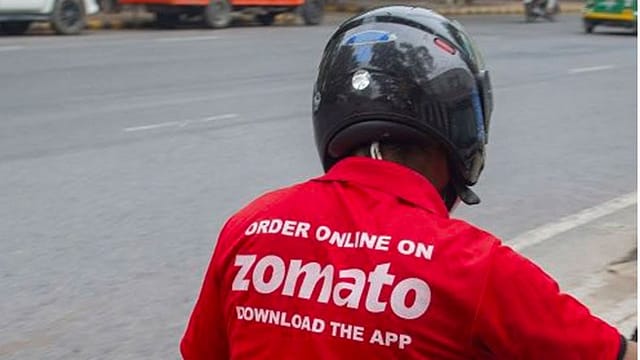
There are two kinds of people when a food delivery is late.
The first refreshes the app every 30 seconds.
The second starts wondering whether the delivery rider has somehow entered another dimension.
Rishabh Kaushik appears to belong to a third category.
He went looking.
And what he says he found has turned one missing dinner into a viral debate about food delivery, tracking apps and who is actually responsible for your meal once it leaves the restaurant.
The Zomato order that wouldn't arrive
According to Kaushik's posts on X, he ordered dinner from Khadak Singh Ka Dhaba through Zomato at around 10:58 pm on September 6.
The app indicated that the delivery partner was nearby.
But the food wasn't.
So Kaushik opened the live order tracker and noticed something odd: the delivery partner's location appeared to remain at the same spot for nearly 40 minutes.
Zeroing In on ECI
09 Oct 2026 - Vol 05 | Issue 41
Constitutional legitimacy versus political opportunism
At some point, watching a tiny icon refuse to move apparently became less satisfying than finding out what was actually happening.
So he went to the location himself.
What did he say he found there?
This is where the story gets bizarre.
Kaushik said he reached the location shown on the tracker and found two people eating food that he believed was his order.
He photographed the scene and shared the pictures alongside screenshots of the order tracker on X.
In another post, he alleged that he was told the food had been sold for ₹100.
His version of events quickly spread online, with users debating how a customer's paid-for meal could allegedly end up with someone else while the order continued to appear active on the app.
India Today initially reported that Kaushik had found the delivery rider eating his food, but later published a correction, clarifying that, according to Kaushik, the food had instead allegedly been sold to two men for ₹100.
That distinction matters.
Because right now, the allegation is Kaushik's account — not an established finding against the delivery partner.
What did Zomato say?
Zomato's response was considerably less dramatic.
Its customer-support handle, Zomato Care, replied to Kaushik on X and asked him to share his order ID so the company could investigate.
Zomato has not publicly confirmed that a delivery partner sold or consumed the food.
Hindustan Times also reported that the allegation remains based on the customer's account, with the company yet to publicly establish what happened to the order.
In other words, there are currently two versions of the story:
Kaushik's: the tracker led him to his missing dinner.
Zomato's: give us the order details so we can find out what happened.
The investigation is the missing middle.
Why did the delivery tracker become the star of the story?
Because the strange part isn't simply that a food order allegedly went missing.
It's that the customer says the app showed him where to look.
Food delivery apps have turned waiting for dinner into something resembling air-traffic control. You can watch the restaurant prepare the order, see when the rider picks it up and follow a little moving dot towards your home.
Usually, that dot is reassuring.
This time, according to Kaushik, it became a clue.
The screenshots he shared appeared to show the delivery partner's location staying put while the order progressed, even though the food had not reached him.
And then the internet got involved
Once Kaushik posted the screenshots and photographs, the missing-dinner mystery became a much bigger conversation.
Some users shared their own complaints about delayed or cancelled late-night orders. Others suggested using cash on delivery when available, arguing that customers may have more protection when an order never arrives.
But that advice is social-media opinion, not evidence that COD would have prevented this particular incident.
The more interesting concern raised online was about trust.
If a customer cannot be certain what happens to an order between the restaurant and the doorstep, where does responsibility sit?
With the restaurant?
The delivery partner?
The platform?
Or all three?
Does this prove a food-safety problem?
Not by itself.
Some users raised the possibility of food tampering, but there is currently no evidence that Kaushik's food was deliberately tampered with.
What the episode does highlight is a more basic consumer concern: once food has left a restaurant, customers rely heavily on the delivery chain to keep the order intact and get it to the right person.
That is why the company's investigation matters more than the social-media speculation.
For now, there is a viral post, photographs, tracker screenshots, a customer's allegation — and a company asking for the order ID.
And somewhere in all of that is one very simple question:
Where did that dinner actually go?
Until Zomato completes its investigation, that's the part nobody can answer for certain.
(With inputs from yMedia and agencies)