Kolkata hotel fire kills 9, exposes a dangerous question: How safe are the city’s budget hotels?
At around 2 in the morning, a hotel room is supposed to be the safest place in the building. The lights are off. The city outside has gone quiet. Guests are asleep.
Then the smoke arrives.
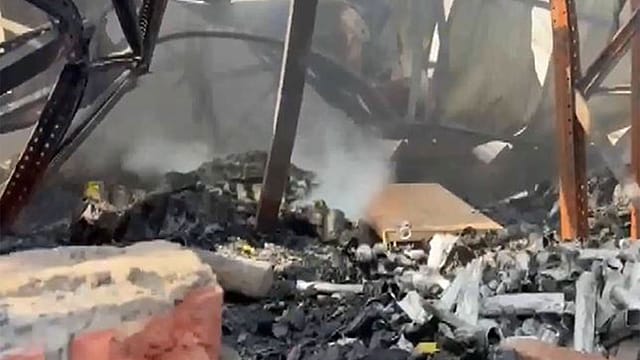
That is what happened in central Kolkata on Wednesday, when a fire broke out at a five-storey building on Mirza Ghalib Street, near New Market. By the time firefighters reached the scene, smoke had spread through the building and trapped guests inside.
Nine people died. Six others were injured.
Among the dead was a four-year-old child, according to The Times of India. The victims included six men, two women and the child, while 60 people were reportedly rescued.
And then came the questions. Not just about how the fire started. But about how a building full of sleeping guests became so difficult to escape from.

The Health and Wellness Issue
25 Sep 2026 - Vol 05 | Issue 39
The fire began while people were sleeping
The blaze broke out at around 2 am at the hotel on Mirza Ghalib Street. Four fire tenders were sent to the spot, according to fire brigade officials. The operation continued for several hours before the fire was brought under control. The precise cause is still under investigation.
Initial findings reported point towards a possible electrical short circuit, rather than the “air-conditioner explosion” mentioned in some early reports. Poor ventilation and narrow exits also reportedly made the situation worse by allowing smoke to spread and making evacuation harder.
A fire can start from something as mundane as faulty wiring. What turns it into a mass-casualty event is often what happens next.
Can people hear an alarm? Can they find the exit? Is there another way out? Can firefighters reach the upper floors?
The real danger may have been the smoke
Imagine waking up in darkness and finding the corridor outside your room filled with smoke. You cannot see the staircase. You do not know which way to run. And every second you spend searching for an exit means breathing more smoke. That appears to have been one of the biggest challenges at the Kolkata hotel.
Poor ventilation and narrow exits hindered evacuation and allowed smoke to accumulate.
It is an important reminder that people trapped in fires do not necessarily die from flames. Smoke can become the killer long before the fire reaches a room.
Why were so many people staying here?
There is another part of this story that can easily get lost beneath the death toll.
The Mirza Ghalib Street–Free School Street–Marquis Street belt is one of central Kolkata’s most important budget-hotel clusters. It has long been known for catering to visitors from Bangladesh, many of whom come to Kolkata for medical treatment.
The area reportedly became a major accommodation hub for Bangladeshi visitors, particularly medical tourists.
These are not just hotels. For many visitors crossing the border for treatment, they are temporary homes.
And then there was another hotel fire
The timing has made the Kolkata tragedy even more unsettling.
Just two days earlier, on Monday, a hotel fire in Tarapith, Birbhum, killed nine people, including two children, according to Hindustan Times and The Times of India. Five members of a family from Meghalaya were among those killed. The Tarapith tragedy has already triggered an administrative response.
15 hotels in Chandipur, Tarapith, were reportedly ordered shut after officials found deficiencies including missing fire-safety certificates and other statutory clearances.
Put the two incidents next to each other and the obvious question emerges: Are these two terrible coincidences — or a warning about how some hotels are being allowed to operate?
It would be premature to declare a statewide systemic failure based on two fires alone. But the sequence is difficult to ignore.
Kolkata has been here before
Kolkata's older commercial neighbourhoods are full of buildings where hotels, restaurants, shops and offices operate inside dense, ageing structures. Narrow lanes and congested buildings can make both evacuation and firefighting difficult.
There is history here, too.
In 2010, The Indian Express reported fire-safety concerns in the Mirza Ghalib Street area itself, including narrow passages and allegations of hazardous commercial activity. The report noted that the locality had experienced multiple fires in previous years.
And in 2022, a fire at another guest house on Mirza Ghalib Street killed a 60-year-old Bangladeshi woman who had come to Kolkata for medical treatment. Police at the time suspected an electrical short circuit and found that the guest house lacked firefighting equipment.
That history makes Wednesday's fire harder to dismiss as an isolated accident.
The questions now go beyond the hotel
Was the building compliant with fire-safety requirements? Were exits adequate and accessible? Were alarms and firefighting equipment functional? Had the premises been inspected? Were all the required licences and clearances in place? And, perhaps most importantly, who was responsible for checking?
Those are questions for investigators and regulators to answer.
Kolkata Police have registered a case and the investigation is underway, while authorities are examining the circumstances surrounding the blaze. The cause of the fire has not yet been conclusively established.
A hotel room should not become a trap
There is something particularly frightening about a hotel fire.
At home, you know where the front door is. In a hotel, you are borrowing someone else's building. You may not know the layout. You may not know where the stairs are. You may not even know whether the door at the end of the corridor leads somewhere useful.
That is why fire safety in hotels cannot be treated as paperwork. A certificate on a wall cannot help a sleeping guest if an alarm does not work. An emergency exit cannot save anyone if it is blocked. And a staircase is not really an escape route if smoke makes it impossible to reach.
Nine people died in a Kolkata hotel on Wednesday. The investigation will determine what started the fire. But the harder question is already staring the city in the face: When the next hotel guest goes to sleep, can they be certain that the building around them is actually safe?
(With inputs from yMedia and agencies)