A Frog Apart: Why Darjeeling’s Marbled Cascade Frog Faces an Uncertain Future
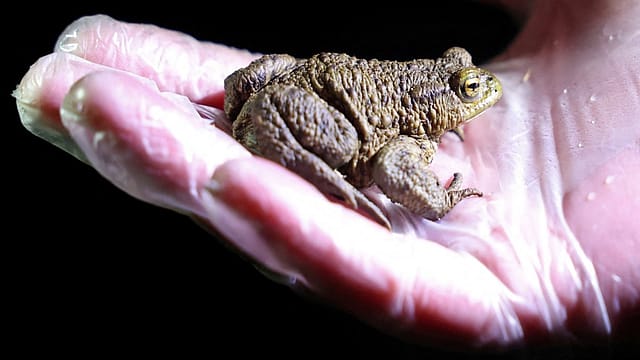
In the Darjeeling Hills, the monsoon brings a familiar practice: catching frogs perched on rocks and bushes after dark. Locally known as ‘Sisne Paha’ or ‘Sisne Paa’, the Marbled Cascade Frog has been harvested for generations for food and traditional medicine.
Now, a study of its DNA has revealed something that familiarity might conceal. These frogs belong to a genetically distinct population, separated from others elsewhere in Asia and carrying significantly less genetic diversity.
For a species inhabiting the waterfalls, fast-flowing streams and rocky rivulets of the eastern Himalayas, that combination raises a conservation concern. Its evolutionary history has left it with a limited pool of genetic variation. Continued hunting could make that pool smaller still.
Published in BMC Genomics, the study brings together an ancient story of separation and a present-day question: how do you protect a population whose vulnerability is written into its DNA?

The Health and Wellness Issue
25 Sep 2026 - Vol 05 | Issue 39
WHAT DARJEELING’S FROG DNA REVEALS
The research involved 12 scientists from the University of Calcutta, Banaras Hindu University, the Zoological Survey of India, Darjeeling Government College and Tamralipta Mahavidyalaya.
The team collected samples from 57 locations across the Darjeeling Hill region, surveying habitats at elevations ranging from 200 to 2,400 metres. Researchers examined the physical characteristics of 60 frogs and analysed DNA from 35 specimens. The Zoological Survey of India in Kolkata confirmed the species’ identity as Amolops marmoratus.
Using two genetic markers, 16S rRNA and COI, the scientists compared the Darjeeling samples with sequences from other Asian populations. Among the populations compared, Darjeeling’s frogs had the lowest genetic diversity. Those from Myanmar, Southeast Asia and China showed relatively greater variation.
The genetic distance was greatest between the Darjeeling and Chinese populations. The smallest difference was between the Myanmar and Southeast Asian populations.
The findings place the Darjeeling frogs on a distinct branch of the species’ evolutionary family tree.
“This is the first study combining morphological and genetic analysis of this species from the Darjeeling Hill Region,” said Dr Rakesh Tamang of the University of Calcutta’s Department of Zoology, who led the research. “The population is distinct and exhibits low diversity; this factor cannot be overlooked when formulating conservation policies.”
AN EVOLUTIONARY STORY MILLIONS OF YEARS OLD
The DNA analysis also allowed the researchers to look far beyond the present-day streams where the frogs were found.
Their estimates suggest that the common ancestor of the species in Asia lived approximately 17.4 million years ago. The South Asian lineage associated with Darjeeling diverged around 11.2 million years ago, while the current Darjeeling lineage spread across the region approximately 940,000 years ago.
These are estimates drawn from genetic data, offering a reconstruction of how the population emerged and expanded.
According to Dr Kumaresh Mandal, the population originated from a small group through what scientists call a “founder effect”, and subsequently expanded rapidly. A population established by relatively few individuals begins with a limited share of the genetic variation found in the larger population from which it originated.
That history helps explain the pattern in the Darjeeling samples: a separate branch on the evolutionary tree, but little variation within it.
The researchers identify geographical isolation, limited gene flow and historical population events as the main reasons for the frogs’ low genetic diversity.
WHY LOW GENETIC DIVERSITY MATTERS
Being genetically distinct makes this Himalayan population scientifically significant. Having little genetic variation also leaves it vulnerable.
BHU gene scientist Professor Gyaneshwer Chaubey explained the concern: “Populations with low genetic diversity are more vulnerable to climate change, disease, and inbreeding.”
The study also points to a gap in scientific knowledge. These frogs inhabit a region celebrated for its biodiversity, yet their genetic diversity has received limited attention.
“Very little work has been done so far on the diversity of frogs in the Himalayas; the Eastern Himalayas lag behind the Western Ghats in this regard,” Chaubey said.
The research provides a starting point for closer monitoring. It generated COI gene sequences from Darjeeling specimens of the species for the first time. The team said these could support future DNA barcoding and environmental DNA, or eDNA, monitoring.
HUNTING ADDS TO THE PRESSURE
Against this background of genetic isolation, the researchers identify local consumption as a modern pressure that could further reduce diversity.
Two frog species are primarily consumed in the region: Amolops marmoratus and Nanorana liebigii. The Marbled Cascade Frog is more widely distributed and, according to the study, consequently faces greater local harvesting pressure.
The conservation challenge therefore involves both the frog’s habitat and the communities that have harvested it for generations.
“Conservation efforts will remain incomplete without raising awareness among local communities,” Chaubey said.
The team recommends curbing unregulated hunting, building local awareness and protecting frog habitats, particularly streams at low to medium elevations. Mandal also stressed the importance of safeguarding these genetically unique populations and their long-term evolutionary potential.
There is a wider reason to pay attention to what happens along these streams. Frogs are indicators of water quality and ecological health; their decline can signal stress across the mountain’s aquatic ecosystem.
The familiar frog on a monsoon rock carries a history stretching back millions of years. Protecting its future will depend on what happens now—in the streams it inhabits and among the people who share them.
With inputs from ANI