'Justice Must Travel to Citizens': CJI Surya Kant Calls for a More Humane and Accessible Legal System
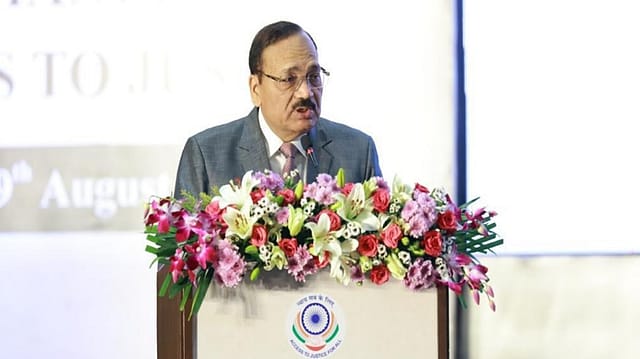
Justice should not wait behind courtroom doors. It should knock on people's doors.
That was the powerful message from Chief Justice of India Surya Kant on Saturday as he argued that India's justice system must reach those who cannot reach it. "Justice must travel to the citizen, rather than expecting the citizen to travel to justice," the Chief Justice said while addressing the inaugural session of the West Zone Regional Conference of the National Legal Services Authority (NALSA) in Indore.
Calling dialogue, dignity and inclusion the three pillars of meaningful access to justice, Justice Kant said the Constitution's promise of equal justice can be fulfilled only when legal institutions become more humane, more accessible and more responsive to the realities of ordinary citizens. He stressed that access to justice begins not with laws or court orders but with listening.

Rise of the Pivotal Power
18 Sep 2026 - Vol 05 | Issue 38
The BRICS declaration is a strategic victory for Modi
Whether it is NALSA, State and District Legal Services Authorities or para-legal volunteers working at the grassroots, every institution, he said, must remain connected to the people it serves. A tribal family in Madhya Pradesh, a fisherfolk community in Goa, a migrant worker in Gujarat and a woman seeking legal assistance in Mumbai all face different challenges, making a one-size-fits-all approach ineffective.
Justice Kant also urged legal institutions to communicate in simple, familiar language instead of legal jargon, arguing that the justice system must learn from communities just as much as it seeks to guide them. He said dignity begins long before a courtroom pronounces judgment.
For many citizens, their first interaction with the legal system is through a legal aid clinic or district authority office. A patient explanation, respectful conversation and someone willing to listen can make the difference between fear and trust, he observed. "The real test of an institution is not how well it serves those who can reach it, but how effectively it reaches those who never can," the Chief Justice said.
Highlighting initiatives such as Tele-Law, which has facilitated more than one crore pre-litigation consultations, Nyaya Bandhu, which connects pro bono lawyers with those in need, and mobile legal aid clinics serving remote and tribal areas, Justice Kant said technology has significantly expanded access to justice.
But he also sounded a note of caution. "Technology is a bridge, not a destination," he said, emphasising that no digital platform can replace the trust inspired by a compassionate para-legal volunteer, legal aid lawyer or judicial officer sitting across the table and listening with empathy.
Concluding his address, the Chief Justice urged judicial officers, legal aid lawyers and volunteers to translate discussions into action, reminding them that the promise of Article 39A of the Constitution will be fulfilled not through resolutions alone, but only when justice reaches every household that needs it.
(With inputs from ANI)