IndiGo’s big international ambitions face a fuel-cost test: Can Willie Walsh keep growth on course?
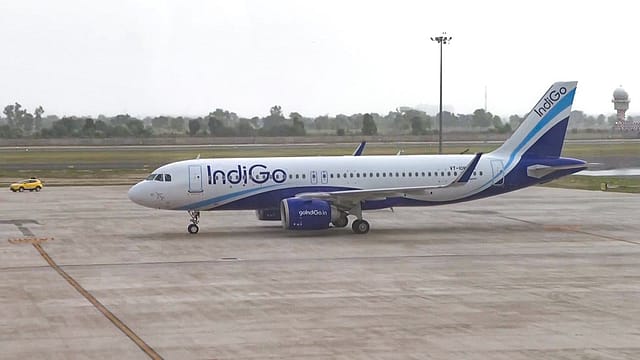
For an airline that has built its reputation on affordable fares and a vast domestic network, the next big challenge lies beyond India’s borders. IndiGo wants to fly farther, compete with established international carriers and offer passengers more premium services. But there is an expensive obstacle in its way: fuel.
At his first in-person media briefing since taking charge as chief executive in August, Willie Walsh acknowledged that the aviation industry was facing an exceptionally difficult operating environment. The airline, he said, would have to maintain a competitive cost base while pursuing its growth plans.
The challenge is already visible in its financial performance. IndiGo reported a net loss of Rs 1,879.1 crore for the July-September quarter, with higher fuel expenses and rupee depreciation weighing on profitability.

The Era of Forever Wars
30 Oct 2026 - Vol 05 | Issue 44
Coping with an explosive Middle East
Why are rising aviation fuel prices such a big problem for IndiGo?
Fuel is one of the biggest expenses for any airline, but Indian carriers face a particularly heavy burden. Walsh said aviation turbine fuel accounts for around 40 per cent of IndiGo's operating costs, compared with approximately 32 per cent for the global aviation industry.
The pressure is not just about crude oil prices. A weaker rupee also makes dollar-denominated expenses, including fuel and aircraft leases, more expensive.
Reuters reported on October 29 that fuel accounted for 37.8 per cent of IndiGo's expenses in the September quarter. The airline's total expenses rose 19.2 per cent to Rs 26,357 crore during the period.
Walsh said IndiGo was not currently planning to hedge fuel prices, a strategy through which airlines lock in prices or manage exposure to future increases. However, he indicated that the airline could reconsider this approach as it prepares to compete in long-haul international markets, where several rivals use fuel-hedging arrangements.
Can IndiGo's Airbus A350 plans transform its international business?
The airline's next major expansion milestone is expected in the second quarter of 2028, when it begins receiving Airbus A350 wide-body aircraft. Walsh believes IndiGo has the foundations to compete in the long-haul market. The aircraft will have a three-class configuration, including 16 lie-flat business-class seats, premium economy and economy.
This marks a significant evolution for an airline traditionally associated with a low-cost model. Its business now extends beyond domestic passenger flights to cargo, premium services and a growing international network.
The A350s are intended to help IndiGo connect India with more distant destinations and compete for passengers who might otherwise choose established international airlines.
How are geopolitical tensions disrupting IndiGo's flight plans?
Expansion is not simply a question of buying aircraft and opening routes. Airspace restrictions and instability in West Asia are affecting how airlines operate.
Reuters reported on November 2 that IndiGo had cut around 30 daily flights because of the prevailing situation in Saudi Arabia. The continued closure of Pakistani airspace to Indian airlines has also forced longer routes on several westbound services, increasing operational complexity and costs.
Walsh said the airline could bring forward expansion in some overseas markets despite these disruptions. Asia-Pacific and Australasia are among the regions being considered, although he did not identify specific destinations.
Why does Navi Mumbai airport matter to IndiGo's growth strategy?
The new Navi Mumbai International Airport offers another opportunity to expand operations in one of India's biggest aviation markets.
Walsh said IndiGo sees a future in which its Mumbai operations are distributed between the existing airport and Navi Mumbai. The additional capacity could support more international services and ease pressure on the airline's operations in the region.
He also called for lower airport charges and taxes, arguing that high costs make it harder for airlines to expand in India.
Can IndiGo maintain its low-cost advantage while going global?
That is the central question facing Walsh. IndiGo operates more than 2,100 flights daily and has a fleet of over 400 aircraft. Its scale gives it a strong platform, but international expansion will bring new competitors, longer routes and higher operating demands.
For now, the airline is trying to do two things at once: protect the cost discipline that made it successful in India and build the capabilities needed to become a larger international player. The A350 deliveries will mark an important step. Whether the economics work will depend on fuel prices, currency movements and how quickly the airline can turn its expansion plans into sustainable growth.
(With inputs from ANI)