India’s next big industrial push is steel: Why 600 million tonnes is the new target
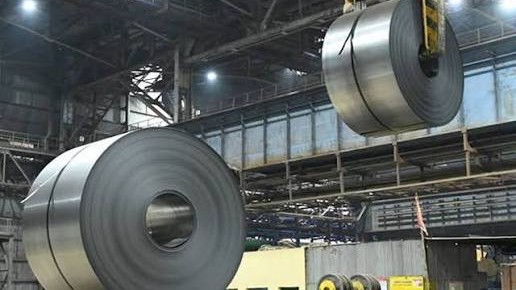
What does India need to build the roads, bridges, homes, factories and cars of the next two decades? A lot of steel. And the government is now preparing a new policy to decide how much India should make, how it should make it and how the industry can remain competitive while becoming cleaner.
Steel Secretary Sandeep Poundrik said on Tuesday that the draft of the new National Steel Policy will be put in the public domain within about a week for comments from industry stakeholders. The new policy is expected to target 600 million tonnes of steelmaking capacity by 2047.
That is a major jump from the existing roadmap. So why is India rewriting its steel policy now?

Zeroing In on ECI
09 Oct 2026 - Vol 05 | Issue 41
Constitutional legitimacy versus political opportunism
Why India needs a new steel policy after 2017
The existing National Steel Policy 2017 was designed around India's steel needs for 2030-31. It set a target of 300 million tonnes of crude steel capacity, 255 million tonnes of production and 230 million tonnes of finished-steel demand and production. But the industry has changed significantly since then.
India's crude steel capacity has expanded, domestic consumption has grown and steelmakers are facing new challenges ranging from global trade pressures to artificial intelligence and decarbonisation. Poundrik said issues such as AI, machine learning and technology upgrades did not have the same policy importance in 2017. The government now wants a roadmap that can take the sector through 2047.
The numbers show why the conversation has moved forward. The Ministry of Steel's data puts India's crude steel capacity at around 222.7 million tonnes as of July 2026, meaning the proposed 600-million-tonne capacity target would be nearly three times today's level.
The 600-million-tonne target is the big number to watch
The new policy is being built around a much longer horizon than its predecessor. The government's earlier plans had focused on reaching 300 million tonnes of capacity by around 2030-31. The new proposal looks towards 2047, when India aims to become a developed economy under its Viksit Bharat vision.
Steel demand is expected to rise alongside construction, infrastructure and manufacturing. The Steel Ministry itself identifies sectors such as construction, automobiles, defence and infrastructure as important drivers of future demand. But producing more steel will not be enough. The industry also has to produce it competitively.
Why cheap steel imports are becoming a policy headache
That brings us to another major part of the new policy: imports.
India has increasingly used trade measures to protect domestic steelmakers from import pressure. In 2025, the government imposed a safeguard duty on certain steel flat products, while the Ministry of Steel has also maintained quality-control requirements aimed at keeping sub-standard steel out of the market. The ministry's own documents say the Quality Control Order covers steel products under 151 Indian Standards, with the aim of ensuring that only steel meeting the required standards reaches users.
Poundrik has said the new policy will look at measures such as safeguard and anti-dumping action against cheap and sub-standard imports. The challenge, however, is broader than simply blocking imports. The government also wants Indian producers to become more competitive through better technology, productivity and quality.
Why smaller steelmakers are getting attention
The new policy is also expected to focus on India's smaller steel producers. The government has proposed a ₹5,000-crore Viksit Bharat Ispat scheme, under which incentives would be linked to production as well as reductions in carbon emissions. Poundrik said better technology, improved raw materials and greater use of renewable energy will be necessary to cut emissions.
That matters because India's steel expansion cannot rely only on large integrated plants. Smaller producers will also have to navigate the industry's transition towards cleaner production.
AI and green steel are changing what a steel plant looks like
Steel may be one of the world's oldest industries, but the technology driving it is changing rapidly. The Steel Ministry has identified artificial intelligence, machine learning, digital twins, robotics and advanced data analytics as technologies that could help the sector improve efficiency and competitiveness. At the same time, decarbonisation has become a central part of the industry's future.
India has already introduced a Green Steel Taxonomy, creating a framework to classify steel according to its emissions intensity. The government is also promoting low-carbon technologies, renewable energy and green hydrogen as part of its effort to reduce the industry's carbon footprint.
The new policy will therefore have to solve two seemingly competing problems: how does India make dramatically more steel while making each tonne cleaner and more competitive?
What happens next?
The immediate next step is the draft itself. Poundrik has said the government will put the proposed policy out for consultation in about a week. Industry players and other stakeholders will then have an opportunity to comment before the framework is finalised. The shift from the 2017 policy to the proposed 2047 roadmap is significant. India is no longer simply asking how it can reach 300 million tonnes of capacity.
It is asking a much bigger question: what should India's steel industry look like when the country reaches 2047?
The answer will involve much more than furnaces and factories — it will shape how India handles imports, technology, smaller producers, energy use and the transition to green steel for decades to come.
(With inputs from ANI)