India's Newest Road Repair Tool? Giant Electric Fans
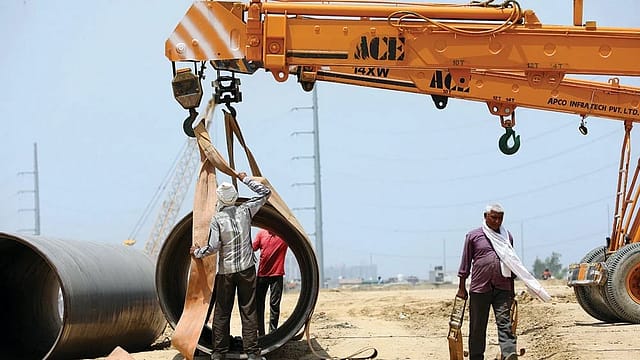
The sight of industrial electric fans lined up along a freshly built expressway to dry out waterlogged soil is not a construction innovation.
It is a confession.
The Kanpur-Lucknow Expressway, barely weeks old, has already caved in under monsoon rain, exposing a pattern of infrastructure failures that stretches far beyond one highway. From Uttar Pradesh to Gujarat, Rajasthan and Kerala, several newly built expressways and national highways have developed cracks, potholes or structural failures soon after opening, raising uncomfortable questions about construction quality, supervision and accountability.
Why were electric fans deployed on the Kanpur-Lucknow Expressway?
Continuous monsoon rain allowed water to seep beneath the pavement, weakening the soil and causing sections of the newly inaugurated expressway to slip. To speed up repairs, engineers deployed high-powered electric fans to dry the moisture trapped beneath the damaged stretch before reconstruction could begin. Videos of the unusual repair method quickly went viral, turning the fans into a symbol of what many saw as an engineering embarrassment. The fans were later removed after widespread criticism.

Rise of the Pivotal Power
18 Sep 2026 - Vol 05 | Issue 38
The BRICS declaration is a strategic victory for Modi
How bad is the situation on the ground?
Bad enough for traffic to be diverted. Vehicles are currently being routed through a single carriageway while repair work continues alongside live traffic. Motorists have also complained of being diverted onto the opposite carriageway after crossing toll plazas, with some alleging they were charged toll without any advance warning of the disruption.
What has alarmed engineers even more is that this is not an isolated defect. The same stretch reportedly required repairs less than a month before the latest cave-in, while road surface slippage has now been reported at several other locations on the expressway.
Who is being held accountable?
The National Highways Authority of India (NHAI) has responded with unusually tough action. It has initiated proceedings to classify construction firm PNC Infratech as a non-performing contractor, suspended toll collection until repairs are completed, and proposed barring key project officials from future NHAI assignments. According to media reports, the contractor will bear the repair cost, estimated at around ₹3 crore. NHAI has also asked IIT Kharagpur to conduct an independent technical investigation into what caused the expressway to fail so soon after opening. India Today had earlier reported that supervisory officials had been removed and debarred from future NHAI projects pending investigation.
Is this the first newly built expressway to run into trouble?
Not at all. The Kanpur-Lucknow Expressway is only the latest addition to a growing list. On the Delhi-Dehradun Expressway, two large potholes appeared near Shamli in Uttar Pradesh less than three months after the highway was inaugurated. The Centre later informed Parliament that the contractor repaired the defects at its own cost under the project's 10-year defect liability clause. The Delhi-Mumbai Expressway has also faced repeated quality concerns. An eight-foot-wide hole reportedly opened in a bridge deck near Ankleshwar in Gujarat, while damaged stretches surfaced in Rajasthan's Dausa and Sawai Madhopur districts. NHAI subsequently initiated action against contractors responsible for the affected sections.
What about the rest of the country?
The problem is not confined to expressways. In Kerala, a 250-metre elevated section of National Highway 66 at Kooriyad in Malappuram district collapsed after foundation soil failed beneath the embankment. Investigations later led to action against officials and contractors, with experts brought in to examine the structural failure, according to The Indian Express.
The issue appears widespread enough for Parliament to take notice. As reported by VnExpress, citing a Rajya Sabha reply by Union Road Transport and Highways Minister Nitin Gadkari, the ministry dismissed 11 officials and initiated disciplinary action against 11 others after failures across 19 national highway projects over the past two years.
What does this pattern reveal?
One collapsed road can be dismissed as bad luck. Several begin to look like a system. Different highways. Different contractors. Different states. Yet the themes remain strikingly similar: water seepage, poor drainage, weak foundations, surface failures and accountability that often arrives only after public outrage. NHAI's own response across these projects — suspending officials, penalising contractors, blacklisting firms, commissioning IIT investigations and halting toll collection — suggests these are not merely isolated engineering glitches but signs of deeper supervision and quality-control challenges.
Why have the electric fans become such a powerful symbol?
Because they tell a story no government press release can. India is investing billions of rupees to build one of the world's fastest-growing highway networks. That ambition has transformed connectivity, logistics and travel across the country. But when a brand-new expressway needs giant pedestal fans to dry its foundation before it can be repaired, the conversation inevitably shifts. It is no longer just about potholes. It is about whether the race to build world-class infrastructure is being matched by the discipline to build infrastructure that lasts. And that is a question far bigger than a few electric fans.
(With inputs from yMedia)