India’s First SME Semiconductor Plant Opens in Rajasthan: What It Means
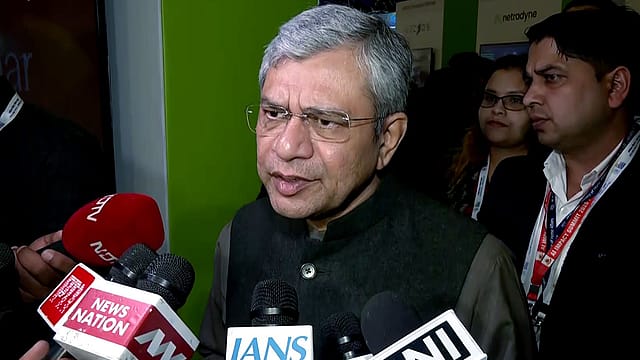
India has taken a notable step in its semiconductor ambitions with the inauguration of its first SME-led chip manufacturing facility by Sahasra Semiconductors Pvt Ltd in Bhiwadi.
The Semiconductor ATMP/OSAT facility—focused on assembly, testing, marking, and packaging of chips—is located within the Electronics Manufacturing Cluster developed by ELCINA at Salarpur, Khushkhera. The inauguration was carried out virtually by Union Electronics and IT Minister Ashwini Vaishnaw in the presence of Rajasthan Chief Minister Bhajan Lal Sharma and Union Minister Bhupender Yadav.
Why is this facility being called a “historic day”?
Highlighting the importance of the development, Vaishnaw said, "A historic day for the state of Rajasthan as it enters the semiconductor industry - a strategically critical industry globally from a geopolitical perspective."
The semiconductor sector is widely seen as a backbone of modern technology, powering everything from smartphones to electric vehicles. By entering this space, Rajasthan—and India more broadly—is positioning itself in a globally competitive and geopolitically sensitive industry.
The Modi Years
02 Oct 2026 - Vol 05 | Issue 40
A Nation Rebuilt
How does this fit into India’s electronics growth story?
The facility aligns with India’s broader push to expand domestic electronics manufacturing. Vaishnaw underlined this growth, stating that production has "grown 6 times to nearly Rs 13 lakh crores" over the past 12 years, while exports have climbed to "around Rs 4.24 lakh crores." He added that "mobile phones have now become India's top export commodity."
These figures reflect a significant shift in India’s manufacturing landscape, with electronics emerging as a key driver of exports and industrial growth.
What does the facility actually produce?
The plant is designed to package semiconductor components rather than fabricate chips from scratch. It will handle memory chips used in Micro SD cards and flash storage devices, along with LED driver ICs, eSIMs, and RFID products.
Spread across 57,000 square feet, the facility includes advanced Class 10K and 100K cleanrooms, which are essential for maintaining the contamination-free environment required for semiconductor packaging.
What is its current and future capacity?
At present, the facility has the capacity to package 60 million semiconductor units annually. However, there are ambitious plans to scale this up significantly, with projections to reach "nearly 400-600 million units annually over the next 2-3 years."
This planned expansion signals confidence in both domestic demand and export opportunities.
How global is the facility’s market reach?
Despite being newly inaugurated, the facility is already export-oriented. More than 60 per cent of its production is being shipped to international markets, including the United States, Germany, France, Eastern Europe, China, and Nepal.
This global footprint highlights India’s growing integration into the semiconductor supply chain.
What role does government policy play here?
The project has been developed under the Ministry of Electronics and IT’s Scheme for Promotion of Manufacturing of Electronic Components and Semiconductors (SPECS), with an investment exceeding Rs 150 crore.
Additionally, the broader Electronics Manufacturing Cluster in Bhiwadi spans 50.3 acres and has been built at a cost of Rs 46.09 crore, supported by Rs 20.24 crore in government funding under the EMC scheme.
How is Rajasthan positioning itself as a semiconductor hub?
Rajasthan is actively working to attract semiconductor and electronics investments. Chief Minister Bhajan Lal Sharma noted that the state introduced a Rajasthan Semiconductor Policy in March 2026 and is developing areas near Delhi-NCR into a manufacturing hub.
The cluster has already drawn planned investments of over Rs 1,200 crore from 20 companies across sectors such as semiconductor packaging, EV components, RFID technologies, and industrial electronics. Eleven companies are already operational, with investments exceeding Rs 900 crore and generating employment for over 2,700 people.
Why was the event held virtually?
The inauguration was conducted online in line with Prime Minister Narendra Modi’s appeal to reduce fuel consumption "in light of the current global situation." This reflects a broader emphasis on efficiency and sustainability in official engagements.
(With inputs from ANI)