India’s economic outlook turns “uncertain” amid West Asia conflict: Finance Ministry
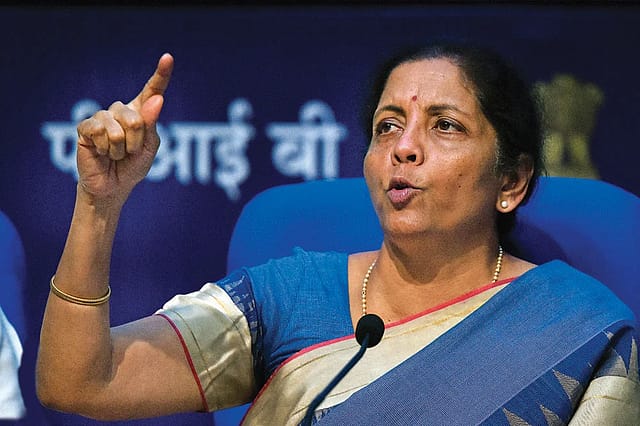
India’s economic outlook has turned “more uncertain” due to West Asia tensions disrupting energy and trade routes, even as domestic growth, credit expansion, and services exports continue to provide resilience.
India’s economic trajectory, which remained steady until early 2026, is now facing fresh headwinds as geopolitical tensions in West Asia begin to ripple across global markets.
According to the latest Monthly Economic Review released by the Department of Economic Affairs under the Ministry of Finance, the ongoing conflict has disrupted key global supply chains, especially in energy and logistics, critical pillars of India’s economic stability.
How is the West Asia conflict affecting global energy and trade?
The report flags serious disruptions in one of the world’s most critical energy corridors—the Strait of Hormuz.
The Modi Years
02 Oct 2026 - Vol 05 | Issue 40
A Nation Rebuilt
It notes: "The economic outlook has become more uncertain in the wake of recent geopolitical developments in West Asia, which have disrupted key energy and logistics channels and led to a tightening of global supply conditions."
The scale of disruption is stark. Ship movements through the Strait have nearly come to a standstill. As the review highlights: "one a week, as against 200-300 a week,"
This dramatic slowdown has tightened global oil and gas supply, pushing prices higher and increasing volatility across international markets.
What risks does this pose for India’s economy?
The Finance Ministry outlines multiple transmission channels through which the crisis could impact India.
The report warns of: "supply disruptions to oil, gas and fertilisers... higher import prices, higher logistics costs... and a possible decline in remittances by Indians in the Gulf countries."
These risks are particularly significant for India, which relies heavily on energy imports and has a large expatriate workforce in the Gulf region contributing to remittance inflows.
Was India’s economy strong before this crisis?
Despite the emerging risks, the review makes it clear that India entered this phase from a position of strength.
It states: "Prior to the onset of these developments, economic activity in India remained robust up to February 2026, with strong performance across both supply and demand-side indicators."
On the domestic front, industrial activity has remained resilient. The report notes that
"strong growth in steel and cement production, alongside steady expansion in coal and fertilisers, underscores sustained momentum in infrastructure and construction activity."
What do inflation and financial indicators show?
The report highlights a mixed picture on inflation and financial conditions.
Retail inflation has edged up, with the review stating:
"retail inflation rose to a 10-month high of 3.21 per cent in February 2026, driven primarily by a sharp uptick in food prices."
At the same time, the financial system continues to support growth. Bank credit expanded strongly, and
"the overall flow of financial resources to the commercial sector grew at 33.2 per cent (YoY)."
Can exports and services cushion the impact?
India’s services sector continues to act as a stabilising force in the external sector.
The review notes: "Services exports have continued to provide a thrust to the country's trade performance effectively, and the services trade surplus covered 85.4 per cent of the merchandise trade deficit."
This buffer could prove crucial in managing trade imbalances if global conditions worsen.
What lies ahead for India’s economy?
Looking forward, the Finance Ministry has struck a cautious tone, emphasising the need for policy vigilance amid rising uncertainty.
The report concludes: "The balance of risks remains tilted to the downside," and
"continued vigilance and proactive policy measures will be important to mitigate the impact of evolving global uncertainties."
While India’s macroeconomic fundamentals remain relatively strong, the evolving West Asia crisis has introduced a layer of unpredictability that policymakers will need to navigate carefully.
(With inputs from ANI)