Illuminating India’s BRICS moment: Light of Global South

The old order is crumbling, and a new one is struggling to be born. In this between and betwixt place, India is set to burnish its BRICS diplomacy as New Delhi hosts the leaders from over 20 countries across continents, scripting a compelling narrative of Global South solidarity in a fragmenting and conflict-ridden world.
With its people-centric approach and “Humanity First” mantra, India has designed its chairmanship of BRICS around four priority pillars - “Building for Resilience, Innovation, Cooperation and Sustainability.” By giving new content and amplitude to the BRICS acronym, India has taken a larger strategic call to steer BRICS away from geopolitical rivalries and focus on concrete outcomes that benefit more than three billion people who live in the 11 BRICS member countries.
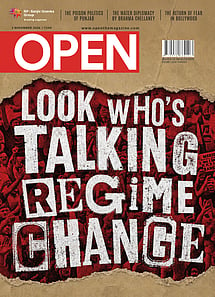
Look Who's Talking Regime Change
23 Oct 2026 - Vol 05 | Issue 43
The world has had enough of conflicts, crises, and wars, and if multilateral groupings are to have any relevance, they must focus on existential issues that beset the bulk of humanity. Food security, energy security, clean energy, reliability of supply chains, and clean air to breathe – these are all-too-real issues that need to be addressed by adopting “whole-of-the-world” approach as epitomised in ancient Indian civilisational ethos of “Vasudhaiva Kutumbakam.” Geopolitical contestations and ego-fuelled politics are luxuries that a crisis-ridden world can ill afford. With this fraught state of the world as a backdrop, India is leveraging BRICS to shape a more democratic and representative world order that is conducive to fructifying aspirations of three-fourth of the world’s population living in developing countries and emerging economies.
Empowering People
In sync with its humanity-first ethos, the BRICS summit in New Delhi on September 12-13 will culminate in a slew of pioneering initiatives that can transform lives of people and widen the arc of prosperity. The Delhi Declaration on September 12 will unveil a host of people-centric initiatives, including the BRICS Startup Innovation Fund and Incubator Network, BRICS Centre of Excellence on Agro-Ecology and Regenerative Agriculture and BRICS Network on Digital Agriculture. In a world buffeted by the aftereffects of the US-Iran war and the resulting energy crisis,
ensuring energy security for emerging economies is a key priority. The summit will launch BRICS Digital Centre of Excellence for Smart Grids and Energy Storage, which will connect expertise, build capacity and support pilot initiatives. In a world riven by conflicts and wars, the BRICS Logistics Supply-Chain Cooperation Framework will bolster connectivity, sustainability, and resilience. Green is the reigning colour of India’s BRICS presidency, with focus on enhancing ease of living. In this context, the BRICS Principles for Advancing Climate Resilience Through People-centric and Community-based Adaptation will dovetail traditional knowledge into climate adaptation efforts. These initiatives will bring BRICS diplomacy closer to everyday lives for businesses, communities, and people.
Ascendance of Global South
Like its successful G20 presidency three years ago, India’s BRICS moment signals ascendance of the Global South. The overarching thrust of India’s BRICS chairship is to ensure that the priorities, perspectives, and aspirations of the Global South are adequately reflected in the emerging global order. Building on its G20 presidency that saw the induction of the 54-nation African Union as a permanent member of G20, the Delhi summit will see the participation of rising African countries such as South Africa, Ethiopia, Egypt, Nigeria and Uganda, harnessing energies of a resurgent African continent for cementing a new architecture of South-South solidarity. The AU will be represented by the AU Council chair, Burundi’s President Evariste Ndayishimiye. The other emerging regions such as Central Asia will be represented by the leaders of Kazakhstan and Uzbekistan as partner countries. Put together, the Delhi summit will see the most representative and inclusive gathering of the leaders of Global South countries under one roof.
Whole-of-nation endeavour
The epic scale of BRICS engagement under India’s chairmanship is awe-inspiring, and underlines India’s unstinting commitment to bringing multifarious initiatives to fruition. Thirty-five Ministerial and Heads of Agencies tracks, around 100 Working and Sub-Working Groups and more than 350 meetings illustrate a whole-of-nation effort that has brought together ministers, senior officials, technical experts, business representatives, academics, think tanks, youth, civil society and people across BRICS nations. Going beyond government-to-government processes, BRICS engagement has encompassed Parliamentarians,
Supreme Audit Authorities, Supreme Judicial Authorities, BRICS Business Council, BRICS Women Business Alliance, Think Tanks Council and Civil BRICS Council. BRICS meetings have organised across thirty cities, taking BRICS beyond the national capital and showcasing the diversity, dynamism and development experiences of India’s states, said a senior official.
P2P Pillar
What makes India’s BRICS presidency stand out is infusion of cultural vitality of BRICS countries into the inner workings of the groupings. BRICS Solidarity Run, BRICS Film Festival, BRICS Youth Summit, BRICS Bazaar and BRICS Quiz, alongside cultural, academic, youth and business engagements, have expanded the canvas of BRICS beyond geopolitics and geoeconomics, building a people-to-people bridge that will nourish the grouping in years to come.
Beyond North and South
Looking ahead, India seeks to position BRICS to become a stronger voice for the Global South and a pillar of an inclusive world order. The focus is on bridging divides and taking BRICS beyond binaries of the North, South, East, and West. This would entail delicate balancing acts as India tries to find a middle ground and resists pressure from some powerful countries to make BRICS a front for anti-West posturing.
The expansion of BRICS has opened new avenues for enhancing cooperation among developing countries but has also complicated the process of forging consensus as brought out vividly by divisions on the issue of US-Iran-Israel war among new members – Iran, Saudi Arabia, and UAE. The last-minute effort is on to bridge differences as India leverages its equations with both sides to nudge them to accept mutually acceptable language to describe the war. There is a lot at stake here, but semantic quibbles can’t be allowed to sink BRICS.
Going forward, the expanded BRICS, with eleven members and ten partner countries, must shun temptations of geopolitical contestation and set new paradigms for inclusive global governance and reformed multilateralism. The long journey from 2006, when the first ministerial meeting started, to the BRICS of 2026 telescope a radical shift in global power distribution, with the centre of gravity shifting to Global South. It’s time for the status quo powers of the West to end a thousand visions and
revisions and make way for emerging powers in the global governance architecture. Ring out the old, ring in the new!