If Gutkha is Banned Across India, Why is it Still Sold? Inside Loopholes, State Orders and a Failing Enforcement Regime
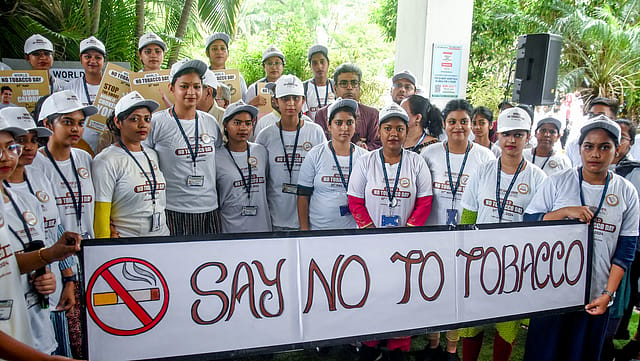
Poison does not become nutrition after crossing a state border.
Gujarat has nevertheless renewed its prohibition on gutkha and tobacco-laced pan masala for another year, as though carcinogenicity came with an expiry date.
The state’s Commissioner of Food Safety has prohibited their manufacture, storage, distribution and sale from September 13, 2026, to September 12, 2027. The order applies to gutkha, pan masala containing tobacco or nicotine and ingredients marketed separately in a manner that allows consumers to combine them.
Gujarat has issued such orders continuously since 2012.
Read casually, the announcement creates a simple impression: Gujarat has banned a dangerous product and protected its people. Read alongside Indian law, it opens a far more uncomfortable question.
Gutkha is already prohibited across India. Regulation 2.3.4 of the Food Safety and Standards regulations has stated since 2011 that tobacco and nicotine cannot be used as ingredients in any food product. The Union Health Ministry’s National Tobacco Control Programme therefore describes gutkha as banned. The ministry’s summary of India’s tobacco-control laws makes that position explicit.

Zeroing In on ECI
09 Oct 2026 - Vol 05 | Issue 41
Constitutional legitimacy versus political opportunism
In 2016, the Supreme Court directed authorities across every state and Union Territory to enforce the prohibition. It specifically confronted manufacturers selling tobacco and pan masala in separate sachets so that customers could mix the two.
Yet gutkha remains available. Sometimes it is smuggled under counters or carried across state borders. Sometimes it is reconstructed legally enough to create confusion and conveniently enough to preserve the market.
India banned the factory-made mixture. The industry handed consumers two sachets and outsourced manufacturing to their palms.
What Has Gujarat Actually Banned?
The wording matters.
Gujarat has not announced a blanket prohibition on every product called pan masala. Its notification covers gutkha and pan masala containing tobacco or nicotine, irrespective of the name under which they are sold. It also seeks to capture the familiar workaround in which components are packaged separately but sold for mixing.
Gutkha typically combines areca nut, tobacco, slaked lime, catechu, flavouring agents and sweeteners. Because it mixes tobacco with ingredients treated as food, regulators have proceeded against it under the Food Safety and Standards Act. Plain pan masala generally contains areca nut, catechu, lime, flavourings and spices but no tobacco or nicotine. It remains legal in much of India, subject to food-safety, labelling and advertising regulations. Certain states may impose broader restrictions through their own orders.
Chewing tobacco, khaini and zarda occupy another regulatory route. They are tobacco products governed principally by the Cigarettes and Other Tobacco Products Act, or COTPA, rather than automatically becoming illegal merely because gutkha is prohibited.
This division created the architecture of the workaround. The masala can be sold as food. The tobacco can be sold as tobacco. The customer supplies the final mixing bowl.
Is Gutkha Really Banned Across India?
Yes, if gutkha means a food product containing tobacco or nicotine. The national rule is straightforward: tobacco and nicotine “shall not be used as ingredients in any food products”.
State commissioners then use Section 30(2)(a) of the Food Safety and Standards Act to prohibit the manufacture, storage, distribution or sale of specified food products in the interest of public health.
That power contains an unusual limitation. A commissioner can issue an order for a period “not exceeding one year”. Section 30 of the Food Safety and Standards Act supplies the legal reason Gujarat, Maharashtra, Karnataka and other states repeatedly renew their prohibitions.
The danger does not undergo an annual review. The legal instrument does. This produces the strange spectacle of a government rediscovering every year that gutkha causes cancer, issuing another notification and restarting the enforcement clock.
Gujarat is not alone. Karnataka issued another one-year prohibition in 2026. Maharashtra renewed its order from July. Nagaland notified a fresh prohibition covering tobacco-containing food products and packages designed for consumer mixing. Odisha tightened its order earlier this year to cover flavoured and scented chewable tobacco and nicotine products sold in single or separate packs.
The national rule supplies the principle. Annual state orders supply much of the enforcement machinery. The result is a prohibition that is national in intent, state-led in operation and uneven at the shop counter.
How Did Two Sachets Defeat One Ban?
The workaround is almost insulting in its simplicity. Before the prohibition, a manufacturer could place areca nut, flavourings, lime and tobacco in one gutkha pouch. After the prohibition, the tobacco and pan masala could travel separately. A customer bought both, emptied them into the palm, mixed them and consumed the product the law intended to remove. The packet changed. The mouth did not.
By 2016, the arrangement had become serious enough for the Supreme Court to intervene. The court was told that manufacturers were selling tobacco-free pan masala alongside flavoured chewing tobacco, frequently through the same vendors and from the same premises.
The court directed statutory authorities to enforce the law and asked health secretaries of all states and Union Territories to report compliance. Its September 23, 2016 order specifically recorded the twin-pack method.
Modern state orders increasingly contain language designed to shut this door. Gujarat’s extension covers ingredients sold separately when they are intended to be combined. Karnataka’s 2026 order applies even when products are individually packaged in a manner that facilitates mixing by the consumer.
Yet intent can be harder to prosecute than packaging. A retailer may argue that the legal pan masala and legal chewing tobacco were independent products. A manufacturer can say it did not combine them. The consumer may perform the prohibited synthesis only after purchase.
Everyone supplies one legal-looking piece. Nobody claims ownership of the completed poison.
If the Supreme Court Intervened, Why Does the Trick Continue?
A court order cannot inspect every paan shop.
India’s retail network is vast, fragmented and frequently informal. Sachets are inexpensive, portable and easy to conceal. A shopkeeper can store a small quantity beneath the counter, replenish it through local distributors or sell the components under familiar euphemisms.
A 2025 investigation by India Today described gutkha as “banned but thriving”. It cited research from Maharashtra, Tamil Nadu and West Bengal showing widespread availability of pan masala and tobacco combinations even after prohibitions. Products could be openly displayed, hidden below counters or supplied to customers who knew how to ask. India Today’s investigation also highlighted the variability in nicotine and carcinogen levels across products and markets.
Raids certainly occur. Maharashtra’s Food and Drug Administration said it raided 658 establishments between May 25 and July 31, 2026, seized products worth ₹15.11 crore, registered 519 FIRs and made 701 arrests. It also confiscated 78 vehicles allegedly transporting prohibited goods.
Large seizures prove enforcement is active. They also reveal the supply chain’s ability to keep replenishing the market. A ban that requires hundreds of raids every few months is confronting something closer to an organised underground industry than a few disobedient shopkeepers.
Maharashtra has accordingly asked officials to examine whether organised gutkha networks may attract the Maharashtra Control of Organised Crime Act in eligible cases. The paan-shop pouch can begin much further away, with manufacturing units, interstate transporters, warehouses, financiers and distributors. Catching the final retailer removes the smallest visible link.
Why Do Gutkha Cases Collapse in Court?
Enforcement can fail long after a packet has been seized. The Food Safety and Standards Act assigns powers to designated authorities. Samples must be properly collected, sealed, documented and sent for analysis. Prosecution must be sanctioned and initiated by officers legally empowered to do so.
A procedural shortcut can rescue the accused. In April 2026, a sessions court in Maharashtra reportedly acquitted a shopkeeper after holding that the police lacked authority to initiate prosecution directly under the food-safety law. The case also suffered from the absence of a food-analysis report, independent witnesses and adequate evidence establishing sale or harm.
The issue was not whether gutkha was healthy. The issue was whether the state had built a legally sustainable case. This gap matters across regulatory enforcement. Police can raid a shop and hold up seized packets for cameras. Conviction requires an intact chain of evidence, laboratory confirmation and prosecution under the correct provisions by the correct authority. The spectacle lasts an evening. The file must survive for years.
Why Isn’t Plain Pan Masala Banned Too?
This is where the health argument becomes more complicated than the tobacco distinction. Plain pan masala may contain no tobacco or nicotine. That does not make it harmless.
Areca nut, one of its central ingredients, has been classified as carcinogenic to humans. Research has linked chewing it to oral cancer and oral submucous fibrosis, a condition in which the tissues of the mouth stiffen, progressively restricting movement and sometimes making it difficult to open the mouth.
A review of human evidence noted a strong association between areca-nut chewing and oral cancer and reaffirmed its classification as a Group 1 carcinogen. The peer-reviewed review also described a dose-response relationship: risk rises with the frequency and duration of chewing.
India’s legal division is, therefore, medically awkward. Add tobacco to pan masala and the mixture becomes prohibited gutkha. Remove the tobacco and the resulting product may remain lawful despite retaining areca nut. The packet can cross from banned to permitted without crossing from dangerous to safe. Plain pan masala carries mandatory warnings. Its advertising faces restrictions, particularly where ads are considered misleading or function as surrogates for prohibited tobacco products.
But legality gives the industry room to manufacture, distribute, advertise and build brand recognition. The poison has gradations. The marketing frequently prefers a binary: tobacco-free, therefore respectable.
Why Are Film Stars Selling Elaichi in a Gutkha Story?
Because the brand can travel where the prohibited product cannot.
Direct and indirect advertising of tobacco products is prohibited under COTPA. The Central Consumer Protection Authority’s 2022 guidelines also target surrogate advertising, in which a lawful product is used to preserve demand and recognition for a restricted one.
Companies can advertise cardamom, mouth fresheners or tobacco-free pan masala using names, colours, slogans and celebrity associations familiar from a wider product family.
The advertisement sells elaichi. The audience remembers the brand.
In August, Maharashtra’s FDA issued notices to Shah Rukh Khan, Ajay Devgn and Tiger Shroff over their appearance in a Vimal Elaichi campaign. The authority alleged that its presentation and market context could amount to indirect promotion of a prohibited pan-masala brand.
The actors and brand had not publicly responded when Reuters reported the notices. The legal question remains contested. A company can argue that it is promoting a lawful tobacco-free product. Courts have previously allowed advertising to continue where regulators could not establish that the advertised item contained tobacco or that the campaign legally qualified as indirect tobacco promotion.
This is the power of the brand-extension defence. The company presents one packet to the regulator. Consumer memory supplies the entire shelf.
How Large Is India’s Smokeless-Tobacco Problem?
Larger than the Gujarat release accurately conveys. The state cited a Global Adult Tobacco Survey figure stating that 35% of Indian adults consume tobacco and 21% use smokeless tobacco. The figures come from different survey periods.
The first Global Adult Tobacco Survey, conducted in 2009-10, found tobacco use among approximately 35% of adults. The later GATS-2 survey conducted in 2016-17 put overall adult tobacco use at 28.6% and smokeless-tobacco use at 21.4%. That still represented roughly one in every five adults using smokeless tobacco.
The decline in overall prevalence was significant. The remaining burden was enormous. The latest nationally comparable adult survey is also almost a decade old. Consumption patterns, brands, enforcement and the tobacco market have continued changing while India waits for a newer nationwide measurement.
The cancer evidence is more recent. A study led by the World Health Organization’s International Agency for Research on Cancer estimated that smokeless tobacco and areca-nut use caused more than 120,000 oral-cancer cases globally in 2022, approximately one-third of all such cases. India accounted for an estimated 83,400 of them.
Nearly nine out of ten attributable cases occurred in South-Central Asia. More than 95% occurred in low- and middle-income countries. The IARC study described prevention of smokeless tobacco and areca-nut consumption as central to reducing the burden.
Among Indian men, gutkha was estimated to contribute to 43% of oral-cancer cases attributable to the products examined. Khaini accounted for an even larger share. Among women, areca nut and betel quid with tobacco were major contributors, with gutkha and khaini also prominent.
The Indian market uses many names for the same family of risk. Gutkha. Khaini. Zarda. Mawa. Kharra. Betel quid. Flavoured tobacco. Pan masala. Cancer is less interested in branding architecture.
Has the Ban Achieved Anything?
The answer is yes, but not enough.
The ban removed the legal right to manufacture and sell ready-mixed gutkha as an ordinary food product. It forced companies to reformulate, abandon products or move into legally separated categories. It gave regulators powers to seize stock and pursue offenders. It raised public awareness that gutkha was too dangerous to remain a normal packaged commodity.
A prohibition does not become meaningless merely because people violate it. But availability determines effectiveness. If a customer can recreate gutkha by purchasing two adjacent sachets, the prohibition has reduced convenience more than consumption. If the same brand remains visible through pan masala or elaichi advertising, the ban has removed the product from the commercial but preserved its cultural machinery.
If police, food-safety officers and prosecutors do not coordinate, seizures may fail to become convictions. If different states frame and renew orders differently, networks can exploit boundaries. And if areca nut remains broadly legal and aggressively promoted, India continues normalising a carcinogenic chewing habit even while prohibiting its most notorious formulation.
What Would a Ban That Actually Bites Look Like?
It would begin by accepting that the consumer experiences a market, not a statute book. A meaningful response must follow the complete product rather than each packet in isolation. Pan masala and flavoured tobacco promoted, packaged, distributed or sold for combined consumption should be treated according to their real use.
Investigators must move beyond retailers and pursue manufacturers, transporters, warehouses and financial networks. Enforcement teams need trained food-safety officers, accredited laboratories and legally correct prosecution so that cases survive after the seizure photographs disappear.
Advertising rules must examine brand recall, sales and market reality rather than accepting a cardamom pouch as conclusive proof that an advertisement is about cardamom.
India also needs a clearer national policy on areca nut. A substance does not become benign because tobacco has been removed. Mandatory warnings cannot carry the entire burden while celebrities, cricket broadcasts and outdoor advertising carry the aspiration.
Most importantly, prohibition must be joined by cessation support. Nicotine dependence cannot be raided out of a person. Users require counselling, accessible treatment and public-health communication that speaks in the languages and places where smokeless tobacco is consumed.
Gujarat’s renewed order is defensible. Its necessity after 14 years is an indictment.
The state already knows gutkha causes cancer. The Supreme Court already knows how manufacturers circumvented the ban. Parliament and regulators already possess laws against tobacco advertising, misleading claims and tobacco in food.
India is not waiting for the scientific evidence. It is waiting for enforcement to catch up with the packet. Poison for Gujarat is poison for Maharashtra, Karnataka, Delhi, Odisha and every other state. The border was never the problem. The gap between two sachets was.
With inputs from ANI