How Free Is the Free Press?
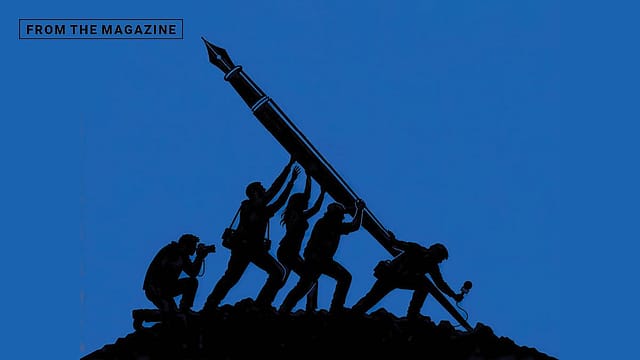
I am, in a sense, a child of the Indian newspaper. My late father, Chandran Tharoor, started in the newspaper business when barely out of college, representing a pair of Indian papers in post-war London, and spent his working life as a senior advertising executive for some of our country’s better-known mastheads. His world fascinated me. My child hood in the 1960s and early 1970s was replete with stories of editorial meetings and battles between the editorial and the advertisement departments, for my father injected newspaper ink into my veins at a young age. I grew up literally with newspapers: from about six or seven years of age, I can remember sitting with my father at 6.30 every morning with chai and multiple newspapers. In addition to the news he always read the ads, counting the column inches of advertising in his own and the rival newspapers—usually (since he was very good at his job) with a grunt of satisfaction.
My father used to work for the Statesman, then a superb newspaper. I remember going to the press as a young boy and seeing the linotype machine men at work with their little fonts that had been carved out of very hot metal, putting together words whose idiosyncratic spellings often revealed that they had not had an English-language education. (That’s why copy editors were indispensable!) I recall handling flongs, the exotic papier-mâché stereotype moulds used in the days before offset printing. Those were the days when you could turn up in some small town and find yesterday’s news with today’s date on it, in what the newspaper called a “dak edition”.

Losing Memory
16 Oct 2026 - Vol 05 | Issue 42
The making of a medical and social emergency
Growing up in Bombay and Calcutta, I enjoyed three or four newspapers in the morning; then, during the day, the pa pers from the rest of the country would be flown in, and my father brought them home after work, when I would have a second round of newsprint to digest. So, I grew up reading a minimum of seven or eight newspapers a day. (This was not as onerous a task as it might seem, since in those days the big newspapers were just twelve pages long, and some, in bad times of newsprint shortages, carried only eight.) When, at the age of ten, I first published a short story, it was not in a fiction magazine but in a news paper, the Bharat Jyoti—the Sunday edition of Bombay’s venerable Free Press Journal. That daily ritual of tea and newspapers gave me an early and abiding passion for the Indian press, one which I have sustained during three decades abroad, when I would have Indian newspapers sent to me in places like Geneva, Singapore and New York, where I was serving the United Nations.
Freedom of the press has long been regarded as one of the pillars of India’s democratic architecture. The Constitution does not explicitly mention “press freedom”, but the Supreme Court has repeatedly held that it is implicit in the guarantee of free speech under Article 19(1)(a). Yet in recent years, concerns about the health of India’s media ecosystem have intensified. Critics argue that the space for independent journalism has shrunk due to legal pressures, regulatory constraints, economic vulnerabilities, and political influence. Supporters of the government counter that India remains a vibrant democracy with a noisy, diverse media landscape, and that allegations of repression are exaggerated. The truth lies in a complex interplay of structural, political, and institutional factors that have reshaped the environment in which journalists operate.
One of the most visible indicators of stress on press freedom has been the detention, arrest, or prosecution of journalists for their reporting. Several cases have drawn national and international attention. Journalists in Kashmir have been charged under the Unlawful Activities (Prevention) Act (UAPA), including reporters accused of “glorifying terrorism” or “spreading disaffection” for publishing stories critical of security operations. In Uttar Pradesh (UP), reporters have faced charges of sedition, criminal conspiracy, or promoting enmity for social media posts or for reporting on sensitive incidents. Freelance journalist Siddique Kappan was arrested in 2020 while travelling to report on a high-profile case and spent over two years in custody under UAPA provisions before being granted bail. In Manipur, journalists covering ethnic violence have faced FIRs and intimidation. These cases, critics argue, reflect a pattern in which criminal law is used to deter or punish critical reporting. RSF’s World Press Freedom Index has repeatedly ranked India low, with the ranking dropping in recent years, citing the dangers faced by journalists, especially in rural areas and conflict zones.
The use of sedition laws (Section 124A of the Indian Penal Code, now 299 of the Bharatiya Nyaya Sanhita) has been particularly contentious. Although the Supreme Court has effectively suspended the operation of the sedition law pending review, journalists were charged under it in several states in the years preceding the suspension. Similarly, the application of anti-terrorism laws such as UAPA, with their stringent bail provisions, has raised concerns that the process itself becomes a form of punishment. Government officials maintain that these laws are invoked only in cases involving threats to national security or public order, but civil liberties groups argue that their broad definitions allow for misuse against journalists performing legitimate public interest work.
The digital sphere has become an increasingly important arena for press freedom. Several journalists and independent media organisations have reported temporary suspensions of their social media accounts, often following government re quests to platforms under emergency powers. During periods of unrest, such as the farmers’ protests or communal tensions, X (formerly Twitter) and other platforms have received take down orders targeting posts by journalists, activists, and news outlets. While the government argues that such measures are necessary to curb misinformation and prevent violence, critics contend that they disproportionately affect voices critical of official narratives.

The regulatory environment for digital media has under gone significant change. The Information Technology (Intermediary Guidelines and Digital Media Ethics Code) Rules, 2021 introduced new obligations for social media platforms, digital news publishers, and OTT services. These include requirements for content takedown within tight timelines, traceability of messages, and a three-tier grievance redress mechanism overseen by the government. Critics argue that these rules give the executive excessive power to demand removal of content and to pressure platforms into compliance, thereby chilling online journalism. The updated IT Rules 2025 expand these powers further, strengthening government oversight of digital intermediaries and increasing penalties for non-compliance. Supporters of the rules argue that they are necessary to combat misinformation, protect national security, and ensure account ability in the digital sphere. Opponents contend that they risk turning social media platforms into instruments of censorship and impose burdensome compliance requirements on small digital newsrooms. But at least for now, digital media remains a safe if crowded space, hosting some of the government’s harshest and most trenchant critics.
While government actions are a major part of the debate, many analysts argue that the media’s own structural vulnerabilities have contributed significantly to the erosion of press freedom. India has one of the world’s largest media markets, with over 400 news channels and tens of thousands of registered publications. This proliferation has intensified competition for advertising revenue and audience attention, incentivising sensationalism, “breaking news” culture, and entertainment-driven content. The result is a trivialisation of news, where complex policy issues receive less attention than spectacle, scandal, and partisan debate. Primetime television debates often prioritise polarising themes over investigative reporting. Many major media houses are owned by conglomerates with diverse business interests, making them sensitive to government regulation, taxation, and licensing. This has contributed to habits of self-censorship, avoidance of critical stories, and amplification of official narratives, while journalists critical of the authorities may find themselves marginalised within their organisations.
Television news has become less about informing and more about inflaming. The endless churn of “breaking news” banners, the performative anger of anchors, the reduction of complex issues into shouting matches—all of this has seeped into politics, business, and culture. News shows are spectacles of outrage, and the more divisive the content, the more attention it garners. In India, this model has been embraced with gusto. Our primetime debates are less Socratic enquiry than verbal wrestling matches, where decibel levels matter more than facts, and the anchor’s role is closer to that of a ringmaster than a moderator.
India’s television news channels have perfected their own formula for this phenomenon. Each evening, viewers are treated to “debates” in which ten talking heads shout past each other, while the anchor interrupts to deliver his thunderous verdict (since his mind has already been made up before he invited them on his programme to validate his prejudices). Nuance is drowned out by noise; complexity is sacrificed to confrontation. The format rewards those who can deliver the sharpest sound bite, not the most thoughtful analysis. Politicians, activists, and even academics are drawn into this circus, knowing that a viral clip can matter more than a reasoned argument.
Media now is driven by the “breaking news” culture and the search for the villain of the day: the news must be broken and so, it seems, must the person. Television news in India, with far too many channels competing 24x7 for the same sets of eye balls and ratings points (‘TRPs’), has long given up any pretence of providing a public service, with the ‘breaking news’ story privileging sensation over substance. (Indian TV epitomises the old witticism about why television is called a ‘medium’: ‘Be cause it is neither rare nor well done.’) Sensationalism, partisan alignment, and the irresponsible pursuit of TRPs have eroded public trust. The unviable economic model of Indian television media—dependent on advertising, vulnerable to corporate influence, and fragmented across hundreds of channels—has weakened its ability to act as a watchdog.
The contagion does not stop at television. Social media platforms amplify these spectacles, slicing them into share able clips that ricochet across WhatsApp groups and X feeds. Social media, with its culture of unverified ‘fact’ and viral opinion, compounds the problem: it offers a ready platform for material that wouldn’t have passed editorial scrutiny in the past. The result is a feedback loop: television produces outrage, social media magnifies it, and politicians respond to it, further feeding the cycle.
What is particularly worrying is that even mainstream print media, once the bastion of sobriety and fact-checking, has begun to feel the pressure. Editors know that by the time their morning paper reaches readers, the public has already been exposed to the tele vision or social media version of events the previous evening. The temptation to echo that narrative, rather than challenge it, is strong. Headlines grow more sensational, analysis more partisan, and the careful verification that distinguished print from television is sometimes sacrificed in the race to remain relevant. Journalists trying to keep up with the relentless 24x7 breaking news cycle, and the rise of social media, now feel pressed to publish without the traditional recourse to fact checking. The result is that our media, in its rush to air the story, has fallen prey to the inevitable rush to judgment: it has too of ten become a willing accomplice of the motivated leak and the malicious allegation, which journalists today have neither the time nor the inclination to check or verify. The damage is done in a blaze of lurid headlines—and rectification, if it comes at all, comes too feebly and too late to undo the irreparable damage to innocent people’s reputations.
This is a profound shift. For some years, India’s print media prided itself on being the antidote to television’s superficiality. Newspapers offered context, depth, and a measure of restraint. They were the place where readers could turn for sober reflection after the noise of the nightly news. There was a time when Indians only believed something if they read it in the newspaper; today they tend not to believe it if they see it in the paper.
Still, in India, the printed word on pulped trees remains an amazingly healthy industry. Print media is thriving in India, increasing in readership, whereas many of its counterparts in other countries are at the end of the road, or swivelling some where in the disruptive abyss of today’s digital world. Since liberalisation in 1991, the audio-visual media has also trans formed itself. Economic development, political liberalisation (which freed broadcast media from government control) and the internet have all prompted an explosion in the quantity, if not quality, of media offerings.
But there is a real problem: the distinctions amongst fact, opinion and speculation, reportage and rumour, sourced information and unfounded allegation, which are drummed into journalism students’ heads the world over, has blurred into irrelevance in today’s Indian media. The Fourth Estate today serves simultaneously as witness, prosecutor, judge, jury and executioner, falling a long way short of the standards expected in liberal democracies.
This should be a matter of serious concern to all right thinking Indians, because free media are the lifeblood of our democracy. They provide the information that enables a free citizenry to make the choices of who governs them and how, and ensures that those who govern will remain accountable to those who put them there. Instead, the media’s obsession with the superficial and the sensational trivialises public discourse, abdicates the watchdog responsibility that must be exercised by free media in liberal democracy, and distracts the public from the real questions of accountability with which the governed must confront the government. Couple this with the fact that legal pressures, regulatory changes, digital takedowns, institutional erosion and overweening political influence have created an environment in which independent journalism is increasingly difficult in the face of the government’s systemic attempt to control the narrative.
Yet, despite all my concerns and criticisms, I remain as strongly wedded to a free press as I was when leaving my smudgy thumbprints on the newsprint in my father’s office. I have always held fast to the evocative image of the canary in a cage being sent down a mine-shaft to see if there is enough oxy gen at the bottom; if it comes back dead, or choking and spluttering for air, you know it is not safe for miners to be sent down. The free press is like that canary; if it is choking or suffocated, that is a clear indication that society is no longer safe for the rest of us. Government needs a free and professional media to keep it honest and efficient, to serve as both mirror and scalpel. If instead all we have is a blunt axe, society is not well served. The free press is both the mortar that binds together the bricks of our country’s freedom, and the open window embedded in those bricks. No Indian democrat would call for censorship, or for controls on the free press: liberals want not less journalism but better journalism.
The vulnerability of India’s free press lies in the interaction of three forces: a political environment that rewards compliance, a regulatory framework that increases vulnerability, and a media ecosystem that has often prioritised commercial and political alignment over journalistic integrity. Such developments are a major reason for the recent decisions of democracy watchdogs Freedom House (which downgraded India from “free” to “partly free”) and the V-Dem Institute (which has called it now an “electoral autocracy”) to express alarm about the direction of the country’s democracy. “India, the world’s most populous democracy, is also sending signals that holding the government accountable is not part of the press’s responsibility,” observed Freedom House.
Despite these challenges, India continues to produce remarkable examples of courageous journalism. Independent digital platforms have broken major investigative stories on corporate influence, environmental violations, electoral funding, and human rights abuses. Reporters in conflict zones, rural districts, and marginalised communities continue to document stories that mainstream outlets overlook. Several journalists have persisted in their work despite facing legal cases, online harassment, or physical danger. Their efforts demonstrate that the spirit of independent journalism remains alive, even if the institutional environment has become more hostile.
In short, the state of press freedom in India today is neither uniformly bleak nor reassuringly stable. It is a landscape marked by legal pressures, regulatory constraints, economic vulnerabilities, and political influence, but also by resilience, innovation, and pockets of fearless reporting. Whether the current trajectory represents a temporary distortion or a deeper structural shift remains a matter of debate. What is clear is that freedom of the press is ultimately the best guarantee of liberty, of change and of progress. It is the mortar that binds together the bricks of freedom— and it is also the open window embedded in those bricks, which would, in Mahatma Gandhi’s famous metaphor, allow the winds of the world to blow freely through the house. Right now, there is reason to be concerned that the government is not averse, in practice, to attempting to close that window. And the future of Indian democracy depends in no small measure on the ability of its media—mainstream and digital, national and local—to reclaim its role as an independent, critical, and trustworthy institution.