How AAI is tackling fog disruptions and passenger delays
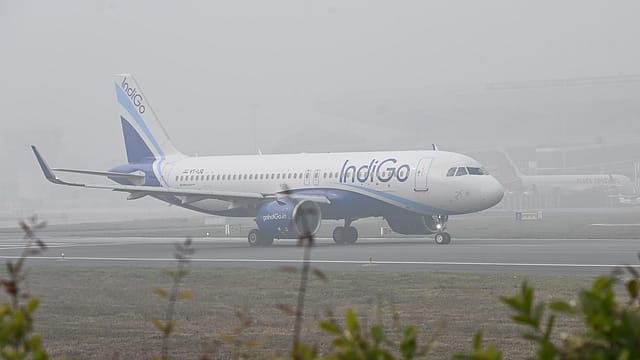
India’s northern region has emerged as a major pillar of the country’s aviation ecosystem, handling a significant share of both aircraft and passenger traffic.
According to the Airports Authority of India (AAI), which manages 137 airports including 24 international ones, the region accounts for more than a quarter of flight movements and nearly one-third of passengers.
“I think the northern region is contributing more than 25 per cent of the air traffic. As of now... in terms of aircraft movements, it's maybe around 26 per cent. But if you go with the passenger traffic, it will be around 30 per cent,” said Ajay Kumar Kapur.
At the centre of this network is Indira Gandhi International Airport, which remains the busiest aviation hub in the region and handles a substantial portion of this traffic.
What makes fog such a persistent challenge?
Despite strong growth, weather—particularly winter fog—continues to disrupt operations in North India.
“I think the most affected are the early mornings when there is more fog. That time most of the delays happen,” Kapur said.
Low visibility during dense fog leads to delays, flight diversions, and congestion at terminals, especially during peak winter months. While advanced systems are in place, their effectiveness has limits.

Exclusive: To the Heavens and Back
19 Jun 2026 - Vol 04 | Issue 76
Shubhanshu Shukla relives the space odyssey that put India into orbit
“There are low visibility procedures... instrument landing systems... ASMGCS, which monitors the ground movement,” he said. “If the visibility almost comes to zero... then technology also doesn't help... so that time it becomes difficult to allow the landings,” he added.
To reduce passenger inconvenience during such disruptions, airports provide basic relief measures. “If somebody is stuck for several hours, we provide them some sort of comfort... at least some relief in the form of sandwich, samosas,” he added.
How is airport infrastructure expanding in the region?
To keep pace with rising demand, AAI is accelerating airport expansion and modernisation projects across northern India.
“Jodhpur is almost ready... Udaipur, we plan to complete by July... Leh will also be ready by July... Varanasi... may see completion by December or early January,” Kapur said.
In addition, a greenfield airport is under development in Kota, while a new terminal at Agra is targeted for completion by 2028. These projects aim to decongest major hubs and improve regional connectivity.
Is Varanasi emerging as a new international hub?
AAI is also focusing on strengthening international connectivity beyond metro cities, with Varanasi Airport identified as a key growth centre.
“We plan to operate the existing terminal building completely as an international terminal,” Kapur said, adding that more destinations could be added as demand increases.
This reflects a broader strategy to distribute international traffic more evenly across cities.
What challenges remain for regional connectivity?
While the government’s regional connectivity push under the UDAN scheme has expanded access, operational constraints persist.
“The only problem is that we are having scarcity of small aircrafts... once those aircrafts are available... this will take off in a big way,” Kapur said.
He noted that some routes have also been affected due to operational issues faced by an airline, though services may resume soon.
How is AAI improving sustainability and passenger experience?
Alongside expansion, AAI is working toward long-term sustainability goals and better passenger services.
“We are using solar power at more than 64 airports... generating 58 megawatts of electricity,” Kapur said, adding that most new terminals are designed as green buildings. The authority aims to become carbon neutral by 2030.
Passenger-facing initiatives are also being scaled up, including the Digi Yatra platform, free Wi-Fi, and affordable food options.
“We are trying to provide... smooth movement of passengers... and comfort at airports,” he said.
What does this mean for India’s aviation future?
With nearly 30 per cent of passenger traffic flowing through North India, the region will remain central to India’s aviation growth story.
However, balancing rapid expansion with operational challenges like fog, infrastructure strain, and aircraft shortages will be key to sustaining this momentum.
(With inputs from ANI)