HAL’s Triple Handover Explained: Why Tejas, HTT-40 and Dhruv NG Matter for India
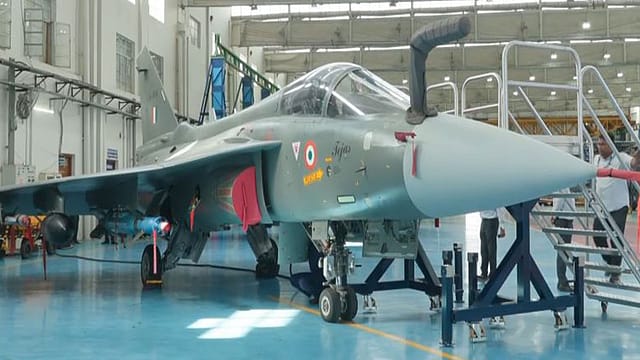
Before a fighter pilot can defend the skies, someone has to teach them to fly.
That less glamorous end of air power shares the spotlight with combat aviation and civilian helicopters at Hindustan Aeronautics Limited’s planned triple handover in Bengaluru on September 18.
Defence Minister Rajnath Singh and Civil Aviation Minister K Ram Mohan Naidu are scheduled to attend as HAL hands over Tejas twin-seat trainers and HTT-40 basic trainers to the Indian Air Force, alongside four Dhruv Next Generation helicopters to Pawan Hans.
The significance lies in what those aircraft represent: the completion of an older fighter contract, the beginning of deliveries under a major training programme, and a commercial opportunity for an Indian helicopter.
Each addresses a different question. Who trains tomorrow’s pilots? Who helps them master a fighter? And can Indian aircraft win a bigger place in everyday civilian operations?

Zeroing In on ECI
09 Oct 2026 - Vol 05 | Issue 41
Constitutional legitimacy versus political opportunism
What exactly is HAL handing over?
The announced package comprises two LCA Tejas trainers in Final Operational Clearance, or FOC, configuration; four Dhruv NG civilian helicopters; and HTT-40 basic trainer aircraft.
The two Tejas aircraft complete the four twin-seaters ordered under the 2010 FOC contract, which also covered 16 single-seat fighters. According to HAL’s account carried by ANI, those 16 fighters were delivered between 2022 and 2023.
The HTT-40 handover starts deliveries against an order for 70 aircraft. The supplied announcement does not specify how many HTT-40s will be handed over at this ceremony. The Dhruv NG helicopters go to Pawan Hans, bringing the civil-certified variant into the operator’s fleet.
Why should a basic trainer get as much attention as a fighter?
Because an air force needs a steady supply of trained pilots to make use of its aircraft. Basic trainers teach foundational skills: aircraft handling, navigation, instrument flying, aerobatics and flying in formation. Their availability affects how reliably a service can conduct training and move pupils through its system.
The government made that need explicit when it approved the HTT-40 procurement in March 2023. The ₹6,828.36-crore proposal covered 70 aircraft, with associated equipment, training aids and simulators, to address a shortage of basic trainers for newly inducted IAF pilots. Deliveries were envisaged over six years. Source: Ministry of Defence
The aircraft may attract fewer cameras than a fighter. Its job begins much earlier in the making of a military pilot.
What does the HTT-40 bring to the training cockpit?
HAL’s domestically designed turboprop has two seats arranged one behind the other, allowing an instructor and trainee to fly together. According to the handover announcement, it supports basic training, aerobatics, instrument and night flying, navigation and close formation flying.
Its development has involved testing handling qualities, systems, hot-weather performance and crosswind operations. HAL says it holds a Restricted Military Type Certificate from the Centre for Military Airworthiness and Certification, or CEMILAC. The programme first flew on May 31, 2016. The start of deliveries in September 2026 therefore comes more than a decade after that first flight. That distinction matters. A successful prototype demonstrates that an aircraft can fly. Deliveries begin the longer test of whether it can be produced, supported and used routinely by its customer.
Why does the IAF need both HTT-40 and Tejas trainers?
They serve different stages of a pilot’s development.
The HTT-40 teaches basic flying skills. A Tejas twin-seater supports the training needed to operate the Tejas fighter, with an instructor accompanying the pilot in the aircraft itself.
They are not interchangeable, and a trainee does not simply graduate from a basic trainer straight into a combat assignment. Other training stages and qualifications sit between those roles.
The significance of this handover is that Indian aircraft are supporting two distinct parts of that journey: learning to fly and learning to operate a particular fighter.
Is the twin-seat Tejas only a flying classroom?
It retains fighter capability, according to HAL.
The FOC trainer combines its instructional role with the Tejas platform’s digital flight controls, glass cockpit, integrated avionics and composite airframe. HAL says the final two aircraft, SPT7 and SPT8, incorporate improvements to radar performance, autopilot handling and the fuel system, alongside secure Software Defined Radio communications and an air-to-air refuelling probe.
For a pilot converting to Tejas, the value is practical: experience in the actual aircraft’s cockpit, handling and systems, with an instructor present. The second seat serves a training purpose without turning the aircraft into a basic trainer.
Does this mean the newer Tejas Mk1A orders have been delivered?
No. This ceremony’s two Tejas trainers belong to the older FOC contract placed in 2010.
That makes the handover a contract-completion milestone. It should not be presented as completion of the later orders for 83 and 97 aircraft, or as proof that the wider Mk1A delivery programme is running to schedule.
HAL has outlined further twin-seater development and deliveries with additional radar, electronic warfare and weapons capabilities. Those plans have to be assessed against their own production and acceptance milestones.
The distinction is essential: closing an old commitment is meaningful, but it does not settle questions about newer ones.
Why are four civilian Dhruv NG helicopters a big deal?
Because a commercial operator gives an aircraft a different kind of examination. Pawan Hans will need helicopters that can perform their assigned missions reliably, receive timely maintenance and justify their operating costs. That creates a demanding opportunity for HAL to demonstrate support over an aircraft’s working life.
According to HAL, the 5.5-tonne Dhruv NG can carry up to 14 passengers, depending on configuration, and can be adapted for passenger transport, air ambulance services, offshore work, law enforcement and disaster relief.
Those are potential roles, rather than a confirmed deployment schedule for these four helicopters. But they explain why the civilian side of the ceremony matters: the market extends from transporting people to reaching places where surface access is difficult or time is critical.
What will decide whether Dhruv NG succeeds commercially?
The aircraft has to keep earning its place after the handover.
For an operator, availability, maintenance turnaround, spare-parts supply, safety performance and the cost of each flying hour matter alongside speed and passenger capacity.
HAL says it will support the platform through manufacturing, maintenance and upgrades, including Power By Hour and Performance Based Logistics arrangements.
Broadly, these models can link support payments to aircraft usage or agreed performance measures. Their precise value depends on the contract: what support is covered, what availability is promised, and how responsibilities are enforced.
The commercial test will be whether HAL can translate those commitments into dependable service.
How Indian are these aircraft? Does “indigenous” mean import-free?
The HTT-40 shows why those terms should be kept separate.
HAL puts the aircraft’s indigenous content at approximately 57 per cent. Its engine is Honeywell’s TPE331-12B turboprop. Honeywell confirmed the delivery of the first engines for the production programme in June 2026.
Domestic design and manufacturing can give India greater ability to adapt, maintain and improve an aircraft, while overseas components still create supply dependencies.
A percentage also tells only part of the story. A component’s importance depends on what it does and how readily it can be replaced. An engine’s availability can determine whether an otherwise completed aircraft is ready for delivery.
The useful measure of self-reliance is therefore both how much India makes and how much control it has over keeping the aircraft flying.
What should we watch after the ceremony?
Three outcomes will show how much this milestone delivers.
For the HTT-40, watch the pace of subsequent deliveries and its integration into IAF training. For Tejas, watch completion and acceptance against each distinct contract. For Dhruv NG, watch operational availability, support performance and further customer orders.
Together, these programmes suggest a broader ambition for HAL: supplying the aircraft that train pilots, support combat operations and carry civilian passengers.
September 18 brings those ambitions onto one stage. Their lasting significance will be measured in training sorties completed, aircraft available for duty and commercial missions flown.
With inputs from ANI