‘Ground Them’: What the Supreme Court’s Warning to Airlines Actually Means for Flyers
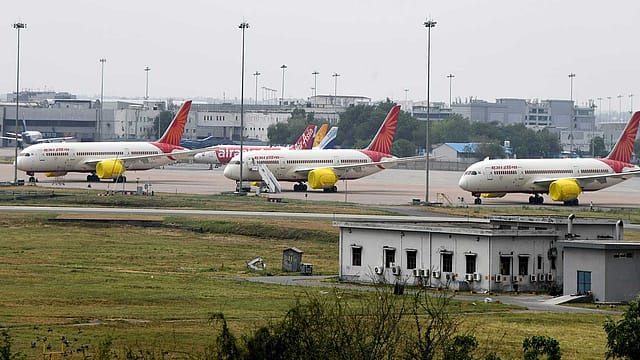
Imagine booking a flight for ₹6,000. A few days later, the same seat costs ₹10,000. Add baggage. Add a seat. Add other charges. Suddenly, the ticket you thought you had bought for ₹6,000 looks very different.
Now imagine a court telling airlines: follow the rules — or you could be grounded.
That is the unusually sharp warning that came from the Supreme Court as it examined a plea seeking tighter regulation of airfares and passenger charges.
The bench of Justices Vikram Nath and Sandeep Mehta was hearing the matter on August 17, when the Centre said it had fast-tracked the framing of rules under the Bharatiya Vayuyan Adhiniyam, 2024 and expected to finalise them within three weeks. The draft rules were placed before the court in a sealed cover.
Rise of the Pivotal Power
18 Sep 2026 - Vol 05 | Issue 38
The BRICS declaration is a strategic victory for Modi
Then came the line that grabbed everyone's attention: “If airlines are not complying, ground them.”
So, what exactly does that mean?
Is the Supreme Court grounding an airline right now?
No. The court's remark was a warning about enforcement, not an order grounding a particular airline.
The issue before the court is whether airlines are complying with regulatory directions, particularly amid concerns over steep and unpredictable airfares and additional passenger charges. The Centre has told the court that new rules are being finalised. The matter will come up again on September 7.
But the warning matters because the new aviation law already gives the government significant powers when an operator violates the law, rules or directions.
So, can an airline actually be grounded?
There is a legal mechanism for serious regulatory action. Under the Bharatiya Vayuyan Adhiniyam, the Central Government or an authorised officer can restrict, suspend or cancel a licence, certificate or approval if there is a contravention of the Act, rules or directions issued under it.
The law also allows restrictions to be imposed on a licence, subject to the prescribed process.
So “ground them” is not simply courtroom rhetoric floating outside the law. There are powers under the new legislation that can ultimately affect an airline's ability to operate. But that does not mean every breach automatically results in an airline being stopped from flying.
What is the court actually unhappy about?
This case began with a much more familiar passenger frustration: airfares that can suddenly become extraordinarily expensive.
Social activist S Laxminarayanan has sought regulatory guidelines to address what the petition describes as “unpredictable fluctuations” in airfares and ancillary charges imposed by private airlines. The plea also seeks a robust and independent regulatory mechanism to improve transparency and passenger protection.
The Supreme Court had earlier described sharp increases in airfares as “exploitation” and sought responses from the Centre and the Directorate General of Civil Aviation.
This is not the court's first intervention in the matter. On July 13, it directed the Centre to place the rules framed under the new aviation law before it in a sealed cover.
What could the new rules change?
This is where things become particularly important for flyers. The proposed framework is being examined in the context of airfares, surge pricing, excess baggage charges and other passenger-related issues.
The Bharatiya Vayuyan Adhiniyam itself gives the Centre the power to make rules for the economic regulation of civil aviation and air transport services. And the law's definition of “tariff” is broad. It includes fares, rates, valuation charges and other charges relating to the air transport of passengers or goods, as well as practices and services affecting those charges.
That is significant. Because the debate is not simply about whether a Delhi-Mumbai ticket should cost ₹5,000 or ₹15,000. It is about what rules govern the way that price is determined and what happens when an airline crosses the line.
Does this mean India is getting an airfare cap?
Not necessarily. That is one of the most important distinctions in this story. The Supreme Court is examining the regulatory framework and the Centre's new rules. The development does not amount to an announcement of a blanket ceiling on airline fares.
Instead, the bigger question is whether the new framework will create clearer powers and enforceable rules around pricing, surge fares and additional charges.
The court has also questioned whether the proposed mechanism provides an effective regulator. And that may be the real heart of the case.
Why does the regulator matter to you?
Because passengers generally experience aviation regulation as something invisible — until something goes wrong. A fare suddenly shoots up. A refund gets delayed. Baggage rules change. An additional charge appears.
A passenger wants to know: Who can actually tell an airline to fix this?
The Bharatiya Vayuyan Adhiniyam retains the Directorate General of Civil Aviation as the safety and regulatory authority for matters covered by the law and its rules. At the same time, the Act allows the Centre to frame detailed rules on economic regulation and specify the authorities that will exercise those powers.
That is why the Supreme Court's question about whether there is an effective regulator is bigger than one airline or one expensive ticket. It is about who ultimately has the power to make passenger-protection rules work.
So what happens next?
The Centre has told the Supreme Court that the rule-making process has been expedited and that the rules should be finalised within three weeks. The court has accepted the request for more time and listed the matter for September 7.
Until then, the proposed framework remains just that — proposed. But the message from the court is already clear. Airlines may set fares. They may compete for passengers. They may charge for additional services where permitted.
But if there are regulatory rules, those rules have to mean something. And that is what makes the Supreme Court's five-word warning so significant. “If airlines are not complying, ground them.”
For flyers, the real question now is not whether an airline will actually be grounded. It is whether the new rulebook will finally make someone clearly answerable when the price of your ticket — or the cost of flying with it — suddenly takes off.
(With inputs from ANI)