Goa Nightclub Fire Case Explained: Why Bombay High Court Cancelled Luthra Brothers’ Bail
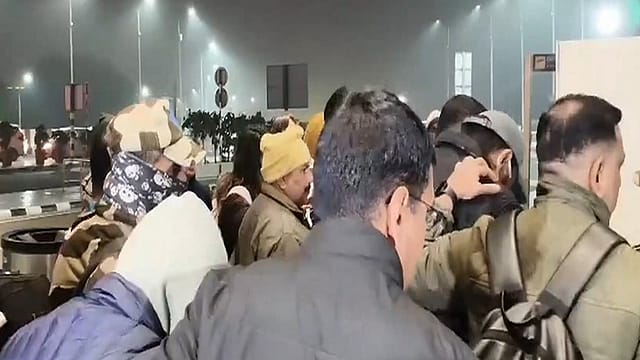
The Goa nightclub fire killed 25 people. The chargesheet ran into 4,420 pages. Investigators alleged that the club operated without critical fire-safety systems, while documents used to secure permissions were forged. Its owners allegedly left Goa after learning about the casualties.
Yet Saurabh and Gaurav Luthra, owners of Birch by Romeo Lane, and their business partner Ajay Gupta secured bail earlier this year. The High Court of Bombay at Goa has now overturned those orders, ruling that the Sessions Court failed to properly examine the evidence or confront the enormity of the case.
What has the Bombay High Court ordered?
The High Court cancelled the bail granted to Saurabh Luthra, Gaurav Luthra and Ajay Gupta in cases linked to the December 6, 2025, fire at Birch by Romeo Lane in Arpora. The three accused have been directed to surrender within two weeks. They remain free to approach the trial court with fresh bail applications. Goa Advocate General Devidas J Pangam told ANI that the High Court found the trial court’s reasoning incorrect and concluded that documents and other material on record had not been properly considered. “The order of bail has been set aside by the High Court,” Pangam said, adding that the trial court has been asked to reconsider the bail question.

Losing Memory
16 Oct 2026 - Vol 05 | Issue 42
The making of a medical and social emergency
Why did the High Court cancel their bail?
Justice Neela Gokhale found that the Sessions Court had failed to apply its mind and had improperly exercised its discretion while releasing the accused. According to LiveLaw’s report on the 27-page judgment, the High Court said the bail order contained no meaningful discussion of the “enormity” or gravity of the alleged offence. The Sessions Court had treated the filing of the chargesheet as a changed circumstance warranting bail. The High Court rejected that reasoning, saying the mere filing of a chargesheet could not, by itself, justify reversing the court’s earlier refusal to release the accused. The High Court also noted that the bail conditions did not require the accused to periodically report to the investigating officer or seek permission before travelling within India.
What did the court say about the club’s alleged safety failures?
The High Court recorded the prosecution’s allegation that the owners knowingly operated a hazardous establishment and permitted cold-pyrotechnic displays despite combustible material being used in the club’s roof. The judgment, as reported by LiveLaw, referred to witness statements alleging that soundproof glass installed on the owners’ instructions prevented smoke from escaping. Staff members had reportedly received no training to tackle a fire, the club had no firefighting equipment and the kitchen had no emergency exit. The court also noted the allegation that the nightclub operated without valid licences because the structure itself was unauthorised. Valid approvals would have required the establishment to install prescribed safety systems and comply with fire regulations. Twenty-five people died after the fire tore through the nightclub. Reuters reported shortly after the tragedy that at least four of those killed were tourists and 14 were club employees, while six injured people were receiving treatment. Goa Chief Minister Pramod Sawant subsequently ordered a magisterial inquiry to establish the cause and fix responsibility.
What charges do the Luthra brothers and other accused face?
Goa Police filed a 4,420-page chargesheet against 13 accused, including the Luthra brothers and Ajay Gupta, partners in Being GS Hospitality Goa Arpora LLP, which owned the nightclub. The accused reportedly face charges that include culpable homicide not amounting to murder and forgery. Surinder Kumar Khosla, the UK-based owner of the property housing the club, was also named in the chargesheet. The prosecution has alleged that the nightclub stood in the middle of a saltpan and lacked fire-safety equipment, an emergency evacuation plan and emergency exits in the basement and upper-deck areas. These remain allegations and will have to be established during the trial.
Why did the Luthra brothers’ flight to Thailand matter?
The High Court found that the Sessions Court’s conclusion on flight risk ran contrary to the material on record. The chargesheet reportedly alleges that the brothers were informed about the fire and casualties soon after the blaze erupted. Saurabh Luthra allegedly contacted a travel agent at 1.13 am using his wife’s phone and booked tickets for himself and his brother. By 5.25 am, the two were reportedly flying to Phuket. They were subsequently apprehended after a non-bailable warrant, proclamation and Blue Corner Notice were issued, and were deported to India. The High Court said the lower court’s bail order failed to address that conduct.
Is there also a separate forgery case?
Yes. Investigators have accused the owners of using forged documents to secure licences and permissions for the nightclub. The chargesheet alleges that documents attached to the application for an excise licence included a police clearance certificate and a no-objection certificate from the Health Department that were found to be forged upon verification. The Indian Express reported that the High Court dealt with five applications: three concerning the culpable-homicide case and two arising from the alleged forgery case.
What did the magisterial inquiry find about local officials?
The Goa government dismissed Arpora Village Panchayat Sarpanch Roshan Redkar and Panchayat Secretary Raghuvir Bagkar on January 1 after the inquiry found “persistent negligence” connected to the nightclub. According to the reported findings, the establishment began in a temporary shed before being converted into a nightclub without a conversion sanad or approved building plans. The inquiry said Redkar presided over meetings in which irregularities surrounding the premises were allegedly ignored or tacitly approved. It also questioned how the structure received a house number without proper verification of its construction licence, approved plans and other documents.
Does cancellation of bail mean the accused have been convicted?
No. Cancelling bail does not determine guilt. The High Court has found serious defects in the manner in which the trial court evaluated the bail applications. The accused can apply for bail again, and the trial court must reconsider their pleas after examining the evidence and the High Court’s findings. The criminal charges will still have to be proved during trial.
(With inputs from ANI)