From Policy to Production: Inside India’s Semiconductor Push
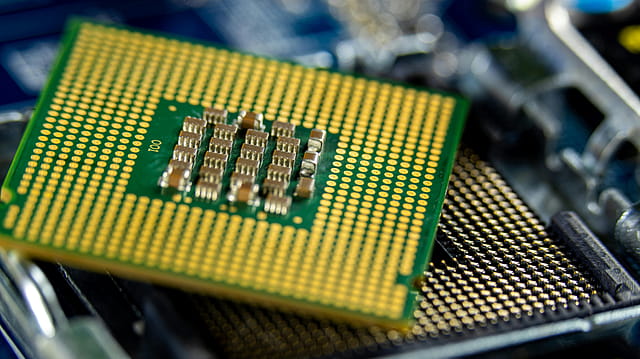
India has taken a significant step in building its semiconductor ecosystem with the government notifying the country’s first chip fabrication plant. The facility will be set up by Tata Semiconductor Manufacturing Private Limited at Dholera under a Special Economic Zone (SEZ) framework.
According to the official statement, “Special Economic Zones (SEZ) will be set up… exclusively for Electronic Hardware and Software including IT/ITES at Dholera in Gujarat.”
Spread across 66.166 hectares, the project is expected to generate nearly 21,000 jobs, underlining its scale and economic impact.
The SEZ is not just about chip production. It is designed to support electronic hardware, software, and IT-enabled services, with enabling infrastructure and a streamlined approval mechanism to ease operations and logistics.
What reforms has the government introduced to support semiconductor manufacturing?
The government has been actively reshaping SEZ policies to attract high-value semiconductor investments. It noted that “these reforms are aimed at promoting high-value, capital-intensive investments, fostering innovation, and enhancing ease of doing business on developing a globally competitive semiconductor ecosystem.”
A key turning point came with amendments to the SEZ Rules, 2006, notified on June 3, 2025. These changes reduced the minimum land requirement from 50 hectares to 10 hectares, introduced flexibility in land norms, allowed free-of-cost supplies in Net Foreign Exchange calculations, and permitted domestic sales in the Domestic Tariff Area on payment of duties.

Exclusive: To the Heavens and Back
19 Jun 2026 - Vol 04 | Issue 76
Shubhanshu Shukla relives the space odyssey that put India into orbit
These measures are tailored to the unique needs of semiconductor manufacturing, which demands high capital investment, complex logistics, and long gestation periods.
Which other projects are shaping India’s semiconductor ecosystem?
The Tata-led fab is part of a broader push to build a domestic semiconductor ecosystem. The government highlighted that “the Board of Approval for SEZs accorded approvals to major proposals of setting up of SEZs for semiconductor and electronics.”
Among these, Micron Semiconductor Technology India Pvt Ltd is setting up a semiconductor Assembly, Testing, Marking and Packaging unit in Sanand, Gujarat, with an investment of Rs 13,000 crore. Meanwhile, Aequs Group is developing an electronics component manufacturing SEZ in Dharwad, Karnataka.
The government believes “these projects are expected to catalyse the development of domestic value chains, generate high-skilled employment, and reduce import dependence.” Over time, such initiatives are expected to build “a robust, competitive, resilient, and future-ready semiconductor ecosystem.”
Taken together, these efforts aim to create integrated manufacturing clusters, strengthen domestic capabilities, and position India as an emerging global hub for semiconductor and electronics production.
(With input from ANI)