From Make in India to Make for the World: Nirmala Sitharaman’s New Global Pitch to Investors
For years, the slogan was familiar.
Make in India.
It appeared on government campaigns, investor presentations and factory announcements. The idea was straightforward: encourage companies to manufacture in India and serve one of the world's largest consumer markets.
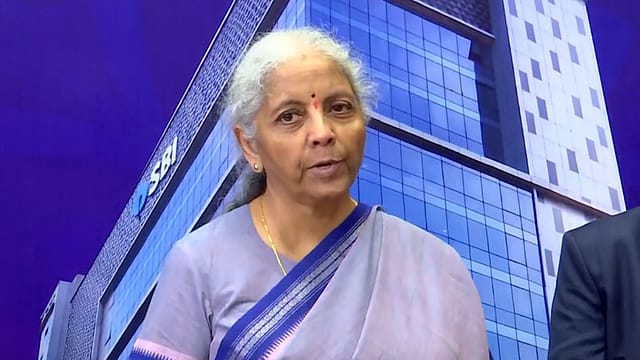
But in Chicago this week, Finance Minister Nirmala Sitharaman appeared to add a new chapter to that story.
Addressing leading investors and business executives at a high-level roundtable organised by the Consulate General of India and the US-India Strategic Partnership Forum (USISPF), Sitharaman repeatedly emphasised a broader vision: "Manufacture in India—for India and for the world."
The difference may sound small.
The implications are not.
Why Is India Now Talking About 'Making for the World'?
Because India's economic ambitions have grown.
Rise of the Pivotal Power
18 Sep 2026 - Vol 05 | Issue 38
The BRICS declaration is a strategic victory for Modi
The country is no longer positioning itself merely as a vast consumer market. It increasingly wants to be seen as a global production base, an innovation hub and a long-term destination for international capital.
According to the Finance Ministry, Sitharaman told investors that India offers a combination of scale, talent, infrastructure, technology and policy stability that few countries can match today.
Her message was clear:
Don't look at India only as a place where products can be sold.
Look at India as a place where products can be designed, manufactured and exported to the world.
Why Is This Pitch Arriving at an Important Moment?
The global economy is changing.
Over the past few years, companies around the world have reassessed supply chains, manufacturing locations and long-term investment strategies. Businesses are increasingly looking for resilience, scale and diversified production networks.
Against that backdrop, India sees an opportunity.
The Finance Minister highlighted India's growing infrastructure, expanding domestic demand and deep talent pool as advantages that can support both local consumption and global exports.
This is also consistent with India's broader push to deepen trade ties and expand economic partnerships with major markets around the world.
Why Did Sitharaman Spend So Much Time Talking About Aadhaar and UPI?
Because India's sales pitch is no longer only about factories.
It is also about digital infrastructure.
During the discussions, Sitharaman highlighted India's Digital Public Infrastructure ecosystem, including Aadhaar, UPI, DigiLocker, ONDC and India Stack. These platforms operate at a scale unmatched by most countries and have become one of India's strongest economic differentiators.
For global investors, the significance is straightforward.
A company entering India is not just entering a large market. It is entering a digital ecosystem capable of serving hundreds of millions of people efficiently.
That can lower costs, accelerate innovation and create entirely new business opportunities.
Is India Now Looking Beyond Software Services?
Not beyond.
But certainly beyond only software services.
For decades, India's global reputation rested heavily on IT services and outsourcing.
The Chicago roundtable suggested the next phase could be much broader.
Sitharaman spoke about opportunities in semiconductors, electronics, artificial intelligence, engineering, analytics and advanced manufacturing. She noted that Global Capability Centres (GCCs) are increasingly evolving into innovation hubs rather than simply support centres.
That reflects a larger shift already underway across cities such as Bengaluru, Hyderabad, Pune and Chennai, where multinational companies are expanding research, engineering and product-development operations.
What Role Does Manufacturing Play in This New Vision?
A central one.
But not manufacturing in the traditional sense alone.
According to the Finance Minister, India is looking to move beyond basic assembly into deeper component manufacturing, engineering capabilities and advanced technology production. Policy initiatives such as the Production Linked Incentive (PLI) scheme were cited as part of that transition.
In other words, India wants a larger share of the value chain.
Not just assembling products.
Designing them.
Engineering them.
And increasingly exporting them.
Why Is GIFT City Becoming Part of India's Global Story?
Because India wants to attract not only factories but also global capital.
Sitharaman highlighted the growth of Gujarat International Finance Tec-City (GIFT IFSC), which had more than 1,250 registered entities as of June 2026. The hub is expanding across banking, fund management, aircraft leasing, ship leasing, reinsurance and sustainable finance.
The goal is to create a financial ecosystem that connects international capital with Indian opportunities more efficiently.
For investors, that means India is attempting to strengthen both sides of the equation: production and finance.
Why Was Chicago the Chosen Venue?
The location itself is telling.
Chicago is one of America's major centres for manufacturing, logistics, finance and industrial investment.
The roundtable was organised in partnership with the US-India Strategic Partnership Forum, an organisation that works to deepen commercial and strategic ties between the two countries and represents hundreds of companies operating across the US-India corridor.
In many ways, the audience represented exactly the type of investors India hopes to attract in the next decade.
The Bigger Story: India Wants to Be More Than a Market
The most interesting part of Sitharaman's remarks wasn't any single sector.
It was the way all the pieces fit together.
Manufacturing.
Artificial intelligence.
Digital public infrastructure.
Semiconductors.
Defence technology.
Financial services.
Infrastructure.
Food processing.
Rather than promoting one industry, the Finance Minister presented India as an integrated platform where talent, technology, manufacturing and capital can come together.
That may be why her message in Chicago felt different from earlier investment pitches.
The old narrative was largely about the size of India's market.
The new narrative is about the scale of India's possibilities.
And if the Chicago roundtable is any indication, India wants global companies to see the country not just as a destination where business is done—but as a place from which business can be built for the world.
(With inputs from ANI)