Explained | India Approves Its First Dengue Vaccine. Here's Everything You Need to Know
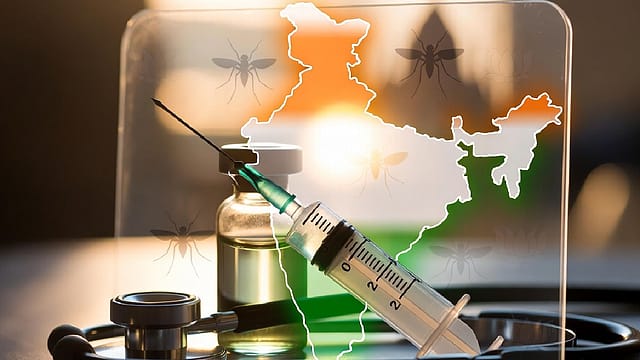
For decades, dengue has remained one of India's most persistent public health challenges.
Every monsoon, hospitals fill up with patients suffering from high fever, severe body aches and, in some cases, life-threatening complications. Despite millions of infections every year, treatment has largely been limited to supportive care because there has never been an approved dengue vaccine in India.
That has now changed.
The Drug Controller General of India (DCGI) has approved QDENGA, developed by Japanese pharmaceutical company Takeda, making it the country's first approved vaccine against dengue for people aged between 4 and 60 years.
So, what exactly is QDENGA? Who can take it? How effective is it? And when will it become available?

The Health and Wellness Issue
25 Sep 2026 - Vol 05 | Issue 39
Here's everything you need to know.
What has the DCGI approved?
India's drug regulator has granted market authorisation to Takeda's QDENGA, making it the first dengue vaccine approved for use in India. The approval allows the vaccine to be used for preventing dengue disease in individuals aged 4 to 60 years.
Why is this approval significant?
Dengue has become a year-round public health concern in India. The country accounts for nearly one-third of the world's dengue burden. While official figures reported more than 113,000 cases in 2025, researchers believe the actual number of infections is much higher, potentially running into tens of millions annually because many cases go unreported. Until now, there has been no approved dengue vaccine available in India.
Who can receive QDENGA?
The vaccine has been approved for:
a. Individuals aged 4 to 60 years
b. People regardless of whether they have previously had dengue
Unlike some earlier dengue vaccines developed elsewhere, QDENGA does not require pre-vaccination blood testing to determine whether a person has been infected before. That makes deployment significantly simpler.
How is the vaccine administered?
QDENGA is given as:
a. Two injections
b. Three months apart
c. Each dose is administered under the skin (subcutaneously)
Completing both doses is necessary for full vaccination.
How effective is the vaccine?
According to Takeda's global Phase III TIDES clinical trial involving more than 20,000 participants across eight countries:
a. 80.2% efficacy against laboratory-confirmed dengue one year after the second dose.
b. 90.4% efficacy against dengue-related hospitalisation after 18 months.
c. 84.1% protection against hospitalisation remained after 4.5 years.
The company also says follow-up data show sustained safety and protection for up to seven years.
Does it protect against all types of dengue?
Yes. Dengue is caused by four different virus serotypes (DENV-1, DENV-2, DENV-3 and DENV-4). India has reported circulation of all four. QDENGA is a tetravalent vaccine, meaning it is designed to provide protection against all four serotypes.
Was the vaccine tested in India?
Yes. Apart from global clinical trials involving over 28,000 participants, Takeda also conducted a Phase III study in India among people aged 4-60 years. According to the company, the study found the vaccine to be safe, well tolerated and capable of generating an immune response in children, adolescents and adults.
Is the vaccine recommended by the World Health Organization?
Yes. QDENGA is recommended by the World Health Organization (WHO) for use in dengue-endemic regions. It has also received WHO prequalification, which means it meets international standards for quality, safety and efficacy and can be procured by agencies such as UNICEF for public immunisation programmes.
Is QDENGA already being used in other countries?
Yes. According to Takeda, the vaccine has now been approved in 43 countries across Asia, Europe and Latin America. More than 32 million doses have been distributed globally. It is already part of Brazil's National Immunisation Programme and is also available through public vaccination programmes in countries including Argentina, Colombia and Indonesia.
Will the vaccine be available immediately in India?
Not necessarily. Regulatory approval is only the first step. Takeda will now work with Indian health authorities and healthcare providers on rollout plans, supply and availability. The company has not yet announced when the vaccine will become commercially available or what it will cost.
Does this mean dengue is no longer a concern?
No. Experts say vaccination should complement—not replace—existing dengue prevention measures.
These include:
a. Preventing mosquito breeding
b. Eliminating stagnant water
c. Using mosquito repellents
d. Wearing protective clothing
e. Community surveillance and vector control
There is also no specific antiviral treatment for dengue, making prevention particularly important.
So, is this the beginning of the end for Dengue in India?
Answer: Not quite. The approval of QDENGA marks a major milestone in India's fight against dengue, but it is not a silver bullet. The vaccine still needs to be rolled out, priced and made widely available. Even then, vaccination will complement—not replace—mosquito control, public awareness and early diagnosis. For now, India's battle against dengue enters a promising new chapter, not its final one.
(With inputs from ANI)