Delhi women’s safety: CM Rekha Gupta says ‘no place for fear’, tells boys ‘no means no’
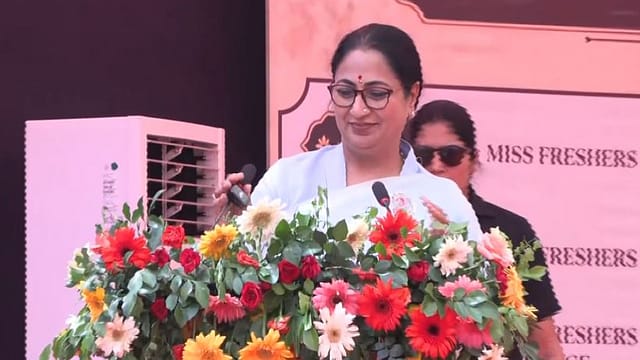
What does a safer Delhi look like? For Chief Minister Rekha Gupta, it cannot simply mean telling women and girls where they should or should not go. Speaking to students at Maitreyi College on Wednesday, Gupta said the conversation around safety must also include boys, and begin with something as basic as understanding consent.
Her message came against the backdrop of renewed scrutiny over women's safety in Delhi, with authorities facing questions about policing, patrolling and security in public spaces.
Why did Rekha Gupta say boys also need to be taught about safety?
Addressing students at the ‘Parampara Se Pragati’ programme, Gupta said families often respond to incidents involving women by placing restrictions on girls. Her argument was that the responsibility cannot stop there. “When incidents happen in Delhi where questions are raised over the safety of girls, families often impose restrictions only on girls. But when restrictions are needed, boys should also be taught,” she said.

Losing Memory
16 Oct 2026 - Vol 05 | Issue 42
The making of a medical and social emergency
Gupta urged boys to understand boundaries and respect, specifically stressing that “NO means NO.” She said everyone needs to understand both their rights and responsibilities, while boys in particular must be taught to respect others.
The comments put gender sensitisation alongside policing as part of the wider conversation about women's safety.
What did Rekha Gupta say about women choosing themselves?
Gupta also used the interaction to speak about women's independence and personal ambitions. She told the students that women often put their families before themselves and encouraged them to prioritise their own growth as well. “First, choose yourself,” Gupta said, urging girls to pursue their aspirations rather than seeing their own ambitions as secondary to family responsibilities. She also referred to her own political journey, telling students that when she was their age, she had never imagined she would one day become Delhi's Chief Minister and address a gathering like this.
Why is women’s safety under renewed focus in Delhi?
Gupta's remarks come as women's safety has remained a major concern in the capital, particularly around public spaces such as parks, schools, colleges and transport hubs.
Following a series of cases involving women and girls, Delhi authorities have recently discussed stronger patrolling and security measures. Delhi Lieutenant Governor Taranjit Singh Sandhu has directed officials to strengthen women's safety measures, including dedicated women-centric patrolling and safety audits of vulnerable locations. The administration has also highlighted the need for better lighting, surveillance and police presence in areas identified as vulnerable.
Those measures address the physical security side of the problem. Gupta's remarks at Maitreyi College added another dimension: changing behaviour and expectations around gender.
What did the Delhi CM say about punishment?
Gupta said people responsible for wrongdoing would face strict action. “If anyone does anything wrong in this city, they will not be spared,” she said.
She also told the students that she stood with women and girls who had to fight for their rights. “I stand with every daughter of mine. Whatever fight you have to fight, I will stand with you,” Gupta said. Her remarks were framed around both safety and empowerment rather than restrictions on women's movement.
What does Gupta want Delhi to look like?
The Chief Minister said the goal should be a Delhi where women can move freely, including at any time of the day.
“There is no place for fear or terror in our city,” she said, adding that authorities and society must work towards ensuring women can go wherever they want without fear.
The message, ultimately, was broader than a warning about punishment.
For Gupta, making Delhi safer also means asking a different question: instead of telling girls to change where they go, what if society also taught boys how to behave when they get there?
(With inputs from ANI)