Delhi HC Rejects Umar Khalid, Sharjeel Imam’s Bail Pleas in 2020 Riots Conspiracy Case
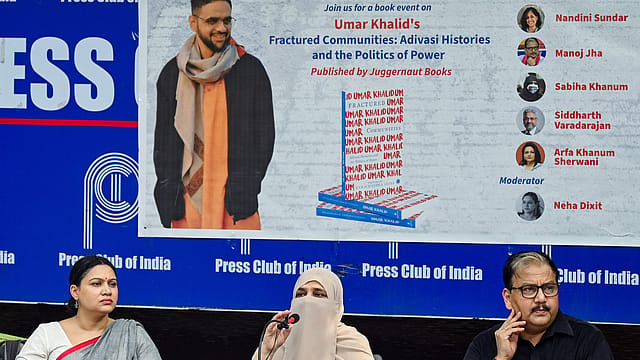
The Delhi High Court on Wednesday rejected the bail pleas of Umar Khalid and Sharjeel Imam in the alleged larger conspiracy behind the February 2020 North-East Delhi riots, holding that it could not modify directions previously issued by the Supreme Court.
A Division Bench of Justices Prathiba M. Singh and Dinesh Bhatt dismissed their appeals against the Karkardooma Court’s July 4 order denying regular bail.
The case concerns an alleged conspiracy linked to the riots amid protests against the Citizenship Amendment Act and the proposed National Register of Citizens. It arises from FIR 59/2020, registered by the Delhi Police Special Cell.
Supreme Court’s Directions Central to Ruling
The High Court noted that earlier bail applications by Khalid and Imam under the Unlawful Activities (Prevention) Act had reached the Supreme Court. The apex court granted bail to five of the seven accused before it but rejected their pleas.

Losing Memory
16 Oct 2026 - Vol 05 | Issue 42
The making of a medical and social emergency
According to the High Court, the Supreme Court had distinguished the roles attributed to the two men from those of the other accused, describing them as “ideological drivers” of the alleged conspiracy.
While denying bail, the Supreme Court permitted them to renew their applications after the examination of protected witnesses was completed or one year had elapsed, whichever occurred earlier.
The High Court said judicial discipline required it to follow those directions.
Defence Cites Incarceration and Trial Delays
Senior Advocate Trideep Pais, appearing for Khalid, argued that changed circumstances justified reconsideration of bail.
He submitted that charges had not been framed, witnesses had yet to be examined and Khalid had spent nearly six years in custody. Pais also relied on subsequent Supreme Court judgments concerning prolonged incarceration and trial delays.
Imam’s counsel similarly argued that the limited progress in the trial and the length of his detention should weigh in favour of bail.
The Bench considered the defence’s reliance on later decisions, including the judgment concerning Iftikhar Andrabi and interim bail granted to co-accused Tasleem Ahmad and Khalid Saifi.
Court Rejects Parity Argument
Opposing bail, Additional Solicitor General S.V. Raju argued that the roles attributed to Khalid and Imam could not be equated with those of accused who had secured relief.
He submitted that the Supreme Court’s January 5 order set out when fresh applications could be made and that the restrictions under Section 43D(5) of the UAPA continued to apply.
The High Court held that the roles attributed to Tasleem Ahmad and Khalid Saifi differed from those attributed to Khalid and Imam, ruling out bail on the ground of parity.
Proceedings on Charges Await Separate Decision
The Bench noted that arguments on framing charges had been completed before the trial court.
It was also informed that a separate issue involving inspection of unrelied-upon documents, arising from proceedings concerning co-accused Devangana Kalita, was pending before the Supreme Court. The trial court was awaiting that decision.
Finding no ground to interfere with the July 4 order, the High Court dismissed both appeals.
With inputs from ANI