Explained: Big Relief for Air Travelers as India Cracks Down on Seat Selection Fees
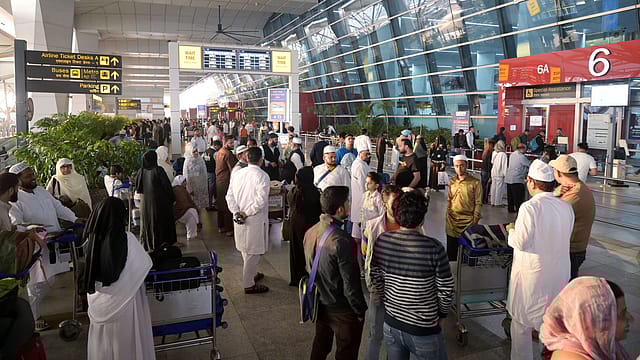
Flying in India may soon feel less transactional and far more equitable.
In a major directive, the Directorate General of Civil Aviation has mandated that airlines allocate at least 60 per cent of seats on every flight free of charge, eliminating the need for passengers to pay extra for basic seat selection.
Until now, travellers routinely paid additional fees to secure preferred seats, often leading to frustration and perceived unfairness.
Will Families Finally Sit Together Without Paying Extra?
One of the most practical changes addresses a long-standing passenger concern. Airlines are now required to ensure that travellers booked under the same PNR are seated together, preferably in adjacent seats.
This directive aims to remove the stress families often face during check-in and boarding, especially when traveling with children or elderly members.

Losing Memory
16 Oct 2026 - Vol 05 | Issue 42
The making of a medical and social emergency
What Changes for Carrying Sports Gear, Instruments and Pets?
The new guidelines extend beyond seating. Airlines must now facilitate the carriage of sports equipment and musical instruments in a transparent and passenger-friendly manner, while still adhering to safety norms.
Additionally, the government has urged airlines to introduce clear and consistent policies for transporting pets, an area that has historically lacked uniformity.
Are Passenger Rights Finally Being Taken Seriously?
The ministry has reinforced its stance on passenger rights, particularly during delays, cancellations and denied boarding. Airlines have been instructed to strictly follow existing frameworks and ensure passengers are well-informed.
To improve awareness, airlines must prominently display passenger rights across websites, mobile apps, booking platforms and airport counters, with communication also available in regional languages.
What Is Driving This Shift in Policy?
Civil Aviation Minister Ram Mohan Naidu highlighted the broader transformation of India’s aviation ecosystem.
"Under the transformational leadership of Hon'ble Prime Minister Shri Narendra Modi Ji, India has established itself as the world's third-largest domestic aviation market. Supported by the UDAN scheme, air travel in India has evolved from being an elite privilege to an inclusive travel. Indian airports are now handling more than 5 lakh passengers every day. It has been my constant endeavor to further enhance the ease of flying in the country through passenger-centric initiatives at airports like the UDAN Yatri Cafe offering affordable food, Flybrary providing free access to books and free Wi-Fi at the terminals. To further strengthen passenger facilitation measures, we have issued important directions: 60% seats free of charge, assured seating together for families, and clear, transparent norms for carriage of sports equipment, musical instruments & pets. Stronger enforcement and visibility of passenger rights, including during delays and cancellations," he said.
How Big Is India’s Aviation Growth Story?
India has firmly positioned itself as the world’s third-largest domestic aviation market, driven in part by the government’s UDAN scheme.
With over five lakh passengers flying daily, air travel is no longer an elite luxury but an increasingly accessible mode of transport for millions.
What Comes Next for Flyers?
The Ministry of Civil Aviation has reiterated its commitment to enhancing passenger experience, reducing grievances and ensuring transparency across the aviation ecosystem.
With initiatives like affordable airport dining, free book access through Flybrary, and widespread Wi-Fi availability, the focus is clearly shifting toward making air travel smoother, fairer and more inclusive.
(With inputs from ANI)