Demolish Illegal Structures, Rehabilitate Families Too: Supreme Court Flags ‘Twin Responsibility’
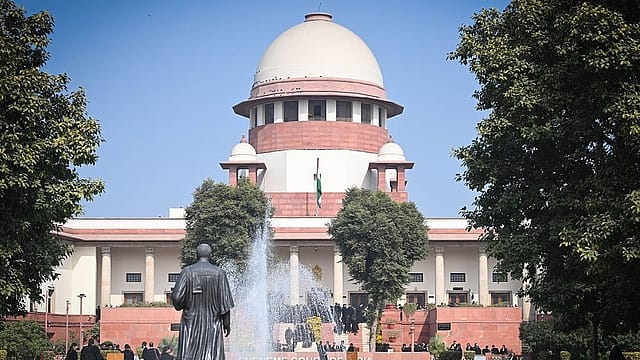
Demolition may enforce the law. But where does the family living inside go next? The Supreme Court has put that question at the heart of the debate over illegal structures, observing that authorities may have a “twin responsibility”: act against unauthorised construction while also considering rehabilitation for people who could be rendered homeless.
A bench comprising Chief Justice of India Surya Kant and Justices Joymalya Bagchi and V Mohana was hearing a petition seeking a uniform policy for long-standing unauthorised constructions and rehabilitation of families affected by demolitions. The Court, however, stopped short of laying down such a policy itself.
Why did the rehabilitation question arise?
The petitioner, Centre for Law and Good Governance, argued that the right to shelter is part of the right to human dignity and that demolishing long-standing settlements without rehabilitation could severely affect families' lives and livelihoods. It pointed out that some unauthorised colonies had existed for 30 to 40 years, with authorities collecting municipal taxes and providing water and electricity connections. In some instances, properties had even been allotted on a freehold basis. The argument: after allowing settlements to exist for decades, authorities cannot ignore the human consequences when they eventually demolish them.

Rise of the Pivotal Power
18 Sep 2026 - Vol 05 | Issue 38
The BRICS declaration is a strategic victory for Modi
What did the Supreme Court say?
The CJI observed that when authorities decide to demolish an illegal structure, they must also confront a basic question: where will the affected family go? That, the Court indicated, could create a “twin responsibility” involving both enforcement and consideration of rehabilitation. At the same time, the bench made clear that rehabilitation policy is essentially a matter for governments.
Why didn't the Court frame a national policy?
Because circumstances can differ dramatically from one state to another. Justice Bagchi noted that demolition cases vary across states, making a single court-mandated formula difficult to impose nationwide. The petitioner had sought an expert committee to formulate and supervise guidelines and proposed temporary accommodation of around 15-20 square yards for affected families. The Court declined to prescribe such a uniform framework.
So, what happens now?
The petition has been disposed of, but the issue hasn't been shut down. The Court allowed the petitioner to send its proposals to the Centre, states and Union Territories, asking them to consider the questions raised while framing their respective policies. The Supreme Court said it was hopeful that the concerns would receive “due consideration”. The legal question of an illegal structure may sometimes be straightforward. The human question of what happens after the bulldozer arrives is considerably harder.
(With inputs from ANI)