Delhi GRAP Stage 1: What commuters and commercial vehicle drivers need to know
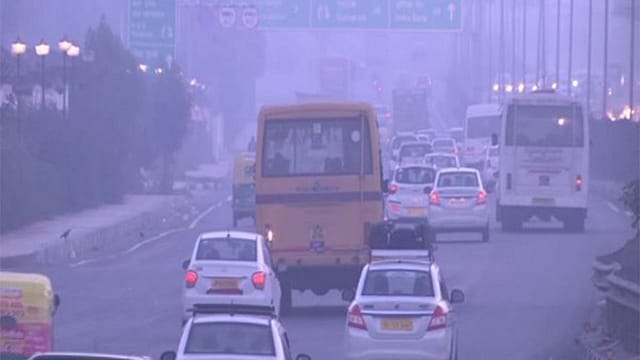
If you are planning to drive into Delhi, operate a commercial vehicle or commute across the NCR, the latest pollution alert comes with a few things to keep in mind. Authorities have activated the first stage of the Graded Response Action Plan (GRAP) as air quality worsens, with traffic management and checks on polluting vehicles among the measures being stepped up.
The Commission for Air Quality Management (CAQM) invoked Stage 1 across Delhi-NCR on October 21, 2026. Delhi Traffic Police Additional Commissioner Vijayanta Goyal Arya subsequently said police would deploy personnel to reduce congestion, divert commercial vehicles that are not headed for Delhi at the borders and intensify enforcement against vehicles without valid Pollution Under Control Certificates (PUCCs).

Losing Memory
16 Oct 2026 - Vol 05 | Issue 42
The making of a medical and social emergency
Here is what the restrictions mean for drivers and why pollution levels are raising concern.
What does GRAP Stage 1 mean for Delhi commuters?
GRAP is a set of emergency measures designed to prevent air pollution from worsening. Under the current framework, Stage 1 applies when Delhi’s AQI falls in the “poor” range of 201–300. According to the Ministry of Environment’s October 21 announcement, CAQM activated all 25 Stage 1 action points across NCR after Delhi’s daily average AQI reached 244 at 2 pm and 245 at 4 pm. Forecasts from the India Meteorological Department and the Indian Institute of Tropical Meteorology indicated that poor air quality was likely to persist.
For commuters, this means stepped-up traffic management and pollution-control enforcement. Stage 1 does not, by itself, mean that all private cars are banned or that schools and offices must close.
Will commercial vehicles face restrictions at Delhi borders?
Delhi Traffic Police has said that commercial vehicles not destined for Delhi will be diverted at the borders. The move is intended to discourage unnecessary truck traffic from entering the city and contributing to congestion and emissions.
The police have also said they will increase deployments at busy roads and intersections to keep traffic moving. Drivers of goods vehicles should pay attention to diversion instructions and check their routes before travelling.
The measure is not a blanket ban on every commercial vehicle. The restrictions depend on the applicable rules and the type of vehicle, so drivers should follow official directions rather than assume all goods vehicles are prohibited.
Is a valid PUC certificate mandatory during GRAP Stage 1?
Delhi Police has urged motorists to keep their Pollution Under Control certificates valid, warning that enforcement against vehicles with expired certificates will be intensified. A valid PUC certificate shows that a vehicle has undergone an emissions test and meets the applicable pollution standards at the time of testing. Drivers should check the certificate’s validity before travelling and ensure their vehicle complies with the relevant emission and fitness requirements.
The wider Stage 1 action plan also calls for authorities to stop visibly polluting vehicles and enforce existing rules on overage petrol and diesel vehicles.
Delhi pollution map: Jahangirpuri and Chandni Chowk cross AQI 300
The citywide AQI does not tell the entire story. At 7 am on October 22, Delhi recorded an AQI of 226, placing the capital in the poor category. Jahangirpuri registered 309, while Chandni Chowk recorded around 306–307 in reports published that morning. Both readings fall in the “very poor” category.
Other monitoring stations also recorded elevated levels. Alipur registered 273, Bawana 275, Patparganj 298, Rohini 291 and ITO 280.
Under the Central Pollution Control Board’s classification, an AQI of 201–300 is poor, while 301–400 is very poor. The CPCB says poor air quality can cause breathing discomfort during prolonged exposure.
What other pollution-control measures are being taken?
Stage 1 extends beyond traffic enforcement. CAQM’s action plan calls for mechanised road sweeping, water sprinkling to control dust, stricter dust management at construction sites, regular waste collection and action against open waste burning. Authorities are also required to enforce pollution standards in industries and monitor high-traffic corridors.
The Delhi Metro Rail Corporation has announced 20 additional weekday train trips from October 22 to encourage public transport use. It has also said it will step up dust-control measures at construction sites and on adjoining roads.
What should Delhi-NCR residents do next?
Keep your PUC certificate valid, follow traffic diversions, check official pollution updates and consider public transport where practical. Residents should also avoid unnecessary outdoor exertion when air quality is poor, particularly if they are sensitive to pollution.
The immediate goal of GRAP Stage 1 is to stop air quality from deteriorating further. Whether the measures work will depend not only on traffic enforcement but also on how consistently agencies across NCR control road dust, construction emissions and other pollution sources.
(With inputs from ANI)