Delhi air pollution: GRAP Stage 3 curbs lifted as AQI improves to 204
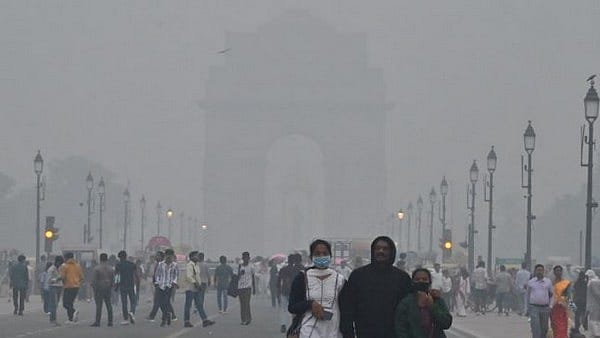
For Delhi residents, the easing of pollution restrictions brings some relief. Construction activity and certain vehicle restrictions had been curtailed under the strictest measures of the Graded Response Action Plan (GRAP). Now, with air quality showing a downward trend, the Commission for Air Quality Management (CAQM) has withdrawn Stage 3 restrictions across Delhi-NCR.
The decision was announced on Tuesday, November 17, after the commission’s GRAP sub-committee reviewed the latest pollution levels. Delhi’s daily average Air Quality Index (AQI) stood at 204, placing it in the ‘poor’ category, according to the CAQM and reports citing Central Pollution Control Board (CPCB) data.
But this is not the end of pollution controls. Measures under GRAP Stages 1 and 2, along with restrictions specified in an earlier CAQM order dated October 30, will continue to apply.

The Wealth Issue 2026
06 Nov 2026 - Vol 05 | Issue 45
Portraits of Dreamers and Doers under 35
Why has CAQM withdrawn GRAP Stage 3 in Delhi-NCR?
The commission cited the sustained downward movement in Delhi’s daily average AQI while announcing the decision. Stage 3 had been imposed on November 6, when the capital recorded an AQI of 382, in the ‘very poor’ category. At the time, unfavourable weather conditions were preventing pollutants from dispersing, while forecasts indicated that air quality could deteriorate further.
The CAQM had therefore activated additional emergency measures across the National Capital Region. Their withdrawal now offers some relief to construction activity and motorists affected by the stricter restrictions.
However, authorities have been asked to continue enforcing the remaining measures to prevent pollution levels from rising again.
What restrictions remain under GRAP Stages 1 and 2?
The withdrawal of Stage 3 does not mean Delhi-NCR is free of pollution-related curbs. Stage 1 and Stage 2 measures remain in force, covering dust suppression, road cleaning, water sprinkling, waste management and enforcement of pollution-control norms.
Stage 2 adds stricter steps, including intensified dust-control measures, higher parking fees and possible changes to office timings to reduce vehicular emissions.
The CAQM’s October 30 order also remains applicable. Residents and businesses should therefore check the commission’s latest directions rather than assume that every restriction has been withdrawn.
What are the four GRAP stages and when do they apply?
GRAP is an emergency response framework designed to intensify pollution-control measures as air quality deteriorates. Its four stages are linked to Delhi’s AQI: Stage 1 applies to ‘poor’ air (201-300), Stage 2 to ‘very poor’ air (301-400), Stage 3 to ‘severe’ air (401-450), and Stage 4 to ‘severe plus’ conditions (above 450).
Stage 3 brings more stringent measures, including restrictions on certain construction and demolition activities, curbs on specified categories of older vehicles and hybrid schooling for younger classes. Stage 4 adds emergency restrictions, including curbs on the movement of certain heavy vehicles and further industrial and traffic-related measures.
Importantly, the authorities can impose restrictions in advance if forecasts indicate that air quality is likely to cross a particular threshold and remain there.
Will Delhi's air quality improve further as winter sets in?
The latest improvement offers temporary relief, but it does not resolve the capital’s recurring winter pollution problem. Weather conditions, wind speed, temperature, local emissions, road dust, construction activity and pollution transported from neighbouring areas can all influence daily AQI readings.
The CAQM’s decision is therefore a step back from emergency restrictions, not a declaration that the air is clean. With Stages 1 and 2 still active, the coming days will show whether Delhi can sustain the improvement or whether worsening conditions will force authorities to tighten the curbs again.
(With inputs from ANI)