Cockroaches, Expired Food, Rotten Fruit: How FSSAI is Putting India's Kitchens Under the Scanner
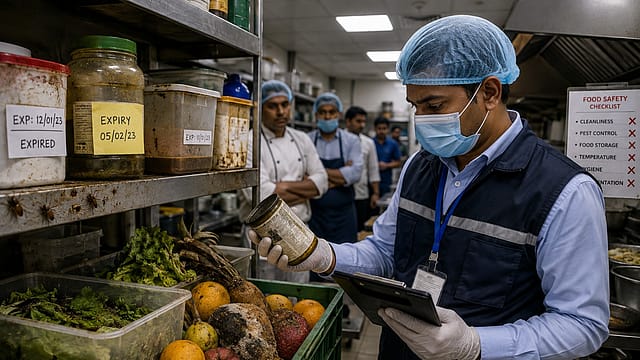
For most travellers, Aerocity is the polished face of modern hospitality.
Located next to Delhi's Indira Gandhi International Airport, the district is packed with luxury hotels, international restaurant chains and business travellers arriving from across the world. The expectation is simple: premium food, premium service and premium hygiene.
That is why the latest findings from Food Safety and Standards Authority of India (FSSAI) inspections have raised eyebrows.
According to sources quoted by ANI, food safety officials inspected the kitchens of two major hotels in Aerocity and found a series of hygiene and food-handling deficiencies, including complaints of cockroaches, flies, foul odour, expired food items and poor storage practices.
The inspections were reportedly carried out over nearly two days, during which officials documented dozens of observations and compliance gaps.

Rise of the Pivotal Power
18 Sep 2026 - Vol 05 | Issue 38
The BRICS declaration is a strategic victory for Modi
The names of the hotels had not been officially disclosed by authorities at the time of writing.
What Did FSSAI Inspectors Find During the Aerocity Hotel Checks?
The findings read less like a luxury hotel audit and more like a food safety warning checklist.
Inspectors reportedly found deficiencies in the segregation of vegetarian and non-vegetarian food, an important requirement intended to prevent cross-contamination and maintain food safety standards.
Officials also reportedly recorded complaints regarding flies, cockroaches and foul smells in food preparation areas.
In one of the kitchens, bread packets carrying expired stickers were allegedly found. Around 87 kilograms of expired sweets discovered in a confectionery section were reportedly destroyed on the spot.
The pastry area raised additional concerns. Sources revealed that inspectors found expired cake bases alongside evidence of pest activity, including flies and cockroaches.
At another Aerocity hotel, inspectors reportedly documented 59 separate deficiencies over the course of the inspection. Among the issues cited were mouldy apples, rotten tomatoes, food products stored in the open, broken containers in bakery sections and irregularities in the labelling of packaged food items.
Officials also noted that some food products allegedly lacked the required FSSAI licences or endorsements.
Why Are Cockroaches and Expired Food Such a Serious Concern?
A cockroach in a kitchen is not just an unpleasant sight.
Public health experts have long warned that cockroaches can act as carriers of bacteria, fungi and other disease-causing organisms. They move between drains, waste areas and food preparation surfaces, creating opportunities for contamination.
Expired food presents a different risk.
Products such as sweets, dairy items, cake bases and bakery ingredients can deteriorate over time, potentially allowing microbial growth if they are not stored and monitored correctly.
The concern becomes greater in high-volume commercial kitchens where hundreds or even thousands of meals may be served daily.
This is why food safety regulations require strict monitoring of storage conditions, expiry dates, pest control measures and segregation practices.
Is This Part of a Bigger FSSAI Crackdown Across India?
Yes.
The Aerocity inspections are not happening in isolation.
Over the past two years, food safety authorities across India have significantly increased inspections, surprise raids and enforcement actions against hotels, restaurants, cloud kitchens and food manufacturing units.
FSSAI and state food safety departments have been under growing pressure to strengthen enforcement following a series of viral videos, customer complaints and investigations highlighting hygiene concerns in food establishments.
Several states have launched special drives aimed at identifying food safety violations before festive seasons and periods of high consumer demand.
The latest inspections appear to be part of that broader push.
What Happened in Maharashtra Earlier This Month?
One of the most recent examples came from Maharashtra.
Earlier this month, the Maharashtra Food and Drug Administration (FDA) suspended the FSSAI licence of a prominent food establishment in Chhatrapati Sambhajinagar after a surprise inspection conducted under the state's "Safe Food Safe Maharashtra" campaign.
According to the FDA, inspectors found chopped paneer with a foul smell being kept ready for cooking despite concerns over its condition. Officials noted that spoiled paneer can become a serious health hazard because its high moisture and protein content creates conditions for rapid microbial growth.
The establishment's licence was suspended with immediate effect pending further action, according to state authorities.
What Other Food Safety Cases Have Triggered Action Across India?
The current wave of inspections follows a string of high-profile incidents that have kept food hygiene in the national conversation.
In 2024, food safety authorities in several states conducted inspections after social media videos showed alleged hygiene lapses in restaurants and food preparation units. According to reports, authorities in Telangana, Karnataka and Maharashtra intensified surprise inspections following public complaints and viral footage showing unsanitary kitchen conditions.
In Hyderabad, task force inspections conducted by Telangana's Commissioner of Food Safety found multiple violations at restaurants and bakeries, including improper food storage, pest-control deficiencies and expired ingredients, according to official inspection reports.
In Karnataka, health authorities also carried out inspections of restaurants and food outlets following food contamination complaints, leading to notices and enforcement actions against several establishments, according to reports.
The common thread across these cases has been the gap between what customers see in dining areas and what inspectors sometimes find behind kitchen doors.
What Rules Do Hotels and Restaurants Have to Follow Under FSSAI?
Every food business operator in India, from a roadside eatery to a five-star hotel, is required to comply with food safety standards laid down under the Food Safety and Standards Act, 2006.
These standards cover everything from pest control and waste management to food storage, labelling, employee hygiene and temperature monitoring.
Businesses are also expected to maintain records showing that food ingredients are safe for consumption and stored appropriately.
Failure to comply can lead to warnings, improvement notices, suspension of licences, monetary penalties and, in serious cases, prosecution.
The severity of the action generally depends on whether inspectors find procedural lapses or conditions that pose a direct public health risk.
Have the Aerocity Hotels Responded?
As of now, no official public response from the hotels inspected in Aerocity has been reported by ANI or other major news agencies.
Authorities have also not publicly disclosed whether the inspections will result in penalties, licence actions or corrective notices.
Typically, establishments found in violation are given an opportunity to address deficiencies and demonstrate compliance before more serious enforcement measures are considered.
Further action, if any, will depend on the findings of follow-up inspections and regulatory review.
The Bigger Question: Are India's Kitchens Facing a Transparency Moment?
For years, food safety inspections largely happened away from public view.
Today, that is changing.
Consumers increasingly expect transparency about what happens behind kitchen doors. Social media has amplified complaints. Inspection reports are drawing more attention. Regulators are facing greater pressure to act quickly and visibly.
The Aerocity findings are significant not only because they involve high-profile hospitality establishments but because they reflect a broader shift in food regulation across India.
The message from regulators appears increasingly clear: whether it is a roadside stall, a cloud kitchen or a luxury hotel near one of India's busiest airports, hygiene standards are no longer something that can remain hidden in the back room.
And for consumers, that may be the most important inspection of all.
(With inputs from ANI)