Chhath Puja Begins Across India; Nitin Nabin Says Festival Takes Bihar’s Traditions to the World
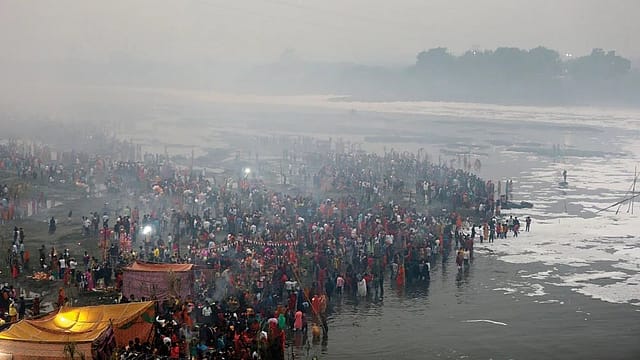
Chhath Puja began across the country on Friday with the ritual of Nahay-Khay, marking the start of the four-day festival dedicated to the Sun God and Chhathi Maiya. Devotees gathered at riverbanks, ponds and temples to offer prayers, as preparations got underway for the evening and morning offerings to the Sun over the next three days.
In Patna, BJP national president Nitin Nabin visited Patlipul and Digha ghats, describing Chhath as a festival that carries Bihar’s culture and traditions to different parts of India and the world.
Speaking to ANI, Nabin said the festival brought families and communities together through rituals centred on cleanliness, purity and discipline. He said its observance also reflected gratitude towards nature, the Sun and the Ganga, as well as the farmers whose produce is used in the offerings.

The Wealth Issue 2026
06 Nov 2026 - Vol 05 | Issue 45
Portraits of Dreamers and Doers under 35
“Wherever the people of Bihar have gone, they have carried this great festival of Chhath and this culture with them. And society has also embraced it very warmly,” he said.
Nabin cited celebrations in New York, New Jersey, Mumbai and Delhi as examples of how the festival had travelled beyond Bihar. He also recalled visiting the Ganga ghats at Patlipul with his family since childhood to offer arghya.
NAHAY-KHAY MARKS THE BEGINNING
The first day of Chhath, Nahay-Khay, involves devotees taking a holy bath and preparing a traditional meal, usually comprising arwa rice, chana dal and lauki (bottle gourd). The ritual marks the beginning of the observance, with devotees maintaining strict rules of cleanliness and food preparation.
In Aurangabad, devotees visited the historic Deo Sun Temple to seek blessings. A devotee told ANI that she had completed the Nahay-Khay meal and was preparing to begin the fast. She said she would visit the temple after taking a bath at Suryakund, a pond associated with the Sun God.
Another devotee in Patna said it was difficult to stay away from the banks of the Ganga during Chhath, particularly for those living in the city.
FOUR DAYS OF RITUALS
The festival continues on Saturday with Kharna, when devotees fast from sunrise until sunset. The fast is broken after prayers with offerings of traditional prasad, generally including jaggery-based kheer and roti. Devotees then begin a rigorous fast that lasts around 36 hours without food or water.
On November 15, the third day, devotees will gather at riverbanks and other water bodies to offer Sandhya Arghya to the setting Sun.
The festival will conclude on November 16 with Usha Arghya, when prayers are offered to the rising Sun. The ritual is followed by Parana, marking the end of the fast.
DEO SUN TEMPLE EXPECTS LARGE CROWDS
Rajesh Pathak, chief priest of the Deo Sun Temple in Aurangabad, said the historic shrine was dedicated to Bhagwan Bhaskar, who is worshipped there in three forms representing Brahma, Vishnu and Mahesh.
He said the temple's idols symbolised the Sun at dawn, midday and sunset. The festival had officially begun on Friday, although some devotees had arrived a day earlier.
Pathak said large crowds were expected over the coming days and arrangements had been made for the convenience and safety of visitors.
Chhath is dedicated to the worship of Surya, the Sun God, and Chhathi Maiya. The festival is observed with prayers and offerings for the health, prosperity and well-being of families. Its rituals, particularly the offerings made to the setting and rising Sun, are central to a tradition that has spread from Bihar and eastern Uttar Pradesh to communities across India and abroad.
With inputs from ANI