BRICS is coming: What did FSSAI find behind the doors of Delhi’s 5-star kitchens?
Imagine walking into a five-star hotel.
The lobby is spotless, the flowers are fresh, and the staff is perfectly turned out. Somewhere upstairs, chefs are preparing elaborate menus for guests who have flown in from across the world.
Now imagine the doors to the kitchen opening.
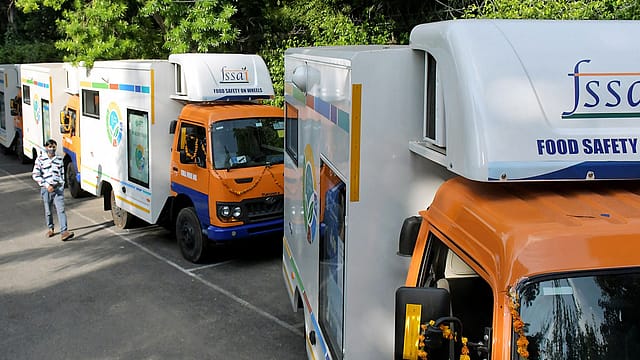
That is where the Food Safety and Standards Authority of India (FSSAI) has been looking ahead of the BRICS Summit in New Delhi.
With India preparing to host the summit on September 12 and 13, the food regulator has held a meeting with representatives of leading five-star hotels and issued what sources described as clear directives on food safety compliance, with zero tolerance for violations.
And recent inspections show why those checks matter.

The Health and Wellness Issue
25 Sep 2026 - Vol 05 | Issue 39
Why are 5-star hotel kitchens under the scanner before BRICS?
When world leaders, ministers, officials and business delegates arrive for a major international summit, hotels become more than places to sleep.
They become part of the event's hospitality infrastructure.
Reuters reported last month that Chinese President Xi Jinping was expected to attend the September 12-13 BRICS summit in New Delhi with a large delegation, with Chinese officials working on hotels and security protocols.
That puts everything from security and transport to food and hygiene under an unusually bright spotlight.
For FSSAI, the message to hotels is straightforward: a five-star address does not mean five-star food-safety compliance can be assumed.
The regulator's recent meeting with hotel representatives focused on regulatory compliance, hygiene benchmarks, kitchen safety protocols and overall food safety. Sources told ANI that the participating hotels reported strong adherence to safety norms and shared updates on their compliance systems.
FSSAI, meanwhile, reiterated a zero-tolerance approach towards violations.
So what does FSSAI actually check inside a luxury hotel kitchen?
Food safety is about much more than whether a kitchen looks clean.
Inspectors can examine everything from food storage and expiry dates to pest control, licensing, labelling, temperature monitoring, waste management and segregation of different food items.
Supplier verification matters too.
Hotels need to know where their ingredients are coming from and whether suppliers have the required food-safety licences and documentation.
Then there is the less glamorous — but crucial — part: what happens after the ingredients reach the kitchen.
Are vegetables stored correctly? Are refrigerators working at the right temperatures? Are food-contact surfaces clean? Are vegetarian and non-vegetarian foods properly segregated? Are allergens handled correctly? Are expired products being removed rather than sitting in storage?
Recent FSSAI inspections in Delhi found deficiencies across several of these areas.
What did FSSAI find at Andaz Delhi?
One of the recent inspections was carried out at Andaz Delhi in Aerocity on June 22.
Among the findings was around 87 kg of expired sweets, which were destroyed on the spot. Inspectors also found an expired cake base and bread packets carrying expired stickers.
The inspection flagged pest-control and hygiene concerns as well. Officials reported cockroaches and flies in parts of the kitchen, along with issues involving food storage, waste management and temperature monitoring.
There were also concerns about segregation.
At one kitchen, vegetarian and non-vegetarian cutting boards were reportedly found immersed together in the same water container. Inspectors also found a case where burners designated for vegetarian food were being used to prepare non-vegetarian food.
The inspection further raised questions about supplier verification, including checks on suppliers' FSSAI licences.
Andaz said it had fully cooperated with the inspection and submitted a detailed action-taken report, adding that guest health, hygiene and safety remain its highest priority.
What about JW Marriott?
At JW Marriott, the inspection continued for around two days and reportedly recorded 59 deficiencies.
The findings went beyond kitchen cleanliness.
FSSAI officials flagged licensing and labelling issues, including food-related activities that were reportedly not covered by the hotel's licence. Some packaged products also had problems with licence numbers or manufacturer details.
The inspection also identified hygiene and storage problems.
These included unclean utensils and food-contact surfaces, inadequate pest control, cockroaches and fruit flies, mouldy apples, rotten tomatoes, uncovered food and improperly stored vegetables.
Problems were reported across multiple kitchen sections, including Chinese, Indian, Italian and bakery areas.
Officials also flagged issues in the water-bottling area, dry store and vegetable preparation section, including a rusting drinking-water storage tank. Samples of products including milk whitener, drinking water, paneer, honey, rasmalai and chutney were collected for analysis.
Does this mean the hotels were serving unsafe food?
Not necessarily.
This distinction matters.
An inspection finding a food-safety deficiency does not automatically establish that every meal served by a hotel was unsafe.
In the two Delhi cases, FSSAI collected regulatory samples, and further action is linked to compliance and laboratory analysis. The regulator has issued notices over the reported deficiencies, giving the establishments an opportunity to respond and take corrective action.
So the story is not simply about “dirty five-star hotels”.
It is about what happens when regulators look beyond the polished guest experience and into the systems that make that experience possible.
Why does kitchen hygiene matter so much at a global summit?
Because one kitchen can end up serving hundreds of people — and during an international summit, those guests may include senior officials and foreign delegations.
That makes food safety part of the larger logistics of hosting BRICS.
India is already preparing the capital for the summit, with traffic rehearsals and restrictions being put in place ahead of the September 11-13 event schedule.
Hotels are another piece of that preparation.
The dining room may be where a guest sees the final product. But food safety is decided much earlier — in storage rooms, refrigerators, preparation areas, supplier records and kitchens that most guests will never see.
The 5-star test is happening behind closed doors
A luxury hotel can spend heavily on its lobby, its rooms and its restaurants.
But the real food-safety test happens somewhere most guests never enter.
Is the food within date?
Is it stored correctly?
Are pests kept out?
Are vegetarian and non-vegetarian foods properly separated?
Are suppliers properly verified?
Are kitchen surfaces, equipment and water systems maintained?
Are licences and labels in order?
Those are the questions FSSAI is asking before the BRICS spotlight falls on Delhi.
And the regulator's latest message to the hotel industry is clear: when the world's attention turns to India's hospitality, there will be little room for food-safety lapses behind the kitchen door.
(With inputs from ANI)