Battle of Tololing changed everything in Kargil War: Brigadier Khushal Thakur
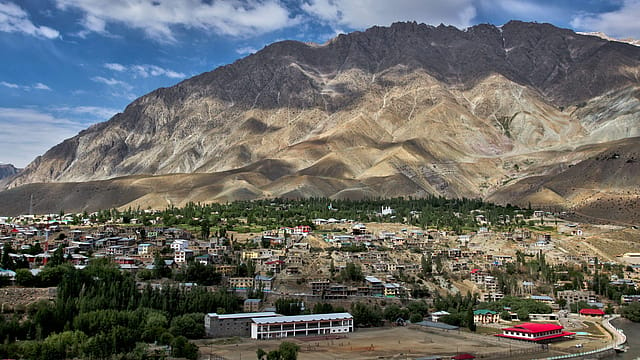
On the 27th anniversary of the Kargil War, Brigadier (Retd.) Khushal Thakur, who commanded the 18 Grenadiers during Operation Vijay in 1999, reflected on the conflict that reshaped India's military history. Recounting the Battle of Tololing, he described it as the most difficult phase of the war and the moment that turned the tide in India's favour. He also paid tribute to fallen comrades, highlighted the Indian Army's transformation over the past 27 years and encouraged young Indians to serve the nation.
Tololing was the toughest battle and the war's turning point
Speaking to ANI, Brigadier (Retd.) Khushal Thakur recalled reaching Dras after moving from Kashmir and said it soon became clear that the Indian Army was confronting regular Pakistani troops rather than infiltrating militants.
"I clearly remember reaching Dras after moving from Kashmir. After four or five days of intense fighting, I realised this was not a handful of militants. Pakistan had deployed troops from the Northern Light Infantry along with regular Army personnel. Their use of heavy weapons, including Stinger missiles that brought down several helicopters, made it evident that we were fighting a full-fledged military force," he recalled.

Losing Memory
16 Oct 2026 - Vol 05 | Issue 42
The making of a medical and social emergency
He described the assault on Tololing as one of the most demanding military operations of the conflict, with Indian soldiers climbing steep, barren slopes to an altitude of nearly 16,000 feet while carrying around 25 kilograms of equipment in temperatures dropping to minus 20 degrees Celsius. The troops faced relentless enemy fire from fortified positions, often without adequate artillery support or sufficient time to acclimatise.
As the Commanding Officer of 18 Grenadiers, Thakur said the responsibility was immense because the nation expected the Army to swiftly recapture the strategic heights.
"The Battle of Tololing became the turning point of the Kargil War. From Dras it appears close, but the reality was completely different. We had to climb steep, barren slopes at an altitude of nearly 16,000 feet in temperatures of minus 15 to minus 20 degrees Celsius. There was no cover, while the enemy occupied fortified positions equipped with machine guns, rocket launchers, mortars and Stinger missiles."
He said the victory at Tololing fundamentally altered the momentum of the conflict.
"In the beginning, the advantage was overwhelmingly with Pakistan because they occupied the heights and had prepared their positions well in advance. But after Tololing was recaptured, the morale of the Pakistani forces collapsed while the confidence of the Indian Army soared. From there, one peak after another was recaptured, ultimately leading to victory."
Tribute to fallen heroes and Yogendra Singh Yadav's courage
Remembering those who laid down their lives during the operation, Brigadier Thakur paid tribute to Colonel Rajesh Adhikari, Subedar Randhir Singh, his radio operator Ram Kumar and Major M. Saravanan Viswanathan, who, he said, died in his arms.
He also highlighted the extraordinary bravery of Param Vir Chakra awardee Subedar Major (Honorary Captain) Yogendra Singh Yadav during the assault on Tiger Hill.
"Yogendra Singh Yadav was only 19 years old. He volunteered to climb the near-vertical cliffs behind Tiger Hill as part of the Ghatak platoon. Almost his entire team was martyred. Despite suffering 15 bullet injuries, he continued fighting until the objective was secured. His courage remains one of the finest examples of battlefield heroism," he added.
Sharing one of the most emotional memories of the war, Thakur recalled an 11-day mission to recover the mortal remains of a soldier who had fallen into a deep gorge during hand-to-hand combat.
"Bringing him back gave me immense satisfaction because we fulfilled our promise that no soldier is ever left behind. Only then could I face his family with dignity," he said.
‘Indian Army stronger than ever, youth should serve the nation’
Reflecting on the Army's evolution since the Kargil War, Brigadier Thakur said technological capabilities, indigenous defence production and infrastructure have improved significantly, while the courage of Indian soldiers has remained unchanged.
"The bravery, valour, and spirit of our soldiers that I witnessed during the Kargil War continue to exist even today. We recently saw that same spirit during Operation Sindoor. What has changed is technology, modernisation, infrastructure and self-reliance in equipment. Today's Army is far better equipped, but the courage remains unchanged," Thakur said.
Looking ahead, he observed that modern warfare increasingly extends into cyber and space domains, making technology and indigenous capabilities critical. He praised the progress achieved under the Atmanirbhar Bharat initiative in defence manufacturing and surveillance.
Concluding with a message for young Indians, the Kargil War veteran urged them to put the nation first and consider a career in the armed forces.
"I would especially encourage young people to join the armed forces. If you work hard and prepare sincerely, nobody can stop you from becoming a soldier or an officer. Merit alone is enough," the Kargil hero stated.
(With inputs from ANI)