Basava Jayanti 2026: Who Was Mahatma Basaveshwara and Why Does India Remember Him?
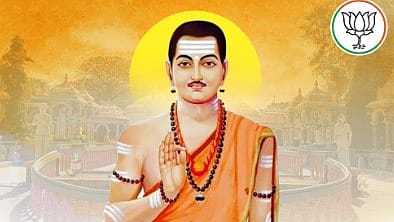
Nine centuries after he walked the plains of Karnataka, Mahatma Basaveshwara commands national attention. On April 20, Basava Jayanti brought leaders to Prerna Sthal in Parliament House, Delhi, to honour a saint-philosopher who dismantled caste orthodoxy, elevated labour as worship, and gave ordinary people a language for the divine.
Who Was Mahatma Basaveshwara?
Born in 1131 AD in Basavana Bagewadi, Karnataka, he came from a Brahmin family but rejected its orthodoxies early. He rose to serve as a minister in King Bijjala's Kalachuri court, giving his reforms rare institutional backing.
Where Did He Get His Spiritual Education?
He relocated to Kudalasangama, a confluence of rivers considered sacred, where he pursued his spiritual formation. This period shaped the egalitarian philosophy he would later translate into a mass movement across Karnataka.
What Did Kayaka and Dasoha Stand For?
Kayaka held that all honest labour carries equal spiritual worth. Dasoha demanded that its fruits be shared with society. Together, they formed a proto-welfare ethic that preceded modern social thought by centuries, expressed not in scripture but in Vachanas, short Kannada prose-poems accessible to ordinary people.

The Health and Wellness Issue
25 Sep 2026 - Vol 05 | Issue 39
Did He Found the World's First Parliament?
Reportedly, yes. The Anubhava Mantapa, established in Kalyana, is widely regarded as the world's first deliberative assembly open to all, including women and lower-caste communities. According to historians of medieval India, no comparable institution existed anywhere in the world at the time.
What Is His Connection to Lingayatism?
He laid the foundation of the Lingayat community, one of Karnataka's largest social groups. Central to this was the Ishtalinga, a personal symbol of Lord Shiva that rejected priestly intermediaries and ritual hierarchy entirely.
Where Did He Attain Spiritual Union?
Basaveshwara is believed to have attained Aikya, or spiritual union with the divine, at Kudala Sangama. The site remains a major pilgrimage destination, drawing thousands annually around Basava Jayanti.
What Did Kiren Rijiju Say at Prerna Sthal?
Union Minister Kiren Rijiju led tributes at Prerna Sthal in Parliament House, Delhi, on Basava Jayanti. Rijiju told ANI, "We have come to pay our respects to Mahatma Basaveshwar. His influence is not only in Karnataka but also in the country and the world. His guidance and teachings will remain immortal."
How Did PM Modi Mark Basava Jayanti?
Prime Minister Narendra Modi extended greetings on the occasion via a post on X, reportedly saying, "His visionary outlook for a just society and his unwavering efforts to empower the people always remain an inspiration to us." The tributes from Delhi's highest offices signal how Basaveshwara's legacy has moved well beyond regional identity into India's broader civilisational memory.
(With inputs from yMedia)