Bankim Used ‘Hindutva’ Before Chandranath Basu, Savarkar: Scholar
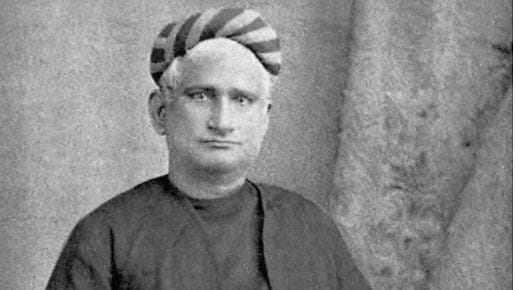
Early on, the coining of the word "Hindutva" was largely attributed to the late politician and ideologue VD Savarkar by writers and academics alike. Later, the claim shifted to writer Chandranath Basu, who used the expression in 1892. But neither can stake claim to it because Bankim Chandra Chatterjee, the Bengali novelist, essayist and composer of the national song Vande Mataram, had used the expression at least 10 years earlier, in 1882, says Amiya Sen, renowned scholar of the Bengali Renaissance and Hindu resurgence and currently Sivadasani Fellow at the Oxford Centre for Hindu Studies, Oxford.
Sen, formerly Heinrich Zimmer Chair at the South Asia Institute, Heidelberg University, and Professor of Modern Indian History at Jamia Millia Islamia, speaks to Open about the controversies surrounding the rendition of Vande Mataram, Bankim Chandra Chatterjee, the Congress’s decision on the national song in 1937, Aurobindo and more. Sen, who has held key positions at the Indian Institute of Advanced Study, Shimla, and Visva-Bharati, Santiniketan, also argues that Bankim Chandra Chatterjee disliked Vedanta philosophy. Edited excerpts:
Rise of the Pivotal Power
18 Sep 2026 - Vol 05 | Issue 38
The BRICS declaration is a strategic victory for Modi
Our national song Vande Mataram was first sung in a major public event by Rabindranath Tagore at the 1896 Congress Session in Calcutta. It was Tagore whom Nehru and Subhas Chandra Bose approached for expert opinion ahead of the decision to draft a CWC resolution in 1937 to restrict the public rendition of Vande Mataram to its first two stanzas. Prior to that Nehru had written to Bose about that there is "no doubt that the present outcry against Bande Mataram is to a large extent a manufactured one by the communalists. At the same time there does seem some substance in it and people who are communalistically inclined have been affected by it". In that sense, how do you look back at the decision by the Congress on the rendition of Vande Mataram?
Nehru was especially wary of the Hindu Right and Hindu communalists though he also made the insightful point that the fundamentalists on both sides understand and respect each other. Only this morning I heard a Bangladeshi TV anchor say that the Narendra Modi government is less likely to face irritable hostility if the Jamaat comes to power in Dhaka.

What are your thoughts on some political leaders now blaming Nehru for non-inclusion of the rest of the four stanzas in the national song?
On the whole, I support the excision of the later stanzas on several grounds: The part that is retained adequately serves the purpose; the later stanzas are in ornate Sanskrit and would sound alien to many modern communities. The later stanzas more directly refer to Hindu deities and would naturally look unacceptable for non-Hindus. There is some brevity and economy of feeling and sentiment expressed in the existing part.
Why is it that of multiple patriotic songs that glorified "mother India", Vande Mataram became the most debated one?
The song appeared at a time when a purist Muslim identity was being forged in Bengal, free of Hindu syncretic influences. It was also the time when the Bengali Muslim press came on its own. Abanindranath Tagore's depiction of Bharat Mata was less threatening because it carried cultural but not explicitly religious symbolism. And it was closer to the Swadeshi Age when there was some semblance of Hindu-Muslim unity.
What is it about Bankim Chandra Chatterjee that appealed tremendously to Aurobindo who translated Vande Mataram into English? How different according to you are Chatterjee's efforts to reinterpret Hindu philosophy compared with the Hindutva ideology that has gained political momentum in recent decades?
The first individual to translate the national song was not Aurobindo as commonly believed, but the philologist, Harinath De. Aurobindo's real contribution was to project Bankim as a modern Hindu sage (rishi). I am particularly referring to his booklet called "Bankim-Tilak-Dayanand". I doubt if Bankim had a philosophical contribution to make to neo-Hinduism, if only because he disliked Vedanta which proved to be the reigning philosophy of modern Hindu resurgence since Rammohan Roy.
I am certain you don't know this: in 1882 Bankim was the first writer to conceptually use the term Hindutva. Until now I had assigned that honour to his friend, Chandranath Basu, who used the expression in 1892. Please refer to my Routledge book "Hindutva before Hindutva...." Both Bankim and Basu differ sharply from the post-Savarkar brand of Hindutva. This is a factor you must keep in mind.