An 80-Year-Old Irishman Is Doing What India's Own Forgot To: Saving Jodhpur's Ancient Stepwells
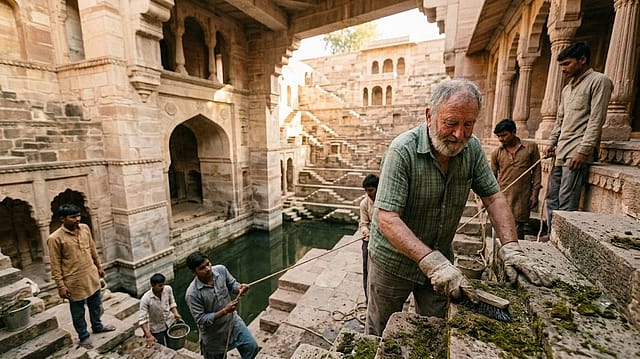
Most visitors to Jodhpur leave with photographs of forts and palaces. Caron Rawnsley left with a mission. The 80-year-old Irishman, now known as Pagal Saab, has spent over a decade restoring Jodhpur's ancient stepwells by hand, earning a public salute from industrialist Anand Mahindra and the admiration of thousands online.
Who Is Caron Rawnsley and What Brought Him to Jodhpur?
Caron Rawnsley is an 80-year-old Irishman who first visited Jodhpur in 2014. He arrived as a tourist but found himself drawn to the city's centuries-old stepwells, most of which had fallen into severe neglect.
What Did He Find When He First Saw the Stepwells?
According to Times of India, Rawnsley recalled being stunned by what he encountered. He said he saw beautiful, ancient water harvesting systems going derelict, filled with waste and largely abandoned, and decided then to devote his time to restoring them.

Look Who's Talking Regime Change
23 Oct 2026 - Vol 05 | Issue 43
Why Are Jodhpur's Bawris and Jhalaras Historically Significant?
Bawris and jhalaras are traditional stepwells that once anchored everyday life in Rajasthan. They stored water in dry regions, offered travellers rest, and served as community gathering points. When modern pipelines arrived, these structures were gradually left to decay.
Which Stepwells Has He Helped Restore?
Rawnsley has helped clean several stepwells including Rambauri and Gulab Sagar. Much of this work has been done entirely by hand, driven by personal commitment rather than any institutional backing.
Why Do Locals Call Him ‘Pagal Saab’?
The nickname, meaning the mad gentleman, was given by Jodhpur residents struck by his unusual dedication. Anand Mahindra shared Rawnsley's story on X, noting that one need not be mad or foreign to care for India's heritage. He reportedly ended his post saluting Pagal Saab Caron for his love of Jodhpur and passion for its history.
How Did the Public React Online?
According to Times of India, the story resonated widely. One user wrote that true love for a place is shown through action, not nationality. Another noted the irony of calling someone mad for doing the most sensible thing imaginable.
Caron Rawnsley did not arrive in Jodhpur with a plan or a grant. He arrived with curiosity and stayed with purpose. The Jodhpur stepwells he has spent a decade restoring are not just water structures. They are living records of a civilisation that understood scarcity long before the modern world did.
(With inputs from yMedia)