A Lot of Water Has Flowed Down the Satluj, Don't Turn the Clock Back
Shortly after his “arrest” in November 1993, Dr Sohan Singh, a former director of Health Services in Punjab and a prominent Khalistan ideologue, had time on his hands to ponder the course of the separatist movement he had ardently advocated. The tide had turned against terrorism with Punjab police gaining the upper hand and security operations uncovering well-known but unspoken truths. For all their claim to being wedded to a puritanical and disciplined cause, the venality of terrorists stood glaringly exposed when the death of Babbar Khalsa leader Sukhdev Singh revealed that he had led a double life as a government-approved contractor, owned a palatial “white house” at Patiala and lived with a woman with whom he had a child out of wedlock.
Interacting with media persons while in detention, Sohan Singh said he was shocked by Sukhdev Singh’s overtly material lifestyle, ill-gotten riches and his illicit relationship with a woman, a “Nabhe wali bibi,” who was part of a group of devotional singers. He said he was dismayed by revelations that came to light after Sukhdev Singh was killed in a police encounter and a government-issued card identifying him as an “approved” contractor recovered from him. . Sohan Singh’s arrest and apparent abjuration of Khalistan ideology and terrorism remained open to interpretation. Some held his was a convenient “ghar wapsi” and he simply recognized the times had changed after Beant Singh became Punjab chief minister and gave K P S Gill a free hand to curb terrorism. Whatever be the case, Sohan Singh had been a prominent advocate of Khalistan and was at one time an associate of Jarnail Singh Bhindranwale. He did not spend much time behind bars and died in his bed just short of turning a centurion in 2012.
The Vanguard
21 Aug 2026 - Vol 05 | Issue 34
BJP Rearmed for 2029
The White House of Patiala
Around the time Sohan Singh was held by the police, Sukhdev Singh’s wife Jawahar Kaur was in detention too. The Patiala “white house” was indeed a wonder, equipped with all modern amenities, even a microwave oven and a snazzy cooking range that were far from common in the early 1990s. The South Asia Terrorism Portal – a remarkable resource set up by Gill in his later years – records the “white house” had “…air conditioners, dish antennae, VCRs, colour televisions, sophisticated cameras, a micro oven and an expensive cooking range…a substantial amount of jewellery and expensive clothes belonging to Jawahar Kaur, were also recovered.” Sukhdev Singh owned another bungalow, the “pink house” at Rajpura and a third one in the Model Town area. Sohan Singh visibly blanched at the mention of reports that smutty films were recovered from the residences. Asked if she thought the unreal world she inhabited would never end, Kaur admitted she didn’t think it would so soon. Though in custody, she remained defiant about her choices. It is possible the consequences of Sukhdev Singh’s death and the prospect of a bleak future had not sunk in.
As Punjab police chief, Gill encouraged a cohort of young officers to take the battle to dreaded terrorist groups like Babbar Khalsa and Khalistan Commando Force. It was an open secret that they acted on the prompt of leaders who had fled to Pakistan and who in turn followed instructions of their Inter Service Intelligence (ISI) handlers. The mood of the police force was upbeat as officers and men came to believe they were no longer on the defensive and at the receiving end of the violence unleashed by terrorists. As is always the case with militancy, it was important to be seen to be winning the war in order to influence public opinion. Fence sitters among the public felt the Khalistanis were now a losing side and many others, who had silently resented the impositions enforced in the name of the separatist movement, were waiting for deliverance. This is not to say the embers of separatism had died out but the sullen faces of Khalistan supporters, even in villages that proclaimed martyrs to the cause, were revealing.
The 1992 election & Beant Singh
Among one of first decisions P V Narasimha Rao took after becoming Prime Minister in 1991 was to put off assembly elections in Punjab. There was real danger of a government wedded to separatist goals assuming office and the home ministry under S B Chavan informed the election commission that it would not be possible to conduct polls. The reprieve proved crucial. When elections were held in February, 1992, the voting percentage was just a little over 22%. The Akali Dal boycotted the poll which was held amid threats from Khalistani terrorists. Interestingly, Amarinder Singh, who led his own outfit at the time, took part in the election. The election led to the installation of Beant Singh as Chief Minister and he revealed a steely determination to tackle separatists many had not suspected lay behind his earthy manner. His political support to Gill was crucial as was the central government’s backing. Chavan was sometimes seen as a “plodder” but as home minister he displayed a strong commitment to national security and recognised the importance of bringing Punjab back from the brink. He also had Rao’s trust and support with the two leaders going back a long way to when they were college mates. The talk was that Rao was academically proficient while Chavan just about got along. The combination obviously worked well.
When Terror Ruled
Through much of the 1980s the Akalis failed to summon the courage to challenge the writ of terrorists who turned the state that birthed the green revolution into a vast killing field. Often enough, a phone call or message from Pakistan-based terrorist heads was enough to dictate their statements or silence. The “Panthic” organisations were similarly under the thrall of separatists and courts feared to send arrested terrorists – even the few who were held – to jail. In one instance, recorded by the SATP, a Punjab Police team simply threw down its weapons and fled during an encounter. As the portal records in a detailed article, “What had been lacking was a clear mandate, and a freedom to carry on the battle without crippling political interference. Throughout the era of the ascendancy of terror, virtually every hard-core terrorist had a political patron; police responses were distorted to such an extent that effective reaction was precluded even in cases where policemen and their families had been specifically targeted by the terrorists.”
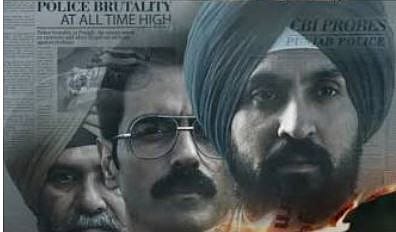
As things turned around from 1992 onwards the same demoralised force, largely comprising Sikhs, got the better of terrorists. Did they do so, as the film “Satluj” -- which has been taken down from OTT platforms -- alleges by resorting to large scale, state-sanctioned extra judicial killings and disappearances? The film’s protagonist Jaswant Khalra, essayed by Diljit Dosanjh, claimed thousands had “disappeared” in state-directed action. The cases of arrests and encounters raising such suspicions might actually number in dozens. It is almost impossible to authoritatively claim who was responsible for the killings. It needs to be remembered that terrorists and their supporters had become habituated to committing murders, extortions and sexual crimes with impunity. While all insurgencies result in “grey zones” where lawful procedure can be a casualty, the violence unleashed by terror organisations is a primary reason for the chaos.
Action and Accountability
Gill was not unaware of the danger and the temptations to adopt short cuts in the course of fighting an insurgency. In his regular review meetings convened to assess the situation in each district he would be quick to note officers who reported arrests or encounter deaths of “minnows” rather than terror leaders. This could reek of “quota filling”. His injunction was firm and direct. “You are catching mice, it is time to catch a few “shers (big cats,’” he would say.
In the end, the actions of the state and its officers, even in difficult and obscure times, are up for judicial review. Some of the officers who were hounded by activists bent on pinning alleged extra-judicial killings on them committed suicide or became nervous wrecks. The terrorist organisations were accountable to no one. A nation owes its heroes an eternal debt of gratitude and must protect their reputations even after they are long gone.