Amitabh Kant calls for India’s shift from Petro State to Electric State. Here's Why

Amid rising global energy uncertainty, Amitabh Kant has proposed a fundamental shift in India’s energy strategy—from dependence on fossil fuels to a clean, electrified future.
Building on PM Narendra Modi’s push for energy conservation, Kant argued that India must transition from a “Petro State” to an “Electric State” to protect its long-term economic and strategic interests.
Why is this shift being discussed now?
The ongoing West Asia crisis and disruptions in critical oil routes like the Strait of Hormuz have exposed India’s vulnerability to external energy shocks.
Kant framed the transition as both an environmental and geopolitical necessity, saying energy independence is now central to national sovereignty.
How ambitious is the renewable energy target?
Kant called for a dramatic expansion of India’s renewable energy capacity—from the current 500 GW target to 1500 GW in the coming years.
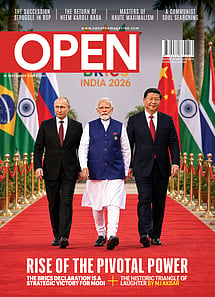
Rise of the Pivotal Power
18 Sep 2026 - Vol 05 | Issue 38
The BRICS declaration is a strategic victory for Modi
He pointed out that India is “climatically blessed” with strong solar and wind potential, but warned that much of this energy goes underutilised due to infrastructure gaps, especially in transmission.
What is the biggest bottleneck in India’s energy transition?
A key issue is not generation, but delivery.
Kant emphasised that renewable energy often gets stranded because of weak transmission and evacuation systems, arguing that building a robust grid is just as important as adding new capacity.
Anil Sardana reinforced this concern, calling transmission a “critical bottleneck” despite India being power-surplus.
What solutions are being proposed for the future energy ecosystem?
Kant outlined a multi-pronged roadmap to transform India’s energy landscape. This includes expanding battery storage, boosting critical mineral processing, scaling offshore wind projects, promoting decentralised solar, and investing in Small Modular Reactors.
He also pushed for faster nuclear reforms and greater private sector participation, alongside a phased exit from combustion-engine vehicles by 2032.
On emerging fuels, Kant highlighted a major opportunity: green hydrogen, calling it a “major strategic opportunity” with India positioned to become one of the world’s cheapest producers and exporters.
What role will nuclear energy and global partnerships play?
India’s nuclear ambitions are also central to this transition.
Sardana pointed to the government’s long-term goal of achieving 100 GW of nuclear capacity by 2047, aligning with the broader vision of a developed India.
Sanjay Sudhir highlighted lessons from the United Arab Emirates, where hydrocarbons now contribute only 28% of GDP and nuclear energy is expanding rapidly.
He noted that the UAE plans to double its nuclear capacity by 2030 and suggested that India could benefit from similar diversification strategies, including trilateral cooperation with the United States.
Are renewables alone enough to power India’s future?
Industry leaders stressed that renewable expansion must be matched with system reliability.
Sumant Sinha warned that grid management has not kept pace with renewable capacity addition, limiting the absorption of solar and wind power.
He called for round-the-clock renewable solutions, including Firm & Dispatchable Renewable Energy (FDRE) projects and large-scale battery deployment.
How can India reduce dependence on imported fossil fuels?
Vineet Mittal described green energy as “inflation-protected” and a “Sanjeevani Booti for India,” particularly in reducing reliance on imported fuels.
He advocated for green methanol production using electrolysis and carbon capture technologies as a way to cut import dependence, especially in the transport sector.
What is the larger takeaway for India’s energy future?
The message from policymakers and industry leaders is clear: energy transition is no longer optional.
Moving toward an “Electric State” will require not just more renewable capacity, but stronger grids, better storage, technological innovation, and coordinated policy support.
In the long run, this shift is seen as essential for achieving energy security, economic resilience, and the vision of a developed India by 2047.
(With inputs from ANI)