Young, Loud & Forever: Farewell to Cheetah Chrome, the Guitar That Gave Punk Its Bite
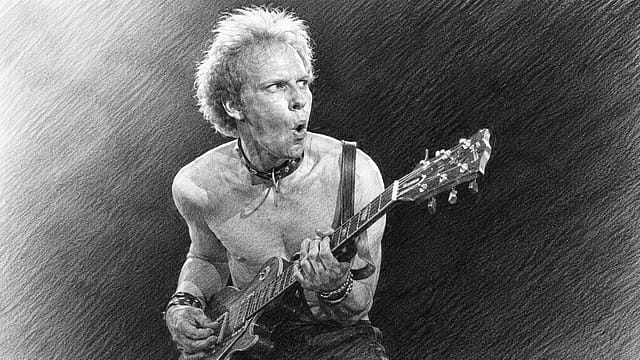
Cheetah Chrome fell backwards. He kept playing.
It was July 1975, and Rocket from the Tombs were opening for Television at Cleveland’s Piccadilly club. As the band launched into “Sonic Reducer”, the guitarist landed on his back and carried on. In the band’s archived history, his recollection comes with a small, triumphant declaration: “I didn’t miss a note!”
There is something worth holding on to in that image. The body on the floor. The guitar still working. A song beginning its journey through a world that had barely heard of the people playing it.
More than half a century later, that journey continues.
Chrome, born Eugene Richard O’Connor, has died at 71. His Dead Boys bandmates announced his death on September 13, remembering a musician whose ferocious playing helped shape American punk. Their farewell also reached beyond the stage persona to the friend they had lost: “Cheetah was also just a really sweet guy that loved rock-roll.”

Zeroing In on ECI
09 Oct 2026 - Vol 05 | Issue 41
Constitutional legitimacy versus political opportunism
That affection belongs in his obituary as surely as the distortion.
The name was Cheetah Chrome. The reputation was combustible. The work required someone who cared enough about a song to keep playing it from the floor.
Before the world caught up
Chrome’s story began in Cleveland, where he joined Rocket from the Tombs in 1974. The band brought together musicians including David Thomas, Peter Laughner, Craig Bell and drummer Johnny Blitz. Its classic lineup survived for less than eight months, according to its official history. The songs proved considerably harder to kill.
Among them was “Sonic Reducer”, written by Chrome and Thomas. It travelled into the Dead Boys repertoire and onto their 1977 debut, Young, Loud and Snotty. Subsequent artists, including Pearl Jam, covered it; the Beastie Boys sampled it on “An Open Letter to NYC”. A piece of Cleveland’s underground kept finding new listeners through other people’s records.
That is one way musical influence makes itself heard. A musician’s name may be unfamiliar; something he helped create has already entered the room.
After Rocket from the Tombs broke apart, Chrome and Blitz joined forces with singer Stiv Bators. Guitarist Jimmy Zero and bassist Jeff Magnum completed the five-man lineup that emerged, through an earlier incarnation called Frankenstein, as the Dead Boys. Joey Ramone helped secure a tryout at CBGB, the New York club that became central to their story.
For musicians struggling to find a place to play, discovering an audience could change the size of the world.
Chrome later recalled that realisation to Classic Rock: “We realised that there was a lot of people like us out there.”
It is a modest sentence for an enormous discovery.
The songs beneath the spectacle
The Dead Boys made themselves difficult to overlook. Bators’ performances could descend into physical chaos. Chrome’s guitar helped give those nights their musical shape.
Their debut arrived in 1977, produced by Genya Ravan and released by Sire. Young, Loud and Snotty was an album title with the manners of someone kicking your door. It also set a demanding test: the music had to deliver on the promise.
“Sonic Reducer” still explains why the record mattered. Its guitar attack gives the song an immediate sense of confrontation, while the recurring figure makes that confrontation memorable. The listener has something to carry away, something to recognise the next time, something to want louder.
Chrome’s importance lives in that marriage of force and form. Noise could seize attention. A song could bring people back.
The original band released We Have Come for Your Children in 1978 and fractured the following year. Two studio albums formed the core of its original recorded legacy.
On paper, it is a short career. In music, duration can be a poor measure of consequence.
Decades later, Chrome remained fiercely protective of what those musicians had achieved. Asked about comparisons with the Sex Pistols in a 2017 WBUR interview, he offered a characteristically unvarnished verdict: “We played a lot better than the Sex Pistols. We had better songs.”
The pride was still there. So was the sting.
Living beyond the legend
There was a cost to the life around the music. WBUR’s retrospective described Chrome’s struggles with drugs and alcohol and a period of homelessness in Boston. His later years brought sobriety, fatherhood and a home in Nashville.
Those years deserve room in the remembrance.
Punk history has often lingered over wreckage. Survival offers a longer, more demanding story: waking up after the celebrated chaos, building a life, finding reasons to continue.
Chrome wrote his memoir, A Dead Boy’s Tale from the Front Lines of Punk Rock, published in 2010. He worked with Nashville’s Plowboy Records and released the solo EP Solo in 2013. The guitarist acquired other ways to participate in the music he loved.
He also returned to the old songs. In 2017, Chrome and Blitz joined a new Dead Boys lineup for the debut’s 40th anniversary. They re-recorded it as Still Snotty: Young, Loud and Snotty at 40. Chrome explained the exercise as a chance to revisit music originally recorded as a demo.
Age supplied its own commentary.
“It’s still just as loud and snotty; we’re just old now,” he said.
There is warmth in that line, and an absence of pretence. The years had passed. He could feel them. He could still play.
One more time, from the beginning
Chrome is survived by his wife, Anna, and son, Rogan. His bandmates asked for privacy as they mourned.
For listeners, the recordings offer a familiar privilege: a return to the beginning whenever the ending becomes difficult to bear.
Put on “Sonic Reducer”. Let the guitar arrive before the explanations, before the dates and the assessments of where everyone belongs in history.
Somewhere in that sound is the young musician who fell backwards in Cleveland and kept going. The record starts again. Cheetah is on his feet.