‘Why are people triggered?’ Swara Bhasker hits back after her Padmaavat jauhar remark sparks trolling
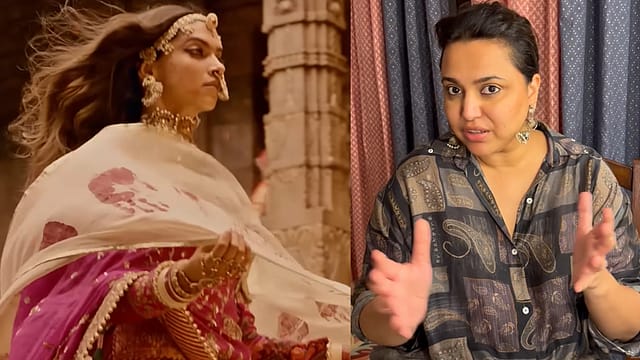
The scene was supposed to belong to another era.
Eight years ago, Padmaavat ended with hundreds of Rajput women walking towards a fire in a mass act of jauhar. The image became one of the film’s most fiercely debated moments.
Now, the scene has returned to the centre of an old argument — and Swara Bhasker is once again at its centre.
Speaking at a Woman Life Freedom talk at the India International Centre in Delhi on August 31, the actor revisited the open letter she had written to director Sanjay Leela Bhansali in 2018. She explained why the film’s depiction of jauhar had disturbed her so deeply, particularly when viewed through the experience of women who survive sexual violence.
Zeroing In on ECI
09 Oct 2026 - Vol 05 | Issue 41
Constitutional legitimacy versus political opportunism
A video of her remarks went viral. The backlash followed quickly.
And on September 1, Swara responded on X, writing that it was “WILD” that so many people — including women — were triggered by the idea that rape survivors have a right to life after rape.
So, why has a controversy from 2018 suddenly returned?
What did Swara Bhasker say about Padmaavat’s jauhar scene?
Swara said she had been particularly disturbed by the film’s climactic depiction of hundreds of women committing jauhar to avoid capture.
Her question was not simply about whether jauhar should be shown on screen. It was about what the portrayal could communicate to a woman who has survived sexual violence.
Swara recalled thinking that if she were a rape survivor, the scene could make her feel like a coward for having chosen to live rather than die to preserve her “honour”.
She then asked whether a film should leave survivors with the message that rape marks the end of a woman’s life.
That distinction is important.
Swara was criticising what she sees as the message of the cinematic depiction, rather than simply recounting the historical practice of jauhar.
Why did Swara focus on the pregnant woman in Padmaavat?
There was one image from the film that Swara said particularly angered her.
She recalled a close-up of a pregnant woman during the jauhar sequence.
Her interpretation was that the shot suggested even a female foetus should not be allowed to enter a world where she might eventually face sexual violence.
It was this image, she said, that made her feel the film was sending an especially troubling message about women's lives and honour.
Her criticism therefore went beyond the question of historical accuracy. It was about how a historical act is framed for a modern audience — and what values that framing can appear to endorse.
Why did Swara Bhasker write the controversial 2018 open letter?
This isn't the first time Swara has made the argument.
In January 2018, shortly after Padmaavat released, she wrote an open letter to Bhansali that was published by The Wire. In it, she accused the filmmaker of glorifying jauhar and sati and argued that women should not be made to feel that death is preferable to surviving sexual violence. At the time, the letter sparked a fierce debate online.
One line in particular became the headline.
Swara wrote that by the end of the film, she felt reduced to a “vagina”.
The phrase overshadowed much of the longer argument she was making about women's autonomy, sexuality and the right to live after sexual violence.
The response was immediate. Some supported her criticism, while others accused her of misunderstanding or insulting the historical context of jauhar. Times of India reported at the time that her letter drew mixed reactions and counterarguments from within the film industry as well.
Why did Swara wait five days before writing the letter?
There is an interesting detail in Swara's latest retelling.
She said people often assume that she expresses controversial opinions impulsively. But, according to her, that was not what happened with Padmaavat.
She said she waited five days after watching the film before writing the open letter, using that time to check whether she still felt as strongly about what she had seen.
Five days later, she said, she still did.
So she wrote.
And eight years later, she is still defending the same argument.
Why is Swara Bhasker facing backlash again?
The latest criticism comes from a very different reading of the jauhar sequence.
Many social media users argued that Swara was viewing a medieval practice through a modern lens and overlooking the circumstances in which jauhar was understood — particularly the fear of capture, enslavement and sexual violence following military defeat.
Several users described jauhar as an act of bravery and accused Swara of ignoring its historical context. Some posts, however, defended her, arguing that she was questioning the glorification of the act in cinema, rather than calling the women who committed it cowards.
The debate has therefore split into two very different questions:
Was jauhar an act of resistance in the face of extreme violence?
And: Should cinema present that choice as an ideal of honour for women today?
Those are not necessarily the same question.
What did Swara say in response to the trolling?
Rather than walk back her position, Swara doubled down.
On X, she wrote: “It is WILD that so many people are triggered (women included) by the basic idea that rape survivors have a right to life after rape!!!”
The post became her clearest response to the backlash.
Her argument, as reflected in her original letter and latest comments, is that surviving sexual violence should never be treated as a loss of honour or a reason for a woman to lose her claim to life.
What was the original Padmaavat controversy about?
It is easy to forget just how explosive Padmaavat was when it arrived in 2018.
Directed by Sanjay Leela Bhansali, the film starred Deepika Padukone as Rani Padmavati, Shahid Kapoor as Rawal Ratan Singh and Ranveer Singh as Alauddin Khilji.
The film became embroiled in protests even before release, with critics accusing Bhansali of distorting the story of the Rajput queen. The filmmakers denied those allegations.
The controversy became so intense that the Supreme Court intervened. In January 2018, it cleared the way for the film's release and directed states not to impose their own bans. Reuters reported that several states had earlier sought to prevent the film from being screened amid fears of unrest.
The film eventually released on January 25, 2018, amid heavy security and protests in several parts of the country. Reuters reported incidents of violence and vandalism surrounding the release.
Swara's criticism arrived in the middle of that already combustible debate.
Eight years after Padmaavat first arrived in theatres, the fire at the end of the film is still burning — only now, the battle has moved almost entirely online.
(With inputs from yMedia and agencies)