RJ Mitte dies at 34: How the Breaking Bad star challenged Hollywood’s disability stereotypes
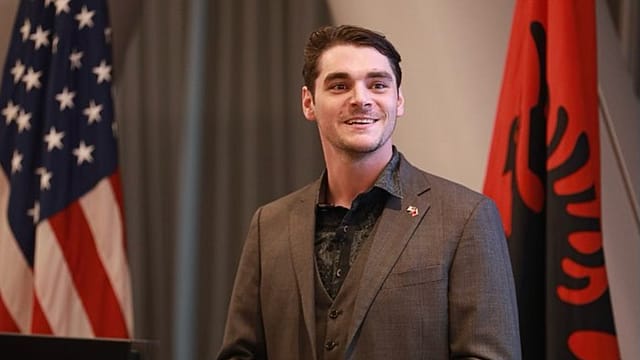
What happens when a television character is allowed to be more than a diagnosis? For RJ Mitte, the answer came through Walter White Jr., the teenage son in Breaking Bad whose story unfolded alongside his father’s transformation from a chemistry teacher to a drug kingpin.
Mitte, who had cerebral palsy, brought his lived experience to the role. But his contribution went beyond playing a disabled character. He helped show audiences that disability could be part of a person’s identity without defining everything about them.
The actor died on October 12, 2026, at the age of 34, his representatives confirmed. Known for his work on screen and his disability rights advocacy, Mitte leaves behind a legacy that extends beyond one of television’s most acclaimed dramas.

Zeroing In on ECI
09 Oct 2026 - Vol 05 | Issue 41
Constitutional legitimacy versus political opportunism
How RJ Mitte made Walter White Jr. more than a disability stereotype
When Breaking Bad premiered in 2008, Mitte played Walter White Jr., also known as Flynn, the son of Bryan Cranston’s Walter White and Anna Gunn’s Skyler White. As his father’s double life threatened to tear the family apart, Walter Jr. became an important part of the show’s emotional story.
The character used crutches and had a speech pattern reflecting his cerebral palsy, which Mitte also has. Yet Walter Jr. was not simply a symbol of courage or an opportunity for other characters to learn a lesson. He was a teenager who could be funny, stubborn, loyal and angry, struggling to understand the growing distance between the father he admired and the man his father had become.
In a 2015 interview with The Guardian, Mitte spoke about the importance of showing the inner strength of people with disabilities rather than allowing assumptions about weakness to define them. That approach challenged familiar Hollywood portrayals in which disabled characters are often reduced to objects of pity or inspiration. Walter Jr.’s disability was visible, but his relationships, choices and emotions made him a fully realised character.
Why disability representation in Hollywood matters
Mitte’s casting also highlighted why disabled actors need opportunities to play substantial roles. Too often, disabled characters have been portrayed by non-disabled performers, while actors with disabilities have faced limited choices or been offered roles built around their condition.
Mitte continued speaking about these barriers after Breaking Bad ended in 2013. His advocacy focused on challenging stigma and creating more opportunities for people with disabilities in entertainment and everyday life.
According to his representatives, he served as an ambassador for United Cerebral Palsy and Shriners Children’s, and as president of the Mitte Foundation. In 2013, he received the SAG-AFTRA Harold Russell Award at the Media Access Awards, which recognise efforts to improve disability representation in entertainment.
His work underlined a broader point: meaningful inclusion is not just about putting disabled characters on screen. It is also about who gets cast, whose experiences shape stories and whether performers with disabilities are given the chance to play varied, complex roles.
From Breaking Bad to disability rights advocacy
Mitte’s career continued beyond Walter White Jr. He appeared in Switched at Birth and The Guardians of Justice, among other projects, and played a high school wrestler with cerebral palsy in the 2021 film Triumph. Shortly before his death, he had also been promoting Talking to Strangers. These projects reflected a career that was still developing, rather than one defined solely by the role that made him famous.
For Mitte, representation meant allowing disabled people to be seen as individuals with ambitions, contradictions and lives beyond a diagnosis. His work could not, by itself, dismantle Hollywood’s barriers, but it helped make the conversation harder to ignore.
RJ Mitte’s legacy goes beyond Breaking Bad
Walter Jr. gave Breaking Bad a perspective on the White family’s collapse that his father’s criminal choices could not erase. Through the character, Mitte showed how disability could be portrayed without becoming the whole story.
His death at 34 has cut short a career that was still moving forward. But the questions his work raised remain: Are disabled performers being given meaningful opportunities? Are their characters written as complete human beings? And can Hollywood reflect real life without reducing people to a single characteristic?
Mitte’s legacy lies partly in helping audiences see that the answer begins when a character is allowed to be a person first.