Solomon Pappaiah dies at 90: The Tamil scholar who turned debate into prime-time entertainment

There are some voices that become part of a culture's soundtrack.
For generations of Tamil audiences, that voice belonged to Solomon Pappaiah. It arrived through television sets during festival specials, settled into living rooms during family gatherings, and transformed debates into events people looked forward to. On Friday, that voice fell silent.
Tamil scholar, celebrated pattimandram moderator and actor Solomon Pappaiah passed away in Madurai at the age of 90 after battling age-related ailments, according to multiple reports and tributes from public figures across Tamil Nadu.
His death marks more than the loss of a television personality. It marks the end of an era in which scholarship, humour and public conversation found a rare common home.
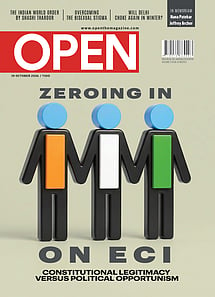
Zeroing In on ECI
09 Oct 2026 - Vol 05 | Issue 41
Constitutional legitimacy versus political opportunism
Who was Solomon Pappaiah and why was he so influential?
Born in Madurai in 1936, Solomon Pappaiah spent much of his life doing something few academics manage: bringing literature out of classrooms and into everyday life.
After earning degrees in Tamil literature, he joined Madurai's American College, where he taught for more than three decades and eventually became one of the institution's most respected professors.
But it was outside the classroom that his influence truly exploded.
Through pattimandrams — a uniquely Tamil style of public debate — Pappaiah became a household name. His ability to blend classical Tamil references with everyday observations helped audiences engage with language, culture and social issues without feeling lectured.
How did Solomon Pappaiah make pattimandrams a cultural phenomenon?
Long before podcasts and YouTube debates became popular, Pappaiah had mastered the art of making conversations entertaining.
Festival specials on Tamil television frequently featured his pattimandrams, where teams debated everything from family relationships and social change to literature and modern life.
What made him stand out was his style. He was witty without being harsh, scholarly without being intimidating, and humorous without losing the substance of the discussion.
For many younger viewers, he became their first introduction to classical Tamil thought. For older audiences, he represented a bridge between tradition and modernity.
Why did Tamil cinema audiences recognise him too?
Even people who never watched a pattimandram likely knew Pappaiah from the movies.
Over the years, he appeared in several memorable films, including Mudhalvan, Boys and Sivaji: The Boss. His screen presence carried the same warmth and authenticity that made him popular on television.
These roles were often brief, but they reinforced his status as a familiar and trusted figure across generations of Tamil audiences.
Tributes pour in from Tamil cinema and public life
Following news of his death, tributes flooded social media.
Actor and choreographer Prabhudeva wrote on X: "Deeply saddened by the passing of Solomon Pappayya Sir. A great voice of Tamil, forever remembered."
Film producer and industry commentator G Dhananjheyan also paid tribute, posting: "RIP Solomon Pappaiah sir. We will miss your live & enjoyable Patti Mandrams."
Many others remembered him not just as a scholar, but as someone who made Tamil language accessible, engaging and deeply human.
How India recognised Solomon Pappaiah's contribution
Pappaiah's work earned him some of the country's highest cultural honours.
He received the Kalaimamani Award from the Tamil Nadu government in 2000 for his contributions to arts and literature. In 2021, he was awarded the Padma Shri, India's fourth-highest civilian honour, recognising decades of service to Tamil language and culture.
The awards acknowledged what audiences had known for years: Pappaiah had done more than teach Tamil. He had helped keep it alive in public conversation.
The man who made scholarship feel like a conversation
The story of Solomon Pappaiah is, in many ways, the story of how ideas travel. Some travel through books. Some through classrooms.
Pappaiah chose a different route. He carried literature through jokes, philosophy through debate, and culture through conversation. He made complex ideas feel familiar and ensured that Tamil scholarship never remained confined to academic circles.
In an age of shouting matches disguised as debates, Solomon Pappaiah represented a gentler tradition — one where disagreement could be thoughtful, language could be joyful, and learning could be entertaining.
That may be his most enduring legacy.
(With inputs from ANI)