Why Indian brands are missing the FIFA World Cup story
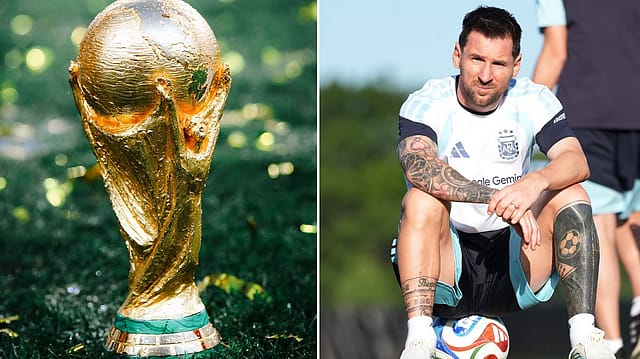
On 11 June 2026, the FIFA World Cup kicks off in Los Angeles.
Over the next 39 days, 48 nations will compete across three host countries — the United States, Canada and Mexico — in what is, by most measures, the largest sporting event in the world.
India will not be one of those 48 nations. India has never played in a FIFA World Cup. The country sits outside the top 100, at 139, in the official FIFA world rankings, and in a tournament that has now expanded its field precisely to let more of the world in, the Blue Tigers remain on the outside looking in.
This is not new. And yet, in the 90 days before the opening whistle, Indian audiences generated 9.7 million pageviews of World Cup-related content on the open web, making India the second-most engaged market globally, behind only the United States.
India’s pre-tournament content consumption comfortably outpaced Brazil (8.5 million), France (6.4 million), Spain (1.5 million) and Germany (542,000). Read that again.

Losing Memory
16 Oct 2026 - Vol 05 | Issue 42
The making of a medical and social emergency
A country that has not qualified for the World Cup since 1950 is more digitally engaged with the tournament than France, Spain, and Germany. This is not a footnote. It is the central fact of Indian football fandom and perhaps the most underexploited insight in Indian brand marketing today.
The bandwagon problem
Every four years, a familiar pattern plays out in Indian marketing. A global tournament arrives. Brands scramble for inventory. Logos appear in match-break spots. Presenters say “brought to you by.” A few FMCG companies run contests.
Fintech brands bet on viewership numbers. Then the tournament ends and very little is remembered. This is not a failure of investment. It is a failure of imagination.
The commercial machinery around the 2026 World Cup in India is substantial. Zee Entertainment has acquired exclusive broadcast and streaming rights for 39 FIFA events through 2034, launching four dedicated sports channels under its Unite8 Sports umbrella alongside ZEE5.
The response from advertisers has been immediate, with brands across categories securing premium inventory ahead of kick-off.
That is the right commercial instinct. The wrong assumption is that buying presence is the same as building meaning. The World Cup is not merely a sporting event. For billions, it is a container for some of the most intense emotional experiences of their lives.
What a brand does with that container matters enormously. Yet most Indian brands continue to treat it like a very large poster site.
The emotional opportunity nobody is naming
Global brands have understood something that many Indian marketers have been slower to recognise: the FIFA World Cup is not primarily about football. It is about what football makes people feel.
Budweiser’s 2026 World Cup campaign, ‘Let It Pour’, created by Grey Global and featuring Erling Haaland and Jürgen Klopp, centres on the emotional release and pressure that define elite football.
IKEA’s ‘Welcome to the Home Cup’ campaign, a print campaign developed by Sancho BBDO for Colombia, frames the tournament around the everyday rituals of togetherness — gathering with family, hosting friends, and celebrating small moments at home.
Neither idea requires your team to be in the tournament. Both would resonate powerfully with Indian audiences.
Indian football fandom occupies a unique emotional space. The Indian fan has no national stake in the outcome. She or he watches not out of patriotism, but out of something purer: love of the game itself.
There is no expectation of victory. No pressure. No collective anxiety about national honour. Only the pleasure of watching great football. That is a rare emotional archetype.
And for brands that trade in aspiration, belonging, family, and perseverance, it is extraordinary territory.
Three stories nobody is telling
Matches in this World Cup will kick off between 9:30 pm and 10:30 am IST, with the biggest fixtures deep into the night.
This scheduling reality — already being discussed as the ‘midnight problem’ — is, from a storytelling perspective, anything but a problem. The young professional in Bengaluru watching on low screen brightness so as not to wake the family.
The grandmother in Kolkata staying awake because her grandson is watching. The group of flatmates in a Delhi PG claiming the TV for a 3 am quarter-final.
Every one of those images is a campaign. A coffee brand, telecom company, mattress brand, or food delivery platform could own the emotional territory of “stay up for what you love” for the duration of this tournament, and beyond it.
Indian fans without a team in the draw do what football fans the world over do: they adopt one. Some inherit Brazil from a father (or mother) who watched Pelé.
Some follow Argentina because of Messi. There will also, for the first time, be four players of Indian heritage competing at this World Cup, for Australia, the Democratic Republic of Congo, New Zealand, and Qatar.
This is the emotional territory of chosen identity: the idea that belonging does not require formal membership, that you can love something even when it does not formally claim you back.
It is also the emotional territory of much financial services, insurance, and education marketing.
And then there is home. For most Indians, the World Cup happens not in fan zones or sports bars, but in living rooms with people they love.
The arguments over which match to watch. The plate of food that appears without being asked for. The uncle who suddenly discovers tactical opinions he has never previously expressed. This is not generic ‘togetherness’. It is specific, recognisable, and deeply Indian.
A food brand, home entertainment brand or consumer electronics brand that captures a real Indian family watching a 2 am match together would be telling a true story.
And true stories, in a media environment saturated with performance marketing, are rare enough to stop people.
The precedent already exists
The emotional ambition required here is not unprecedented in Indian sports advertising.
Gillette once made a four-minute film, The Best A Fan Can Get’, about a blind man who experienced decades of Indian cricket through his son’s eyes.
When the son moved away, Rahul Dravid stepped in to become the old man’s companion for the next tournament. That film had nothing to do with razors. It had everything to do with what sport does to a family across time.
The FIFA World Cup — arriving in Indian living rooms at midnight, for 39 nights, with India absent from the pitch — deserves that level of creative seriousness.
Football already ranks as India’s second-most followed sport, according to Nielsen’s 2025 Global Sports Report. The question is not whether Indian audiences are emotionally invested in this World Cup. The data has settled that.
The question is whether Indian brands will show up as participants in that emotion or merely advertise around it.
What the fork in the road looks like
Brands advertising around the 2026 World Cup face a genuine creative choice. One path leads to logo placement, presenter sponsorships, and match-break spots. That path is safe, measurable, and rapidly forgotten.
The other path starts with a different question: what does it mean to love a game your country cannot play?
That question, answered honestly and with craft, is a campaign. It does not require a celebrity footballer, a multinational production budget, or an official FIFA partnership.
It requires only the willingness to see the Indian football fan clearly: to acknowledge the specific, slightly bittersweet and entirely human nature of their devotion, and to stand alongside it.