Oil's Resurgence: A Geopolitical Power Play in a Fractured World
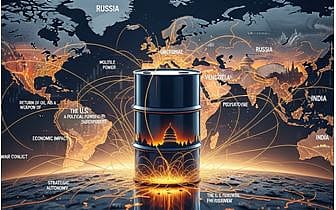
For much of the post-Cold War era, oil was seen to be a settled issue. Markets would stabilize prices, energy diversification would reduce shocks, and geopolitics would progressively disconnect from crude. That presumption has collapsed. Today, oil is once again a key tool of power, determining wars, alliances, domestic politics, and the concept of strategic autonomy. In a broken international order, oil no longer just fuels economies; it also determines geopolitics.
Return of Oil as a Weapon of War
The war in Ukraine was a turning point. When Russia invaded fully in 2022, Western governments responded by putting strict limits on Russian energy exports. It was clear what they wanted: to cut off oil money and weaken Moscow's military. Instead, Russia changed. It moved crude oil flows to Asia, built up its "shadow fleet," and used price cuts to keep volumes steady.
So, oil became more than just a product that could be sold; it also became a tool for staying strong in the world. Sanctions changed the paths of trade instead of cutting off supply. They showed a harsh truth: the global oil system can handle political shocks, but only by changing the balance of power. The rewards went to not only manufacturers but also intermediary states that were good at finding their way through regulatory grey areas.
The U.S: A Political Power or an Energy Superpower?
This change is happening mostly in the United States. The United States has a lot of power over the world's energy markets because it is the biggest oil producer. But its power is limited by politics at home. Donald Trump made oil a symbol of national strength, and "energy dominance" was both an economic policy and a geopolitical stance. People who said "drill more" were very likely to make promises of lower gas prices and more strategic independence.

Global By Design
29 May 2026 - Vol 04 | Issue 73
Is the future of fashion Indian?
Energy policy is very political, even outside of campaign rhetoric. The Strategic Petroleum Reserve releases, pressure on OPEC+, and changes in the rules for shale production show that decisions about oil are becoming more short-term and based on what voters want. It's clear that the United States wants to change the global oil markets while still being dependent on gas prices in the US.
Russia's Endurance Funded by Oil
Oil is what keeps Russia alive. State capacity, military spending, and elite stability are all supported by hydrocarbon revenue. Even with sanctions, Russia is still sending oil shipments, which shows how energy can help keep a country from being cut off. New customers, especially those from Asia, have made Western pressure less strong.
This endurance has effects on geopolitics. It tells other sanctioned or semi-isolated countries that energy can buy time. Oil money does more than just pay for government services; it also gives governments more freedom to negotiate. Russia's story has become a model for how oil producers can avoid being pushed to the side in a world that is falling apart.
Oil without power in Venezuela
Venezuela is an example of oil without power, while Russia is an example of oil that is strong. Venezuela has the biggest proven reserves of energy in the world, so it should be an energy superpower. Sanctions, broken infrastructure, and bad politics have made its oil industry unusable instead.
The US recently lifted sanctions to stabilize global supplies, which shows a cynical truth: geopolitics can help pariah governments when oil markets get tight. Venezuela's low production capacity shows that oil power is more than just having a lot of oil; it also has to do with government, investment, and legitimacy. Having a lot of oil in the ground doesn't always mean having a lot of power in the world.
The Middle East: Still Important, but Less Certain
Even though people talk about diversification, the Middle East is still very important. Saudi Arabia's work with Russia through OPEC+ has changed the way countries talk to each other about energy. Instead of automatically siding with Washington, producers are now looking for price stability on their own terms.
In the area, oil politics have also become transactional. More and more, security guarantees, arms purchases, and diplomatic recognition are all connected to decisions about manufacturing. Because of this, the Middle East is less stable but more aggressive in its strategy. It knows how strong it is because the world needs oil.
Oil has a big impact on geopolitics, and India is a good example of this.
India buys a lot of things from other countries, so prices can change at any time. But since 2022, it has been using cheap Russian oil to save money and not paying attention to what people in the West say.
Under Narendra Modi, oil diplomacy has become a way to gain strategic independence. The Indian view is more practical than ideological: energy security is more important than alliance discipline. This balancing act—keeping ties with Russia while building stronger ties with the West—shows how oil lets middle states be independent in a split system.
A broken oil order
There isn't one powerful or stable government that controls the oil industry anymore. It is less centralized, more transactional, and more political. Sanctions, wars, election cycles, and changes in alliances have an effect on oil flows that is just as strong as the basic laws of supply and demand.
What comes out is a puzzle. Oil makes things unstable, but it also gives states a way to deal with it. It makes things more confrontational while also letting people hedge their bets. Oil has changed from a time of trust and struggle between many powers to a time of distrust and struggle between many powers.
Oil won't be the only thing that decides geopolitics in the next ten years, but nothing important will happen without it. The barrel of crude oil is still a source of power, a bargaining chip in diplomacy, and a reminder that the world still needs oil, even though the climate crisis is urgent.