The singular voice of Asha Bhosle
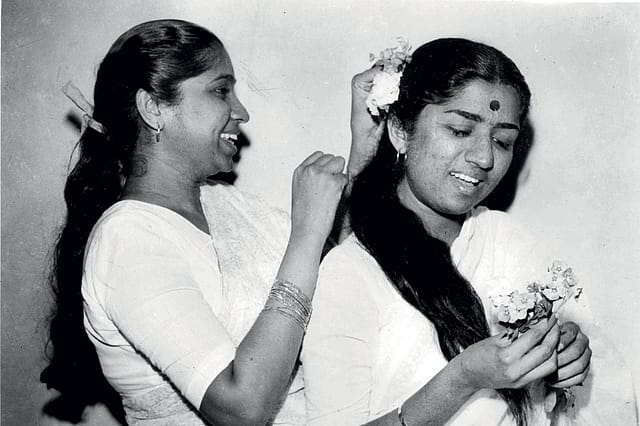
One of the most facile and unnecessary binaries created by overzealous fans of Indian film music revolves around the celebrated sibling duo, Lata Mangeshkar and Asha Bhosle – who is the better singer? This age-old debate perhaps indicates a peculiar facet of Indian fandom that likes to pit one performer against the other. For someone to be great, another must fall. And if you come to think of it this yardstick is used in all forms of performance – Amitabh Bachchan vs Rajesh Khanna, Pt. Ravi Shankar vs Ustad Vilayat Khan, Sachin Tendulkar vs Sourav Ganguly, Rajinikanth vs Kamal Haasan. The list goes on.
Both singers had disregarded these comparisons on numerous occasions. Would they have reacted differently if they weren’t siblings? Remember Sai Paranjape’s Saaz? Paranjape maintained that the film was a work of fiction but it most certainly displeased the Mangeshkar family. Having said that, one must also recognise that this project of constant comparison was often stonewalled by the sisters themselves largely enabled by their peerless and distinct repertoires. One is very different from the other. In an interview clip that has gone viral since her death, Asha Bhosle laments the lack of a higher education. She reasons saying she could have gone to the West and had a career singing English songs. Knowing Bhosle, she may have done it too. Her collaborations with Boy George, Michael Stipe and the British boy band Code Red are remembered fondly by her fans.
The Modi Years
02 Oct 2026 - Vol 05 | Issue 40
A Nation Rebuilt
Asha Bhosle had to struggle to carve out a space for herself in Hindi playback singing. Even though there were singers like Shamshad Begum and Geeta Dutt before her. Bhosle was not the good girl’s voice. That role and space was occupied by her legendary elder sister. Bhosle sang a new bevy of songs almost creating a unique Hindi female playback voice. She sang for the vamp, the item girl, the other woman. Her renditions bordered on the sensuous. She was often asked about her selection of such songs? It is for these reasons that Asha Bhosle is a watershed in playback singing. She created a distinct style and a path for others to follow. Such was the dexterity and prowess of her voice that it didn’t matter who it was filmed on and in which context. People remembered the music, not necessarily the image that accompanied it.
I often think of the term versatile which is used to describe Asha Bhosle. What does it mean though? Just singing a wide range of songs? In different styles? There is also an unabashed ease in these renditions. How did she manage that? It was osmosis perhaps. Exposing herself to different styles and genres of music including the likes of Elvis Presley and trying to imbibe some of those qualities in her singing as and when needed. She imbibed, never imitated. Whatever she sang, she left an imprint. For instance, listen to her Rabindra sangeet (songs written and composed by Rabindranath Tagore in Bengali) recordings. Rabindra sangeet demands a certain kind of enunciation. Asha Bhosle’s Rabindra sangeet is not normative but what she eventually sang became her own. You are so consumed by the magnificent voice that grammar, syntax, style seem secondary. It feels that this is the most natural way of singing and how it ought to be sung.
Asha Bhosle is also the product of her circumstances. That unmissable lilt in her voice – where does that come from? Is it just training or life experiences or a combination of both? A troubled personal life? The responsibility to bring up her children? She sang what came her way. Lived life on her own terms. Loved to dress well and shake a leg on stage during concert performances. Loved to cook and feed. She embodied independence and autonomy in every possible way through the music she sang and the life she lived. That’s how she will be remembered.