The Aravalli fault line: When development turns ecology into an acting error
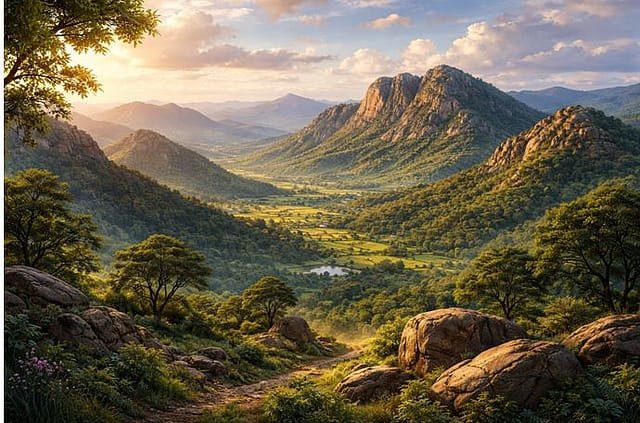
The Aravalli Range does not fall dramatically. They disintegrate gradually, lawfully, and almost invisibly. This ancient mountain range, which spans Gujarat, Rajasthan, Haryana, and Delhi, has withstood tectonic upheavals, ice ages, and desertification. What it is currently struggling to maintain is India's modern development model.
People often talk about the Aravallis in terms of technical disagreements about land classification, mining permits, or forest rules. In reality, it is much more important: it is a test case for how India balances growth with environmental limits, and how quickly environmental protections are lost when land is turned into a financial asset instead of a living system.
A mountain range is now just a type of mistake
The Aravallis are dry, rocky, and sparsely forested, unlike thick tropical woods. Because they are so sensitive to the environment, they are especially vulnerable. For decades, revenue records called large parts of the range "non-forest" land, even though they were doing important environmental work like recharging groundwater, controlling dust, supporting biodiversity, and regulating climate.
This bureaucratic error made it easier for mining to happen all over the place, especially in Haryana and Rajasthan. When mining was stopped by the courts, the pressure didn't go away; it just changed shape. Quarries were replaced by farmhouses, highways, resorts, and real estate developments. These changes were often made possible by zoning changes, master plans, or permits that were issued after the fact.

The Liberation of Bengal
05 Jun 2026 - Vol 04 | Issue 74
A silent revolution ends the reign of fear
The debate arose several times as state administrations moved to regulate construction in Aravalli districts, claiming that economic development and housing demand required a "pragmatic" approach to land management.
Courts, Following the Rules, and Creative Governance
The Supreme Court of India has often recognized how important the Aravallis are to the environment. It has told governments to protect the range and banned mining. The law seems easy to understand on paper. In practice, enforcement is far from perfect.
States like Haryana and Rajasthan have often responded not by breaking the law, but by changing the way they see things. For example, they have changed land classifications, redrawn boundaries, or used new planning frameworks that follow court orders but make them less strict.
This has led to an unusual way of governing: the environment is getting worse not because of breaking the law, but because of following the law to the letter. Violations don't happen all at once; instead, they become normal through notifications, changes, and the discretion of administrators.
Who Gains from Development?
People who want deregulation say that the Aravallis stop housing supply, infrastructure growth, and state revenues from growing. But this line of thinking hides a big imbalance.
A small group of people, including developers, landowners, and state treasuries that are under financial pressure, will benefit from converting Aravalli land. Heat waves, pollution, and a lack of water have ecological costs that affect millions of people. The urban poor and informal communities are the most affected and least prepared to deal with them.
This isn't progress; it's just moving costs around. The Aravallis are being secretly sold off to pay for city growth without thinking about how this will affect people's health and the environment in the long run.
Politics of Not Remembering
What makes the Aravalli controversy so interesting is that it keeps coming up in public debate every few years, with new alerts, legal cases, and promises of protection. The words change every time: "mining" becomes "regularization," "conservation" becomes "balanced development," "protection" becomes "managed use," and so on.
The basic idea stays the same: land is mostly seen as an asset that makes money. People talk about the ecological importance, but institutions don't give it much thought. In this way, the Aravallis are being destroyed not because people don't care, but because they forget on purpose. People understand how important they are just enough to keep people from being unhappy, but never enough to stop progress.
A Look at India's Environmental Future
The tragedy of the Aravallis teaches us lessons that apply to all of India and beyond. India's cities will need the ecosystems around them more and more as the weather gets worse. But the current systems of government still see these ecosystems as disposable buffers that can be changed when money or politics demand it.
To protect the Aravallis, we don't need new rules; we just need to change our priorities. We need to see natural systems as infrastructure instead of obstacles and understand that some landscapes can't be replaced, no matter how ambitious the plans for compensatory afforestation are.
The oldest mountains in India are showing us something that makes us uneasy. Growth that destroys the environment doesn't stop overnight; it falls slowly, unevenly, and for good. The Aravallis may not fall all at once, but if things keep going the way they are, they will disappear right in front of our eyes.
And by the time people really miss them, it will be too late to rebuild what took millions of years to make. The steady unraveling of the Aravallis is not an environmental accident, but rather a policy choice. These ancient hills demonstrate how India's development paradigm consistently considers nature as negotiable—valuable only until it stifles expansion. When land is reduced to financial potential, protection exists only in language, not in practice. The Aravalli debate demonstrates that legality alone cannot protect nature when policy vision is short-term and fiscally driven. Preserving the range ultimately means preserving urban resilience, public health, and climate stability. If India continues to destroy its environmental roots in the name of progress, the consequences will be real, unequal, and irreversible.