India's Chocolate Story: The Bittersweet Republic
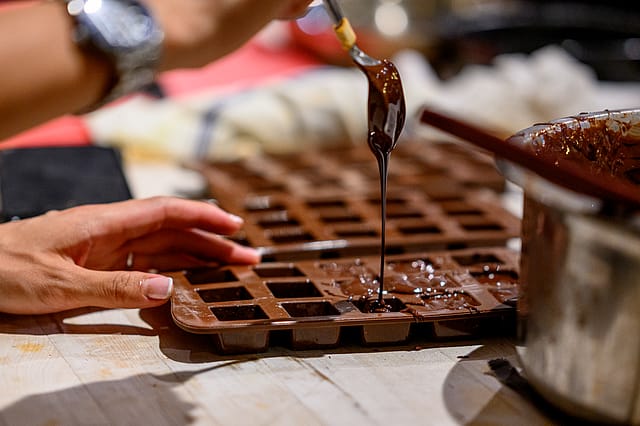
Every civilisation carries a distinct vocabulary of taste through which its history and evolving aspirations may be read. In India, that vocabulary has long been dominated by sweetness. Sugar has occupied a privileged place in religious ritual, festive exchange, hospitality, and memory. From laddus offered at temples to payasam served at family gatherings, sweetness has traditionally belonged to the community rather than commerce. Chocolate arrived late to this cultural landscape, imported first as a colonial luxury, then as an aspirational urban indulgence, and finally as an everyday consumer product. Today, as World Chocolate Day is marked on July 7, India finds itself at an intriguing intersection. Chocolate is no longer merely a confection; it has become a lens through which one can examine agriculture, nutrition, manufacturing, global commodity markets, changing consumer behaviour, and even public health.
India's chocolate story is remarkable precisely because it remains unfinished. Per capita chocolate consumption is still among the lowest in the world. Industry estimates generally place average annual consumption at between 100 and 200 grams per person, compared with well over 5 kilograms across much of Western Europe and around 11 kilograms in countries such as Switzerland. Yet the sheer scale of India's population transforms this modest per capita consumption into one of the world's fastest-growing chocolate markets, estimated to be worth around USD 3 billion in 2024. Rising disposable incomes, the expansion of organised retail, the rapid growth of e-commerce and quick-commerce platforms, and an increasingly young consumer base have steadily shifted chocolate from an occasional festival indulgence to an everyday snack and a popular gifting choice. Premium dark chocolate, artisanal bean-to-bar products, and sugar-free variants have all found an audience that barely existed two decades ago. Consequently, India's chocolate market has been expanding more rapidly than many mature markets, even though its growth potential remains far from exhausted.
The Modi Years
02 Oct 2026 - Vol 05 | Issue 40
A Nation Rebuilt
Yet the growth of chocolate consumption exposes a striking paradox. India is an increasingly important chocolate market but remains a relatively modest cocoa producer. According to the Government of India, the country produced about 32.91 thousand metric tonnes of cocoa in 2024–25. During the same year, cocoa and cocoa product exports were valued at around USD 295.58 million, with major destinations including the United States, the Netherlands, the United Arab Emirates, Indonesia, and Nepal. At the same time, however, domestic production meets less than 30 per cent of the country's cocoa requirement. To bridge this gap and sustain its expanding confectionery industry, India annually imports roughly USD 866 million worth of cocoa beans and processed cocoa products, including cocoa butter and cocoa liquor. Most of these imports originate from West African producers such as Côte d'Ivoire and Ghana, making the price of chocolates on Indian supermarket shelves increasingly dependent on conditions thousands of kilometres away. The surge in global cocoa prices during 2023 and 2024, driven by adverse weather, crop diseases and structural supply constraints in West Africa, sharply increased input costs for Indian manufacturers, forcing many to reduce pack sizes, raise prices or reformulate products. The episode exposed a fundamental structural weakness: India's rapidly expanding chocolate economy remains heavily dependent on imported cocoa and is therefore highly vulnerable to climatic and supply shocks beyond its borders.
Ironically, cocoa is no stranger to Indian soil. Commercial cultivation began many decades ago, primarily as an intercrop beneath coconut and arecanut plantations. Today, Andhra Pradesh, Karnataka, Kerala, and Tamil Nadu account for the bulk of the country's cocoa production. Southern India's tropical climate is well suited to cocoa cultivation, particularly when integrated with existing plantation systems. Yet the sector continues to face structural constraints. Small and fragmented landholdings, ageing plantations, uneven productivity, limited extension support, and volatile prices have discouraged farmers from making sustained investments. Unlike tea or coffee, cocoa has never developed a robust institutional ecosystem or a strong cultural identity within Indian agriculture. As a result, domestic production has failed to keep pace with rapidly expanding industrial demand, leaving manufacturers increasingly dependent on imported cocoa beans and cocoa products.
That dependence also explains why Indian chocolate differs perceptibly from many European counterparts. Geography matters, but regulation and economics matter even more. Premium European chocolates often contain higher proportions of cocoa solids and cocoa butter, reflecting centuries-old traditions of chocolate making and consumers accustomed to more intense cocoa flavours. Indian mass-market chocolate, by contrast, has historically prioritised sweetness and affordability. Sugar frequently occupies the first position in ingredient lists, while cocoa content remains relatively modest in mainstream milk chocolates. This formulation is not merely a technological choice but a commercial calculation. Sugar is substantially cheaper than cocoa, and Indian consumers have traditionally displayed a stronger preference for sweeter taste profiles. The result is a chocolate culture where the dominant sensory note is sweetness rather than cocoa complexity.
The distinction becomes clearer with the recent expansion of India's premium chocolate segment. Urban consumers are increasingly reading labels, comparing cocoa percentages, and seeking bean-to-bar chocolates made from single-origin Indian cocoa. Domestic craft manufacturers have demonstrated that Indian cocoa, when carefully fermented and roasted, can produce chocolates displaying floral, fruity, or nutty notes comparable to international specialty products. This emerging market remains small but intellectually significant. It marks the transition from chocolate as a sugary confection towards chocolate as an agricultural product possessing terroir, much like coffee or wine.
Public health introduces another dimension to the conversation. Chocolate occupies an awkward position within India's nutritional landscape. Dark chocolate with high cocoa content contains flavonoids associated with cardiovascular benefits and antioxidant properties. However, these potential benefits apply primarily to products rich in cocoa solids and relatively low in added sugar. Most chocolates sold in India belong to the milk chocolate category, containing considerable quantities of sugar alongside milk solids and fats. Their health profile resembles confectionery far more than functional food. As India confronts rising obesity, diabetes, cardiovascular, and metabolic disorders, the composition of chocolate deserves greater public attention than celebratory marketing campaigns usually permit.
The issue extends beyond sugar to product transparency. Consumers often assume that every brown confection bearing images of cocoa beans is fundamentally chocolate. Yet processed foods frequently contain vegetable fats, flavourings and cocoa substitutes designed to lower manufacturing costs while preserving appearance and texture. Labelling regulations have improved over time, but ingredient literacy remains limited. Reading the percentage of cocoa solids, identifying added sugars, and distinguishing cocoa butter from alternative vegetable fats are habits still confined to informed buyers only. The next stage of India's chocolate evolution will depend as much upon informed consumption as upon rising incomes.
Adulteration acts as a different challenge. Unlike loose sweets, packaged chocolates from organised manufacturers are generally subject to food safety standards. Yet counterfeit branded products occasionally enter retail channels, particularly during festive seasons, while poor storage in high temperatures can compromise quality. More significant than outright adulteration is product formulation. The use of cheaper vegetable fats, excessive added sugars, emulsifiers, and lower cocoa content may comply with regulations but can diminish nutritional value and product quality. Stronger enforcement, transparent labelling and informed consumers remain the best safeguards.
India's chocolate economy also reveals changing social behaviour. Chocolate has steadily displaced traditional sweets in urban gifting. Birthdays, corporate celebrations, Valentine's Day, Raksha Bandhan, and even Diwali increasingly feature premium chocolate assortments alongside, or sometimes instead of, mithai. This substitution is not simply a triumph of marketing. Packaged chocolates offer longer shelf life, standardised quality and attractive presentation, attributes particularly valued in an increasingly mobile and nuclear society. Yet India's confectionery culture has not surrendered entirely. Rather, it has hybridised. Chocolate barfis, chocolate modaks, cocoa-infused laddus and artisanal desserts represent an Indianisation of a global ingredient rather than its wholesale adoption.
Every chocolate bar also carries ethical questions. Much of the world's cocoa is grown by farmers who receive only a small share of its final retail value, while climate change, ageing plantations, volatile prices and persistent rural poverty threaten the crop's long-term sustainability. As Indian demand grows, responsible sourcing, fair compensation for growers and environmentally sustainable cultivation deserve greater public attention.
India's chocolate journey also mirrors its broader economic transformation. Once a luxury associated with imported brands, chocolate has evolved into a diverse industry shaped by liberalisation, multinational investment, domestic manufacturing, and growing cocoa cultivation. Today, the market spans global corporations, dairy companies, artisanal chocolatiers and bean-to-bar entrepreneurs, reflecting an economy increasingly driven by value addition rather than commodity production.
Thus, World Chocolate Day should be more than a celebration of indulgence. It is an occasion to reflect on what Indians are eating, how cocoa cultivation can become more resilient, whether consumers understand what constitutes genuine chocolate, and how a rapidly expanding market can be made healthier, more transparent and sustainable. India's chocolate future will depend less on marketing than on strengthening cocoa production, promoting transparent manufacturing, reducing import dependence, and fostering a more discerning consumer palate.
Like chocolate itself, India's story balances bitterness with sweetness. The country has the climate to grow more cocoa, the capacity to produce world-class chocolate, and a fast-growing consumer market. If these strengths converge, India can evolve from being primarily a consumer of chocolate to becoming a confident producer, making World Chocolate Day a celebration not merely of consumption but of creation.