If Sandesara Brothers Can Get Relief, Why Not Vijay Mallya?
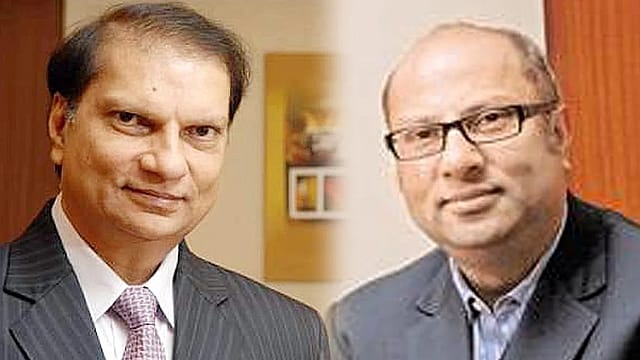
A front-page report in The Indian Express on March 19, 2026, left me stunned. The headline read: “SC let off Sandesaras with Rs 5,100 crore deposit, banks say dues are Rs 19,000 crore.”
The immediate question that came to mind was: why not Vijay Mallya?
Surprisingly, the story did not find mention in business dailies the same day or even thereafter. That, in itself, seemed unusual.
To rewind a bit, in December 2024, Finance Minister Nirmala Sitharaman informed the Lok Sabha that public sector banks had recovered over Rs 14,131.6 crore from fugitive businessman Vijay Mallya through asset attachment and sale.
Reacting to the minister’s statement, Mallya wrote on X: “The Debt Recovery Tribunal adjudged the Kingfisher Airlines debt at Rs 6,203 crores, including Rs 1,200 crores of interest. The FM announced in Parliament that through the ED, banks have recovered Rs 14,131.60 crores from me against the judgment debt of Rs 6,203 crores, and I am still an economic offender. Unless the ED and banks can legally justify how they have taken more than twice the debt, I am entitled to relief, which I will pursue.”

Zeroing In on ECI
09 Oct 2026 - Vol 05 | Issue 41
Constitutional legitimacy versus political opportunism
This column is not meant to defend Mallya—or anyone accused of gaming the system.
However, the Supreme Court’s order in the Sandesara case appears unusual. In what seems to be a first-of-its-kind direction, the Court asked the market regulator SEBI to close all pending proceedings against the Sandesara brothers. The bench of Justices J K Maheshwari and A S Chandurkar even questioned why SEBI was “coming in the way” of a settlement. This must have significantly boosted the morale of the Sandesara brothers.
Based on media reports, the cases against the Sandesaras and Vijay Mallya share striking similarities: comparable allegations, the same investigating agencies, and the same designation—fugitive economic offenders. Yet, while the Sandesaras appear to have negotiated an exit, the government continues to push aggressively for Mallya’s extradition from the UK.

The Gujarat-based Sandesara brothers—Nitin and Chetan—ran a diversified group spanning oil and gas, pharmaceuticals, fertilisers and infrastructure. Their empire, largely funded by bank loans, began to unravel when Sterling Biotech, the flagship firm producing gelatin capsules for pharmaceutical companies, slipped into losses.
With an overleveraged balance sheet, the group owed banks around Rs 19,000 crore. Soon, multiple agencies—including the ED and the CBI—began probing allegations of loan diversion, money laundering, shell companies abroad, and bank fraud. As liabilities mounted and the threat of arrest loomed, the brothers fled India around 2017–18, reportedly relocating to Nigeria, though some accounts place them in the UAE or Albania. They were subsequently declared fugitive economic offenders.
In 2022, under the Insolvency and Bankruptcy Code (2016), they were declared insolvent, and their pharma business was sold to the U.S.-based food-tech company Perfect Day Inc.
In contrast, Vijay Mallya—the “King of Good Times”—hardly needs an introduction. The former chairman of United Spirits, later sold to Diageo, and head of the United Breweries Group, he had interests spanning aviation (Kingfisher Airlines), IPL cricket, Formula 1, and real estate.
The 71-year-old, currently based in the UK, faces serious financial crime charges. He is accused of wilfully defaulting on loans taken for Kingfisher Airlines between 2005 and 2010, and of diverting funds from a consortium of 17 Indian banks to other ventures and personal assets. The ED has charged him under the Prevention of Money Laundering Act (PMLA), while the CBI has pursued fraud cases.
The banks have recovered more than double the adjudicated debt as disclosed by the FM. Still, the government remains intent on extraditing and prosecuting him, even as the Sandesaras appear to have secured a negotiated settlement.
Like the Sandesaras, Mallya’s Kingfisher Airlines also collapsed—arguably due to adverse market conditions as much as managerial decisions.
Fearing arrest, Mallya left India on March 2, 2016, shortly after meeting then Finance Minister Arun Jaitley. He too has been declared a fugitive economic offender.
In 2022, the Supreme Court sentenced him to four months in jail for contempt of court—for failing to disclose assets and transferring $40 million to his children in violation of judicial orders. He has not returned to India since.
The government continues to push for his extradition, ostensibly to ensure he faces trial and possible imprisonment. To some observers, this persistence appears driven as much by the need to set a precedent as by legal considerations.
Reading between the lines, the Rs 5,100 crore deposit in the Sandesara case may represent only a partial settlement and does not extinguish their total liability. The Supreme Court typically does not “forgive” debt, though it may facilitate settlement-based closures. Notably, extradition requests against the Sandesara brothers remain pending, and Red Corner Notices are still active—even as their exact whereabouts remain unclear.
For Mallya, the situation is more complex. While repayment strengthens his case, the 2022 contempt conviction weakens it. Legal experts point out that financial recovery does not substitute for criminal accountability.
On the CBI cases, Mallya has argued on X: “Government and my critics say I have criminal cases to answer. What are these cases? I never borrowed a single rupee personally, never stole anything. As guarantor of KFA debt, I am accused—along with others, including IDBI Bank officials—of fraudulently obtaining a Rs 900 crore loan, duly approved by their credit committee and board. The full loan with interest has been repaid. After nine years, where is the conclusive evidence of fraud?”
He does raise a valid question: if dues have been recovered, why does the pursuit continue?