Ghar Wapsi Clarion Call: Anybody Listening?
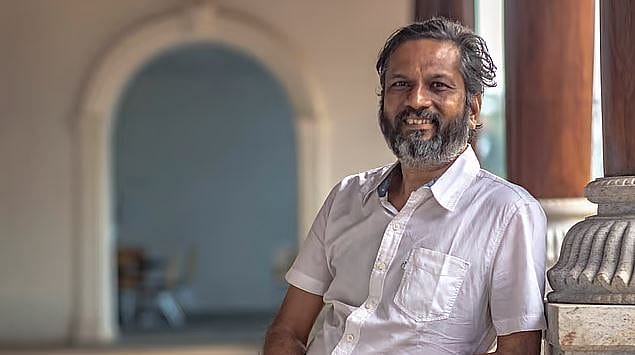
There is a sense of déjà vu in reading Zoho founder Sridhar Vembu’s appeal to Indians in America to come back home. No one doubts Vembu’s sincerity or the nobility of his call. What is being questioned is its practicality. If they were to uproot themselves from the U.S. and return to India, what kind of support system would they have? Who would provide the hand-holding? These are some of the questions that come to mind.
The trigger for Vembu writing this ‘Open Letter to Indians in America’ via X is the manner in which U.S. President Donald Trump has been heaping insults on India and Indians in his second term. He has referred to India and China as “hell-holes.” I agree with Vembu—Trump’s outbursts and racist remarks are insulting and annoying. But this too shall pass must be the collective optimism and practical approach of Indians living in the U.S.
Indians globally have faced second-class treatment from time to time. I recall the 1972 incident when 60,000–80,000 Indians (mostly Patels) in Uganda were expelled by the dictator Idi Amin. They had to leave behind all their assets—homes and businesses. While they were welcomed in India, that was not enough. In the 1970s and 1980s, India’s economic report card was far from encouraging.
Today, India—with a GDP of $4.18 trillion—is the world’s fourth-largest economy. But are rankings and numbers enough to bring NRIs back? Not quite. For many NRIs, returning is not about investment returns; it is about ease of living.

Open Minds 2026
26 Jun 2026 - Vol 05 | Issue 26
The power of ideas and arguments in 50 portraits
This has been well articulated by Vineeth K., a Chicago-based investor, in response to Vembu’s clarion call. He notes that, for most Indians abroad, it is not just about earning more money. “That’s a very small part of the story. The real reasons are the quality of everyday life and systems that work more consistently.”
Some of the key factors that work in their favour abroad include:
· Lower day-to-day corruption
· Less dependence on “connections” for basic services
· Stronger safety nets during emergencies
· Better civic discipline
· Cleaner cities and superior infrastructure
· Roads without constant stress and unpredictability
To this, one can add monsoon disruptions and pollution. In my view, Vineeth has hit the nail on the head.
However, several entrepreneurs, including Mohandas Pai and Vivek Wadhwa, have strongly opposed Vembu’s call. They argue: “Why are some Indians begging the diaspora to return? We stayed back, worked hard, paid taxes, built India, and will continue to build its future. Why beg? We are not beggars. People are free to come—no begging required.” Some have even mocked Vembu, calling him delusional.
Ghar Wapsi, or reverse brain drain, was first encouraged by the late Prime Minister Rajiv Gandhi in the mid-1980s. When he assumed office, the national mood was upbeat and optimistic. Rajiv Gandhi liberalised technology imports and encouraged NRIs to return by backing the telecom and computing revolution.
During his tenure, Sam Pitroda founded the Centre for Development of Telematics (C-DOT) in 1984. Computerisation in banks and public call offices (PCOs) at street corners became a reality. Dr Naresh Trehan returned to India and, along with the Nanda group, set up the Escorts Heart Institute in 1988. Rajeev Chandrasekhar, then with Intel, was influenced by Rajesh Pilot’s “stay back” pitch and went on to establish himself as a tech entrepreneur.
The number of returning NRIs was not in the thousands—perhaps only a few hundred—but their impact was significant in select sectors. Unfortunately, Rajiv Gandhi was assassinated in 1991.
Since then, no government has made a concerted effort to woo Indians abroad. Prime Minister Narendra Modi, for instance, has not issued a direct “come back home” appeal. In his town hall interactions abroad (U.S., U.K., Middle East), his approach has been: “Come, invest and build in India,” rather than relocate permanently.
Perhaps Modi recognises that patriotism alone will not suffice. What is needed is a sustainable model that blends economic opportunity with national sentiment. Indians abroad seek long-term opportunities and returns—both financial and emotional.
For decades, India exported talent and imported remittances—$135 billion in 2025, with the U.S. alone accounting for $38 billion. Today, as the world turns increasingly protectionist and nationalist, the key question is: Can India create an enabling environment for its best minds to return?
Consider the situation in the U.S. There are roughly 4.8–5 million people of Indian origin living there. Of these, about 2.7–3 million are U.S. citizens, while 2–2.5 million are non-citizens (visa holders, green card applicants, students, and dependents).
Due to country caps in U.S. immigration law, green card applicants face decades-long backlogs. Waiting times for these “permanently temporary” residents can stretch from 20 to 40 years. Many are in a bind, with children born and educated in the U.S., making relocation to India difficult.
Logistically, the next best option for many is to apply for permanent residency in Canada, which can be obtained within one to three years. Current trends suggest this is already happening.
Given this Trishanku-like situation, the Modi government could begin by focusing on the U.S., where nearly three million Indians are in limbo.
Some may choose to return—but with a caveat. Matching U.S.-level salaries in India will be difficult. Those considering a move back should ideally explore entrepreneurship.
India is no longer merely a land of shopkeepers; it is a startup powerhouse—a land of opportunity. As the fastest-growing major economy, it is projected to expand from $4 trillion to $30–35 trillion by 2047. This represents a massive opportunity. Alongside business prospects, India must also address softer aspects, such as building universities on par with Harvard, Oxford, Stanford, and MIT.
Typical challenges faced by returnees include:
· Regulatory maze (licences, compliance overload, excessive paperwork)
· Policy unpredictability
· The persistence of “speed money”
· Judicial delays, especially in land-related disputes
· Infrastructure bottlenecks, poor roads, and traffic congestion
· Cultural readjustment
That said, there are positives. India enjoys political stability, a buoyant stock market, healthy forex reserves, rising FDI, and relatively low inflation. Reforms such as GST, UPI, and digital governance have made doing business easier.
While the government has established dedicated NRI cells across states to address grievances, their scope can be expanded. Measures could include fast-track clearances for returnee entrepreneurs, a “reverse brain drain” visa (offering expedited residency and tax incentives), and reduced compliance burdens for startups.
Finally, Vembu—whose company Zoho is valued at around $12–13 billion—has sparked a meaningful debate. He has certainly walked the talk. However, he does not have the heft and gravitas to galvanise large-scale Ghar Wapsi. This is where Prime Minister Modi must step in with a clear and compelling call. The response could be significant.
Ultimately, the need of the hour is a robust policy framework that incentivises reverse brain drain over the next 20–25 years. Only then will NRIs seriously consider coming back.