Generation Climate: Why Eco-Anxiety Divides Gen Z and Millennials
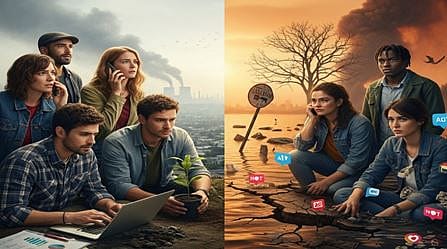
In public conversation, there is a new way to talk about feelings. It isn't just about the economy, war, or ideology, but all of these things are important. It has to do with heat. In the skies full of smoke. In cities that are flooded and winters that are disappearing. More and more, people are using the term "eco-anxiety" to describe this condition: a constant fear of environmental collapse and an uncertain future for the planet. But people of different ages feel this anxiety in different ways. It was a warning for Millennials. For Generation Z, it's a vibe.
Eco-anxiety is not hysteria or a trendy mental illness. It is a reasonable emotional response to an overwhelming amount of scientific certainty and political uncertainty. Every year, climate reports get clearer. Extreme weather events now seem to happen in cycles instead of being rare. The summer news is starting to sound like a broken record: record-breaking heat, huge wildfires, and floods that happen once every hundred years. The crisis has gone from being predicted to being real.

Zeroing In on ECI
09 Oct 2026 - Vol 05 | Issue 41
Constitutional legitimacy versus political opportunism
Millennials, who were born in the 1990s, were the first generation to see climate change as a threat to their lives. They remember when people were still arguing about global warming in public and people were sure that technology would save them. They saw the rise of global climate conferences, promises to be more sustainable, and the hope that countries working together could stop disasters from happening. They were afraid of climate change, but they also hoped for change. The system was broken, but it could be fixed.
But the 2008 financial crisis was another trauma that affected millennials. The amount of student debt went through the roof. Job markets got tighter. Housing prices went up too much. Economic uncertainty was more important than environmental concerns. Climate change was important, but so was finding a job. Millennials often feel eco-anxiety when they are worried about money. It was part of a bigger problem with stability, not the main one.
The story of Gen Z is different. Generation Z, who were born in the 2000s, has no memory of a climate story before the crisis. They grew up hearing real warnings. The skies are turning red because of bushfires in Australia. The glaciers in the Himalayas are melting faster than expected. Heatwaves are getting close to the point where they can kill people. For them, climate change is something that is happening right now, not something that is coming. Gen Z grew up with social media, but Millennials didn't. They take in the disaster as it happens. Fear and anger are rewarded by algorithms, which make sure that pictures of environmental disasters are always spreading. Catastrophe isn't a breaking news alert; it's a background that you can scroll through. The psychological effect is constant immersion.
Millennials think of climate change as a political issue, while Generation Z thinks of it as a threat to their lives. Surveys show that a lot of young people are wondering if it's right to have kids on a planet that is getting warmer. Planning your career has to do with being able to handle climate change. While Millennials wanted to know how to make their lives more sustainable, Generation Z wants to know if the system itself is sustainable.
It's not just about age that makes the difference between generations. It's about the time frame. Millennials were promised there was time to innovate, bargain, and transition. Climate deadlines were estimated in decades. Generation Z hears deadlines measured in years: 2030 targets, 1.5-degree thresholds, and shrinking carbon budgets. 2030 is not a distant future for a 20-year-old; it is the beginning of maturity. The future seems cramped.
This compression modifies the emotional tone. Millennials are prone to pragmatic anxiety, which is characterized by both concern and adaptation. Many people channel their fears about climate change into green employment, ethical consumption, and corporate sustainability efforts. There is still a belief in institutional reform. Gen Z's eco-anxiety is stronger than that of previous generations; it includes anger and sadness. Sadness for ecosystems that are no longer there. Anger at groups that seem to have put off taking action even though they have been warned for decades. The language goes from "What can I do?" to "Why didn't they do anything?" The focus changes from individual carbon footprints to structural accountability, such as the fossil fuel industries, political inaction, and systemic growth strategies.
There is also a more profound psychological difference. Millennials heard stories about progress as they grew up. Globalization opened up new doors, and technology promised to bring people together. The economic crisis destroyed this story, but it wasn't completely forgotten. Generation Z grew up during pandemics, geopolitical tensions, a decline in democracy, and ecological disasters. It is not clear if the idea of linear progress is correct. Eco-anxiety is part of a bigger feeling of being weak in the system. It would be easy to paint Millennials as people who want to make things better and Generation Z as people who think things will end badly. There is only a small difference. Millennials are still very worried about the future of the climate, especially now that they are parents and have to worry about their children's safety. Even though they are angry, Generation Z still thinks about other options, like renewable transitions, regenerative agriculture, and circular economies. Both generations want to have a say. They just see the size of the change in different ways.
In this way, eco-anxiety points to something wrong with modern politics. It shows how the pace of institutions is different from the urgency of science. It shows that economic models put more value on growth every three months than on global stability. It shows that young people don't trust the government and other institutions. This dynamic is very important in India. The heat waves in the northern states are getting worse. The eastern shorelines are changing because of coastal erosion. Every year, air pollution kills thousands of people. Climate is one of the things that Indian millennials have to deal with when they want to move up in their careers or take care of their families. Climate change makes things even harder for Indian Gen Z, who are already having a hard time finding jobs and getting into good schools.