From Lab to Forest Floor: How India’s Forest Research is Strengthening Forest-Dependent Livelihoods
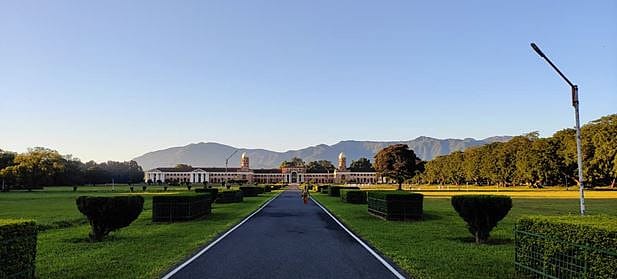
Conflict comes up a lot in discussions about India's forests, like when people are evicted, when there are competing property claims, or when people say that conservation and jobs are at odds with each other. Scientific research plays a less obvious but just as important role in determining how forests are managed and how millions of people make a living from them.
Making forest livelihoods predictable
One of the Forest Research Institute's most tangible contributions is research into non-timber forest products (NTFPs). Resin, bamboo, lac, medicinal plants, grasses, and leaves are the primary sources of seasonal income for forest-dependent households.
For instance, FRI research on resin tapping showed that controlling the depth, timing, and rotation of the tapping could help pine trees live longer and still produce good yields. States that followed these rules had healthier forests and more stable earnings. When policies didn't follow scientific advice, like cutting quotas by a lot or banning extraction without alternatives, people's lives got worse. This shows how important it is for governments to pay attention to what scientists find.
The main point is clear and strong: when ecological research tells us how to use forests instead of random rules, conservation and jobs work together instead of against each other.

The MissOil Strike
03 Apr 2026 - Vol 04 | Issue 65
The War on Energy Security
Agroforestry serves as a pressure release valve
Agroforestry is another area where India has quietly excelled, and FRI has had a significant impact here as well. The institute conducted decades of trials on poplar, eucalyptus, bamboo, and mixed native species to gather data on growth rates, water use, soil impacts, and economic returns. This research lays the groundwork for tree-based farming systems that enable smallholders to diversify their income while lessening strain on natural forests.
In Uttarakhand, Punjab, Haryana, and areas of central India, agroforestry has evolved into a viable livelihood strategy rather than a trial experiment. Farmers profit from lumber, poles, bamboo, and fuelwood without expanding cultivation into forest land. From a policy standpoint, this is significant because it demonstrates how scientific forestry may influence land-use decisions far beyond reserve boundaries. Forest protection here is accomplished not by exclusion, but by providing viable alternatives.
Regeneration through community participation
Forest regeneration is frequently portrayed as a top-down activity—plantations planned in offices and carried out by contractors. FRI research proposes a different model. Its research on natural regeneration, aided regeneration, soil moisture conservation, and fire management has influenced community-based forest management in multiple states.
Under Joint Forest Management and community forestry arrangements, villagers use research-proven techniques such as protecting natural seedlings rather than relying solely on plantations, retaining moisture with contour trenches and mulching, and implementing fire-prevention strategies tailored to local ecologies. These approaches are less expensive, more durable, and consistent with how communities now interact with forests.
The end outcome is regeneration that provides livelihoods (by grass, fodder, and minor crops) while enhancing forest quality. This is a significant counterpoint to the notion that scientific forestry is necessarily technocratic or disconnected from local knowledge. In actuality, much of FRI's work supports and strengthens community stewardship.
Climate science goes beyond carbon markets.
As climate change gets worse, people are starting to think of trees more in terms of carbon stocks and offsets. FRI has done a lot of important work on carbon assessment and climate modeling, but the effects of the research on people's lives also need to be looked at. Studies on how well species can survive, how well they can handle heat, and how well they can adapt to climate change affect which trees are planted today and which trees will make money tomorrow.
For forest-dependent societies, these decisions influence whether a planted species will withstand prolonged heat, unpredictable rainfall, or pest outbreaks. Research-backed species selection lowers the risk of unsuccessful plantations and wasted labor—an often ignored aspect of climate adaptation. In this way, FRI's climate research serves not only as an environmental tool but also as a type of livelihood insurance.
Why does this matter now?
India is experiencing a sharpening of forest policy debates, particularly over conservation targets, infrastructural expansion, and carbon markets. In such disputes, the role of scientific institutions is frequently reduced to a background reference. However, FRI's experience demonstrates that long-term solutions arise when research, policy, and community practices work together.
This does not imply that India's forest governance is without problems. Implementation gaps remain, and research findings are not always incorporated into policy. However, where alignment exists, the results are visible: better forests, diverse rural incomes, and less conflict between conservation and livelihoods.
A quiet success worthy of recognition.
India's forestry research story is small, slow, and very useful in a time when environmental politics are all over the news. It doesn't have the drama of big announcements, but you can see its effects in forest regeneration plots, agroforestry farms, and seasonal earnings all over rural India.
Acknowledging this success requires more than mere institutional recognition. It is about understanding that science-based forest management, which is based on years of research and fieldwork, is one of the most trustworthy ways to combine protecting the environment with social justice. As India faces climate stress, rural employment challenges, and biodiversity decline, the insights gained by organizations such as FRI necessitate significantly greater public and policy focus.
Because, in the end, the destiny of India's forests will be determined not just by policy texts, but also by how well science shapes life on the forest floor.